


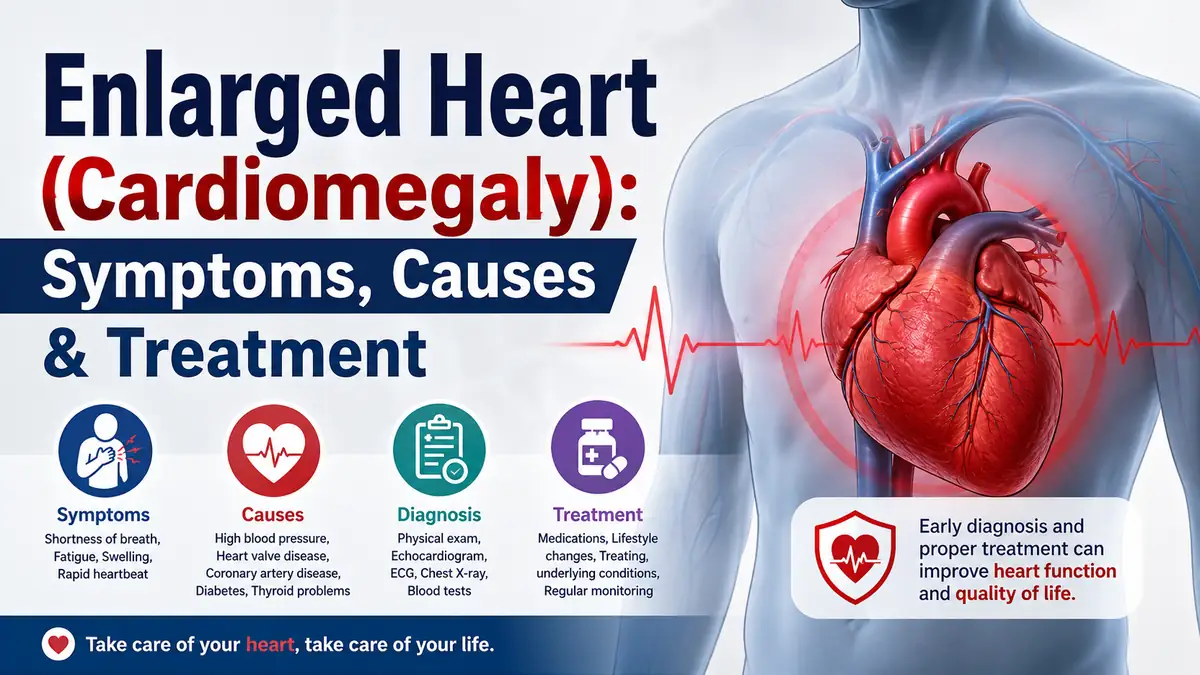
An enlarged heart, medically known as cardiomegaly, means that the heart is larger than its usual size. It is not a disease by itself but is usually a sign of an underlying heart or health condition. The heart may become enlarged when it has to work harder than normal or when the heart muscle or chambers become stretched or thickened.
Some people with cardiomegaly have no noticeable symptoms, while others may experience shortness of breath, swelling, fatigue, or an irregular heartbeat. Treatment depends on the underlying cause and may involve medicines, lifestyle changes, medical procedures, or surgery.
What Is an Enlarged Heart?
Cardiomegaly refers to an increase in the size of the heart. It can involve the entire heart or primarily one or more chambers. The heart may become enlarged because its muscle becomes thicker or because its chambers become stretched and dilated.
An enlarged heart can sometimes be temporary, while in other cases it may be long-lasting. For example, certain conditions can temporarily place extra stress on the heart, whereas chronic high blood pressure or heart muscle disease can cause persistent enlargement.
Importantly, finding an enlarged heart on a chest X-ray does not always identify the underlying problem. Additional tests are often needed to determine why the heart appears enlarged and how well it is functioning.
Enlarged Heart Symptoms
Some people have no symptoms of cardiomegaly, especially during the early stages. When symptoms occur, they can vary depending on the cause and how well the heart is pumping.
Common enlarged heart symptoms may include:
- Shortness of breath, particularly during physical activity
- Difficulty breathing while lying down
- Waking up at night feeling short of breath
- Fatigue or unusual tiredness
- Swelling of the legs, ankles, feet, or abdomen
- Irregular, rapid, or pounding heartbeat
- Reduced ability to exercise
- Dizziness or lightheadedness
- Fainting
- Chest discomfort or pain
These symptoms can also occur with many other heart and lung conditions, so they should not automatically be attributed to cardiomegaly.
When Should You Seek Emergency Care?
Seek emergency medical attention if you develop severe chest pain, severe difficulty breathing, fainting, or symptoms that could indicate a heart attack.
Do not wait for symptoms to improve on their own when they are sudden or severe.
What Causes an Enlarged Heart?
Cardiomegaly can develop when the heart muscle is damaged or when the heart has to pump harder than usual. Several conditions can contribute to heart enlargement.
1. High Blood Pressure
Long-term high blood pressure forces the heart to work harder to push blood through the body’s blood vessels. Over time, this extra workload can cause the heart muscle to thicken and may eventually contribute to enlargement.
2. Coronary Artery Disease
Narrowed or blocked coronary arteries can reduce blood flow to the heart muscle. Coronary artery disease is an important cause of heart damage and can contribute to cardiomegaly.
3. Heart Attack
Damage caused by a previous heart attack can weaken the heart muscle. The affected heart may have to work harder to pump blood, potentially resulting in enlargement.
4. Cardiomyopathy
Cardiomyopathy refers to diseases affecting the heart muscle. Some types can cause the heart chambers to become enlarged or the heart muscle to become abnormally thick.
Dilated cardiomyopathy, for example, can cause the heart chambers to stretch and enlarge, making it harder for the heart to pump blood effectively.
5. Heart Valve Disease
The heart contains four valves that help blood flow in the correct direction. Damaged or diseased valves can make the heart work harder and may eventually cause enlargement.
6. Abnormal Heart Rhythms
Persistent abnormal heart rhythms, including certain types of arrhythmias, can put additional stress on the heart and may be associated with an enlarged heart.
7. Congenital Heart Conditions
Some people are born with structural problems affecting the heart. Certain congenital heart defects can increase the workload on the heart and contribute to enlargement.
8. Pulmonary Hypertension
High blood pressure in the arteries of the lungs can make the right side of the heart work harder. Over time, this may cause thickening or enlargement of the right side of the heart.
9. Thyroid Disorders
Both an underactive thyroid and an overactive thyroid can affect cardiovascular function and may contribute to heart problems, including enlargement in some people.
10. Anemia
Severe or persistent anemia reduces the amount of oxygen carried by the blood. The heart may compensate by pumping more blood, increasing its workload.
11. Pregnancy
Pregnancy naturally increases the workload on the cardiovascular system. In some circumstances, this can cause temporary changes in heart size. However, symptoms such as significant breathlessness or swelling during pregnancy should always be discussed with a healthcare professional.
12. Other Conditions
Less common causes can include conditions such as hemochromatosis, cardiac amyloidosis, inflammatory diseases, and certain infiltrative disorders that affect the heart.
Risk Factors for Cardiomegaly
Certain factors can increase the likelihood of developing conditions associated with an enlarged heart.
These include:
- Uncontrolled high blood pressure
- Coronary artery disease
- Previous heart attack
- Heart valve disease
- Cardiomyopathy
- Diabetes
- High cholesterol
- Excessive alcohol consumption
- Smoking
- Physical inactivity
- Family history of cardiomyopathy or heart disease
- Certain thyroid disorders
Managing cardiovascular risk factors can help reduce the risk of conditions that place excessive strain on the heart.
How Is an Enlarged Heart Diagnosed?
A healthcare professional may first suspect cardiomegaly based on symptoms, a physical examination, medical history, or a chest X-ray. However, additional testing is often required to determine the actual cause and assess heart function.
Common diagnostic tests include:
Chest X-ray:
Can show whether the heart appears larger than expected, although other tests may be needed to confirm enlargement.
Electrocardiogram (ECG/EKG):
Records the heart’s electrical activity and can identify certain rhythm abnormalities or patterns associated with an enlarged heart.
Echocardiogram:
Uses sound waves to create images of the heart. It can evaluate the size and structure of the chambers, heart valves, blood flow, and pumping function.
Blood tests:
May help identify conditions contributing to heart enlargement or evaluate for heart muscle damage.
Stress testing:
Can show how the heart responds to physical activity or increased workload.
Cardiac CT or MRI:
These imaging tests can provide detailed information about the heart’s structure and surrounding tissues.
Cardiac catheterization:
In selected cases, a catheter may be used to evaluate pressures inside the heart and examine the coronary arteries.
Enlarged Heart Treatment
There is no single treatment for cardiomegaly because an enlarged heart is usually a sign of another condition. Treatment focuses on identifying and managing the underlying cause.
Medications
Depending on the underlying condition, a doctor may prescribe medicines such as:
- Diuretics to help reduce excess fluid
- ACE inhibitors or ARBs for certain heart and blood pressure conditions
- Beta-blockers to control heart rate and blood pressure
- Anti-arrhythmic medicines for abnormal heart rhythms
- Anticoagulants when appropriate to reduce the risk of blood clots
The appropriate medication depends on the individual’s diagnosis, kidney function, blood pressure, heart rhythm, and other health factors.
Medical Procedures and Surgery
Some people may need a procedure or surgery if medication and lifestyle measures are not sufficient.
Possible treatments include:
- Pacemaker implantation
- Implantable cardioverter-defibrillator (ICD)
- Heart valve repair or replacement
- Coronary artery bypass surgery
- Other procedures for specific structural or rhythm problems
- Left ventricular assist device (LVAD) in selected advanced heart failure cases
- Heart transplantation in severe cases when other treatments are no longer effective
Not everyone with an enlarged heart needs surgery or a medical device.
Lifestyle Changes for an Enlarged Heart
Lifestyle changes can support heart health and help manage some of the conditions associated with cardiomegaly.
Eat a Heart-Healthy Diet
Focus on:
- Vegetables and fruits
- Whole grains
- Beans and legumes
- Lean sources of protein
- Healthy fats
Reducing excessive sodium and saturated or trans fats may also be recommended.
Control Blood Pressure
Regularly monitoring blood pressure and taking prescribed medicines as directed can help reduce the workload on the heart.
Exercise Safely
Regular physical activity can benefit cardiovascular health, but people with cardiomegaly should ask their healthcare professional what type and intensity of exercise are appropriate for them.
Avoid Smoking
Smoking damages blood vessels and increases cardiovascular risk. Quitting can significantly benefit overall heart health.
Limit Alcohol
Excessive alcohol consumption can contribute to certain heart conditions. Your doctor may recommend limiting or avoiding alcohol depending on the cause of cardiomegaly.
Maintain a Healthy Weight
If you have overweight or obesity, gradual weight management may reduce cardiovascular strain and improve other risk factors.
Can an Enlarged Heart Return to Normal Size?
In some cases, heart enlargement may improve when the underlying cause is successfully treated. However, whether the heart returns to its typical size depends on the cause, how long the condition has been present, and whether permanent heart muscle damage has occurred.
For this reason, early diagnosis and appropriate treatment are important.
Possible Complications of Cardiomegaly
An enlarged heart can sometimes lead to serious complications, particularly when it is associated with significant heart dysfunction.
Possible complications include:
- Heart failure
- Abnormal heart rhythms
- Blood clots
- Stroke
- Heart valve problems
- Cardiac arrest
- Sudden cardiac death in severe cases
The risk varies considerably from person to person and depends on the underlying cause and the condition of the heart.
How Can You Help Prevent an Enlarged Heart?
Not every case of cardiomegaly can be prevented, especially when genetic or congenital conditions are involved. However, managing cardiovascular risk factors can lower the risk of several conditions that may cause heart enlargement.
Helpful steps include:
- Keep blood pressure under control.
- Monitor cholesterol and blood sugar.
- Don’t smoke.
- Eat a balanced, heart-healthy diet.
- Exercise regularly as appropriate for your health.
- Maintain a healthy weight.
- Limit excessive alcohol consumption.
- Take prescribed medicines consistently.
- Attend recommended medical checkups.
- Tell your healthcare professional about a family history of cardiomyopathy or other heart disease.
Frequently Asked Questions
Is an enlarged heart serious?
It can be serious because cardiomegaly may indicate an underlying heart condition. However, the seriousness depends on the cause, the degree of enlargement, and how well the heart is functioning.
What are the most common symptoms of an enlarged heart?
Some people have no symptoms. When symptoms occur, they may include shortness of breath, fatigue, swelling in the legs or abdomen, reduced exercise tolerance, and irregular or rapid heartbeats.
Can high blood pressure cause an enlarged heart?
Yes. Long-term high blood pressure makes the heart work harder and can cause changes in the heart muscle that contribute to enlargement.
Can an enlarged heart be cured?
There is no single cure because cardiomegaly has many possible causes. Treating the underlying problem may improve heart function and, in some cases, reduce enlargement.
Is cardiomegaly the same as heart failure?
No. Cardiomegaly means the heart is enlarged, while heart failure means the heart cannot pump or fill with blood adequately to meet the body’s needs. An enlarged heart can occur with heart failure, but the two terms are not interchangeable.
What test confirms an enlarged heart?
A chest X-ray may suggest an enlarged heart, but an echocardiogram is often used to evaluate heart size, structure, blood flow, and pumping function. Additional tests may be required to identify the cause.
Final Takeaway
Cardiomegaly, or an enlarged heart, is usually a sign of an underlying condition rather than a disease itself. High blood pressure, coronary artery disease, cardiomyopathy, heart valve problems, abnormal heart rhythms, and several other conditions can contribute to heart enlargement.
Because some people have no symptoms, cardiomegaly may be discovered during an imaging test performed for another reason. If an enlarged heart is suspected or diagnosed, medical evaluation is important to determine the cause and assess heart function.
Treatment may include medications, lifestyle changes, procedures, or surgery depending on the underlying problem. Early diagnosis and appropriate management can help reduce the risk of complications.