


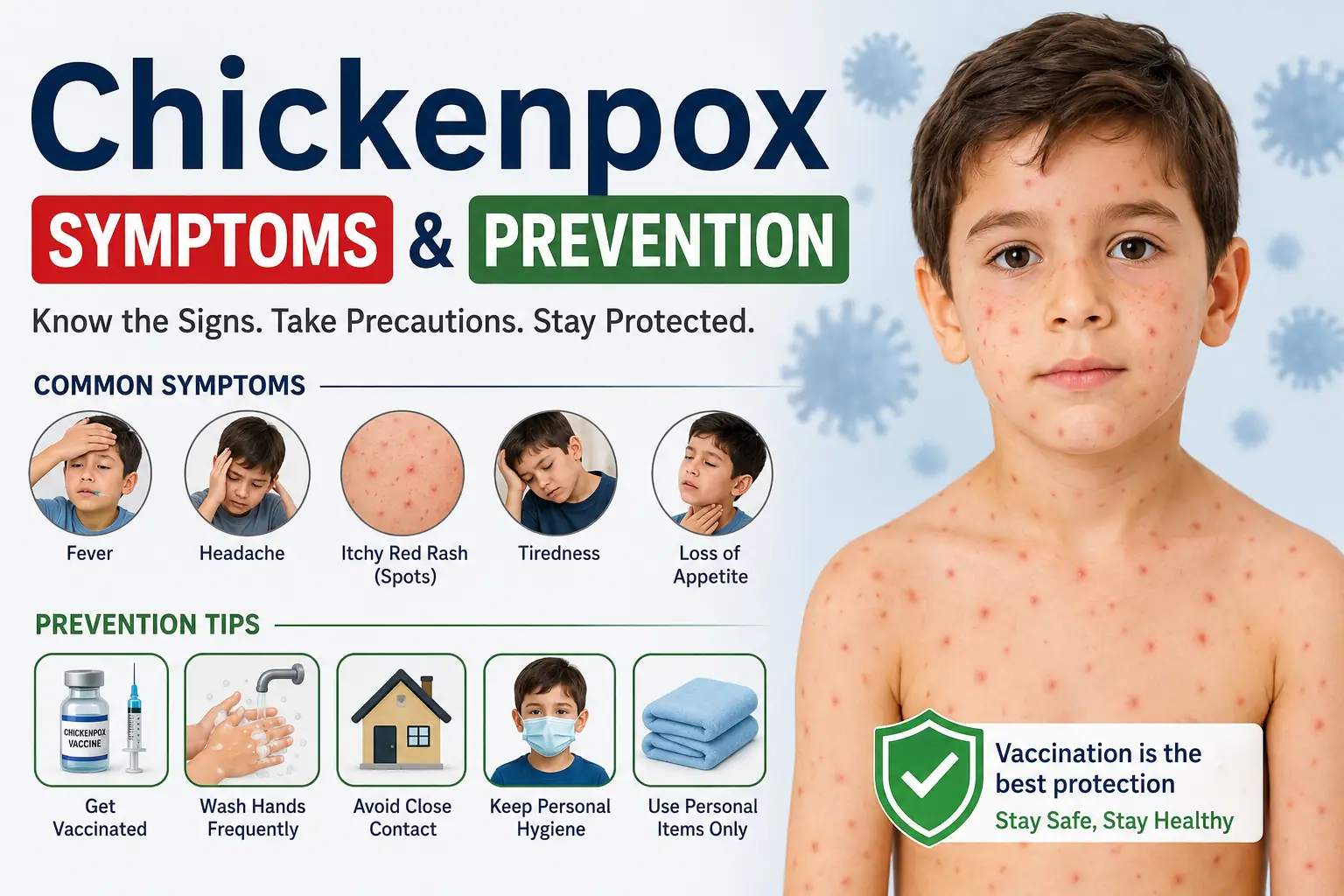
Chickenpox is a highly contagious infection that commonly affects children but can also occur in adults who have not previously had the infection or been vaccinated. It is caused by the varicella-zoster virus (VZV) and is best known for its itchy, blister-like rash.
Although chickenpox is usually mild in healthy children, it can sometimes lead to complications, particularly in newborns, pregnant women, adults, and people with weakened immune systems. Understanding the causes, symptoms, treatment, and prevention of chickenpox can help reduce its spread and support a safer recovery.
What Is Chickenpox?
Chickenpox is a viral infection caused by the varicella-zoster virus. It spreads easily from person to person, especially among people who have not developed immunity.
The infection typically begins with symptoms such as fever, tiredness, headache, and reduced appetite. A few days later, an itchy rash usually develops. The rash progresses from small red spots to fluid-filled blisters before drying and forming scabs.
After recovering from chickenpox, the virus remains inactive in nerve tissue. Years later, it can reactivate and cause shingles (herpes zoster).
What Causes Chickenpox?
The main cause of chickenpox is infection with the varicella-zoster virus.
Chickenpox spreads primarily through:
- Breathing in respiratory droplets from an infected person
- Close contact with someone who has chickenpox
- Contact with fluid from chickenpox blisters
- Spending time in the same indoor space with an infected person
A person with chickenpox can spread the virus from about 1–2 days before the rash appears until all the blisters have crusted over.
Because the virus spreads very easily, outbreaks can occur in households, schools, childcare centers, and other places where people have close contact.
Chickenpox Symptoms
Chickenpox symptoms can vary from person to person. In many children, the illness is mild, while adults may experience more severe symptoms.
Common chickenpox symptoms include:
1. Itchy Rash
The most recognizable symptom is an itchy rash. It commonly starts on the chest, back, or face and may spread to other areas of the body.
The rash usually develops in stages:
- Small red or pink spots appear.
- The spots become raised bumps.
- Fluid-filled blisters develop.
- The blisters break or dry out.
- Crusts form over the affected areas.
New spots can continue appearing for several days, so different stages of the rash may be visible at the same time.
2. Fever
A mild to moderate fever may develop before or around the time the rash appears. Fever can sometimes be higher in adults.
3. Tiredness
People with chickenpox may feel unusually tired or weak, especially during the first few days of the infection.
4. Headache
Headache can occur before the characteristic rash develops.
5. Loss of Appetite
Some people, particularly children, may temporarily lose their appetite.
6. Muscle or Body Aches
Mild muscle aches or general discomfort may accompany the infection.
Chickenpox Symptoms in Adults
Chickenpox can be more serious in adults than in young children.
Adults may experience:
- Higher fever
- More extensive rash
- Greater fatigue
- Severe headache
- Increased risk of complications
Adults who develop symptoms should monitor their condition carefully and consider contacting a healthcare professional, particularly if symptoms are severe or they have other medical risk factors.
How Long Does Chickenpox Last?
Chickenpox generally lasts around 4–7 days, although the rash can take longer to completely heal.
The incubation period—the time between exposure to the virus and development of symptoms—is usually around 10–21 days.
New blisters may continue appearing for several days. A person is generally considered contagious until all the chickenpox lesions have dried and formed scabs.
How Is Chickenpox Diagnosed?
Chickenpox is often diagnosed based on the appearance and progression of the rash along with other symptoms.
A healthcare professional may examine:
- The appearance of the rash
- The distribution of the spots and blisters
- Fever and other symptoms
- Recent exposure to someone with chickenpox
- Vaccination and previous infection history
Laboratory testing may be recommended in certain situations when the diagnosis is uncertain or when confirming infection is particularly important.
Chickenpox Treatment
There is no routine antibiotic treatment for chickenpox because it is caused by a virus rather than bacteria. Treatment usually focuses on relieving symptoms and preventing complications.
1. Relieve Itching
Itching can be one of the most uncomfortable symptoms. Measures that may help include:
- Taking cool or lukewarm baths
- Using soothing skin products recommended by a healthcare professional
- Keeping fingernails short
- Wearing loose, comfortable clothing
- Avoiding scratching the blisters
Scratching can damage the skin and increase the risk of bacterial infection and scarring.
2. Manage Fever and Discomfort
Fever and discomfort can often be managed with appropriate fever-reducing medicines.
Do not give aspirin to children or teenagers with chickenpox, because of the risk of Reye’s syndrome.
Ibuprofen and other nonsteroidal anti-inflammatory drugs may not be appropriate for people with chickenpox unless specifically advised by a healthcare professional.
3. Stay Hydrated
Drinking enough fluids is important, particularly when fever is present. If mouth sores make drinking uncomfortable, small, frequent sips may be easier.
4. Antiviral Medicines
Antiviral medicines such as acyclovir may be recommended for certain people who have a higher risk of complications.
Antiviral treatment is most effective when started early, so people at increased risk should contact a healthcare professional promptly after symptoms begin.
Chickenpox Treatment for Adults
Because adults can develop more severe chickenpox, medical advice may be appropriate soon after symptoms appear.
A doctor may consider antiviral treatment depending on factors such as:
- Age
- Severity of symptoms
- How long symptoms have been present
- Pregnancy
- Immune system status
- Other underlying health conditions
Do not self-medicate with prescription antiviral medicines without medical guidance.
Chickenpox in Pregnancy
Chickenpox during pregnancy requires medical attention because the infection can sometimes cause serious complications for both the pregnant person and the developing baby.
If someone who is pregnant has been exposed to chickenpox or develops symptoms, they should contact their healthcare provider promptly. Treatment and monitoring may be needed depending on their immunity and timing of exposure.
Pregnant people should not receive the live chickenpox vaccine during pregnancy. Vaccination may be considered before pregnancy or after delivery according to medical advice.
Chickenpox in Babies and People With Weak Immune Systems
Newborn babies and people with weakened immune systems may have a higher risk of serious chickenpox complications.
Medical advice should be sought promptly if chickenpox is suspected in:
- Newborns
- Young infants
- People receiving certain immune-suppressing treatments
- People with weakened immune systems
- Pregnant individuals
Possible Chickenpox Complications
Most healthy children recover without major problems, but complications can occur.
Possible complications include:
- Bacterial skin infections
- Pneumonia
- Dehydration
- Brain inflammation (encephalitis)
- Cerebellar inflammation
- Bloodstream infections
- Severe infection in people with weakened immunity
Adults, pregnant people, newborns, and individuals with weakened immune systems have a greater risk of serious complications.
Seek urgent medical care if someone with chickenpox develops difficulty breathing, severe weakness, confusion, persistent vomiting, severe headache, difficulty walking, unusual sleepiness, or rapidly worsening symptoms.
How to Prevent Chickenpox
The most effective way to prevent chickenpox is vaccination.
The chickenpox vaccine helps protect against infection and can also reduce the severity of illness in people who become infected.
Other measures that can help reduce transmission include:
- Avoiding close contact with infected people
- Staying home while contagious
- Avoiding scratching and touching blisters
- Washing hands regularly
- Not sharing personal items such as towels or clothing
- Keeping frequently touched surfaces clean
People who have not had chickenpox or the vaccine should discuss vaccination with a healthcare professional.
Chickenpox Vaccine
The chickenpox vaccine is a live attenuated vaccine designed to provide immunity against varicella.
Vaccination schedules can vary by country and individual circumstances. In the United States, routine childhood vaccination generally involves two doses.
People who are unsure whether they are immune should discuss their vaccination history and options with a healthcare professional.
Chickenpox vs. Shingles
Chickenpox and shingles are caused by the same virus but are different conditions.
Chickenpox is the initial infection with varicella-zoster virus and commonly causes a widespread itchy rash.
Shingles occurs when the virus reactivates later in life. It usually causes a painful rash affecting a specific area of the body.
Having chickenpox does not mean a person can never develop shingles. The virus can remain dormant in the nervous system after the initial infection.
When Should You See a Doctor?
Contact a healthcare professional if you suspect chickenpox, especially if the affected person is an adult, pregnant, very young, or immunocompromised.
Seek urgent medical attention for symptoms such as:
- Difficulty breathing
- Severe or persistent vomiting
- Confusion or unusual drowsiness
- Severe headache
- Difficulty walking
- Signs of dehydration
- Rapidly worsening illness
- Skin around blisters becoming very red, painful, swollen, or producing pus
Frequently Asked Questions About Chickenpox
Is chickenpox contagious?
Yes. Chickenpox is highly contagious and can spread through respiratory droplets and direct contact with fluid from blisters.
How long is chickenpox contagious?
A person can generally spread chickenpox from about one to two days before the rash appears until all lesions have crusted over.
Can adults get chickenpox?
Yes. Adults who have not previously had chickenpox or received vaccination can become infected, and illness may be more severe than in children.
Can you get chickenpox twice?
It is uncommon to develop chickenpox more than once. However, the virus remains in the body after infection and can reactivate later as shingles.
Can you take a bath when you have chickenpox?
Yes. A cool or lukewarm bath may help soothe itching. Avoid very hot water and gently pat the skin dry rather than rubbing it.
How can chickenpox scars be prevented?
Avoiding scratching and keeping the skin clean can reduce the risk of scarring and secondary bacterial infection. Persistent or severe scars can be discussed with a dermatologist.
Final Thoughts
Chickenpox is a highly contagious viral infection that typically causes an itchy, blistering rash along with symptoms such as fever and tiredness. Most healthy children recover without serious problems, but adults and certain high-risk groups can develop complications.
Treatment generally focuses on relieving itching, controlling fever and discomfort, maintaining hydration, and monitoring for complications. Vaccination remains the best way to prevent chickenpox and reduce the risk of severe disease.
If you suspect chickenpox—particularly during pregnancy, in an adult, or in someone with a weakened immune system—contact a healthcare professional for appropriate advice.