


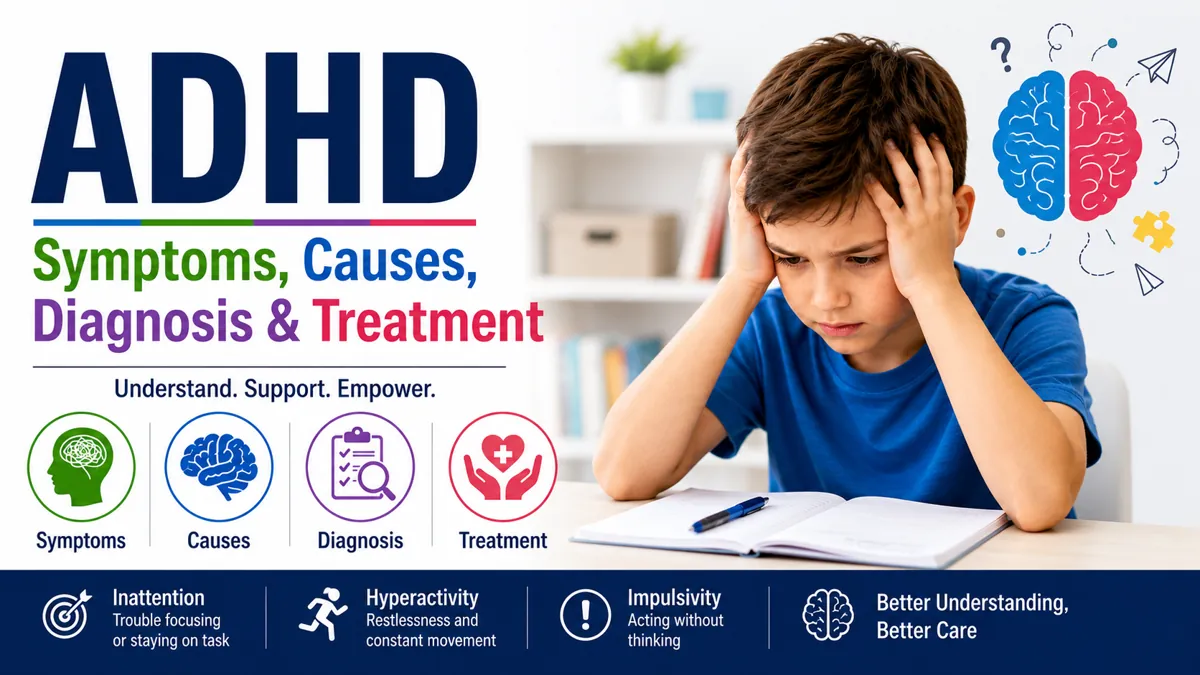
Attention-Deficit/Hyperactivity Disorder (ADHD) is one of the most common neurodevelopmental conditions affecting both children and adults. While many people associate ADHD with hyperactivity, the condition can also cause difficulties with attention, organization, emotional regulation, and impulse control.
ADHD isn’t simply about being distracted or energetic—it can significantly impact school, work, relationships, and daily life. Fortunately, early diagnosis and proper treatment can help individuals manage symptoms successfully and improve their quality of life.
This comprehensive guide explains ADHD symptoms, causes, diagnosis, treatment options, and lifestyle strategies in easy-to-understand language.
What Is ADHD?
Attention-Deficit/Hyperactivity Disorder (ADHD) is a chronic neurodevelopmental disorder that affects the brain’s ability to regulate attention, behavior, and self-control.
People with ADHD may struggle to:
- Stay focused
- Complete tasks
- Organize responsibilities
- Control impulsive behaviors
- Sit still when required
- Manage emotions
Although ADHD usually begins during childhood, many people continue experiencing symptoms into adulthood.
Types of ADHD
Healthcare professionals classify ADHD into three main types.
1. Predominantly Inattentive Presentation
This type mainly affects concentration and organization.
Common features include:
- Easily distracted
- Frequently losing items
- Difficulty following instructions
- Forgetfulness
- Poor attention to detail
2. Predominantly Hyperactive-Impulsive Presentation
This form mainly involves excessive activity and impulsive behavior.
Symptoms include:
- Constant fidgeting
- Difficulty remaining seated
- Talking excessively
- Interrupting conversations
- Acting without thinking
3. Combined Presentation
This is the most common form and includes symptoms of both inattentiveness and hyperactivity-impulsivity.
ADHD Symptoms
Symptoms vary depending on age and the type of ADHD.
ADHD Symptoms in Children
Children may experience:
- Short attention span
- Easily distracted
- Forgetting homework
- Difficulty following classroom instructions
- Frequent careless mistakes
- Losing school supplies
- Excessive talking
- Constant movement
- Running or climbing excessively
- Interrupting others
- Difficulty waiting for their turn
ADHD Symptoms in Teenagers
Teenagers often experience:
- Poor time management
- Trouble completing assignments
- Restlessness
- Impulsive decisions
- Emotional outbursts
- Difficulty concentrating during classes
- Academic struggles
ADHD Symptoms in Adults
Adult ADHD may look different from childhood ADHD.
Common symptoms include:
- Poor organization
- Chronic procrastination
- Difficulty prioritizing tasks
- Frequently missing deadlines
- Forgetfulness
- Losing keys, wallets, or phones
- Restlessness
- Difficulty focusing during conversations
- Impulsive spending
- Mood swings
- Difficulty maintaining relationships
Emotional Symptoms of ADHD
Many people also experience emotional challenges, including:
- Low frustration tolerance
- Anxiety
- Irritability
- Feeling overwhelmed
- Difficulty regulating emotions
- Low self-esteem
- Sensitivity to criticism
What Causes ADHD?
The exact cause remains unknown, but researchers believe multiple factors contribute.
1. Genetics
ADHD often runs in families, making genetics one of the strongest risk factors.
2. Brain Development
Studies suggest differences in brain structure and communication pathways involved in attention, motivation, and impulse control.
3. Neurotransmitter Imbalance
Certain brain chemicals, particularly dopamine and norepinephrine, play important roles in attention and self-control.
4. Premature Birth
Children born prematurely or with very low birth weight may have a higher risk.
5. Prenatal Factors
Risk may increase if the developing baby is exposed to:
- Smoking during pregnancy
- Alcohol
- Certain drugs
- Environmental toxins
6. Brain Injury
Rarely, traumatic brain injury may contribute to ADHD-like symptoms.
Risk Factors
Factors associated with a higher likelihood of ADHD include:
- Family history
- Premature birth
- Low birth weight
- Prenatal exposure to tobacco or alcohol
- Exposure to lead during childhood
- Certain neurological conditions
ADHD Is Not Caused By
Many myths surround ADHD.
Current evidence does not support sugar intake, poor parenting, excessive screen time alone, or laziness as direct causes of ADHD, though some factors may influence behavior or symptom severity.
ADHD Diagnosis
There is no single blood test or brain scan that diagnoses ADHD.
A healthcare professional evaluates:
- Medical history
- Behavioral symptoms
- Developmental history
- School or workplace performance
- Family history
- Input from parents, teachers, or partners (when appropriate)
Symptoms generally need to be persistent, occur in more than one setting (such as home and school or work), and interfere with daily functioning.
ADHD Treatment
Treatment is often most effective when tailored to the individual’s needs and may combine medication, therapy, education, and lifestyle changes.
1. Medication
Common medications include:
Stimulants
These are often the first-line treatment and can improve attention and reduce impulsivity for many people.
Examples include medications containing methylphenidate or amphetamine.
Non-Stimulants
These may be recommended if stimulants are ineffective, not tolerated, or not appropriate.
2. Behavioral Therapy
Behavioral therapy helps individuals:
- Build routines
- Improve organization
- Develop coping skills
- Reduce disruptive behaviors
- Strengthen problem-solving abilities
Parents of young children may also benefit from behavior-management training.
3. Cognitive Behavioral Therapy (CBT)
CBT can help adolescents and adults:
- Manage negative thinking
- Reduce anxiety
- Improve planning
- Develop healthier habits
- Strengthen emotional regulation
4. Parent Training
Parents learn practical techniques for:
- Positive reinforcement
- Consistent routines
- Effective communication
- Managing challenging behaviors
5. School Support
Children may benefit from:
- Extra time during exams
- Seating with fewer distractions
- Organizational assistance
- Individualized educational accommodations where appropriate
Lifestyle Tips for Managing ADHD
Healthy daily habits can support overall well-being alongside professional treatment.
Maintain a Routine
Consistent schedules reduce distractions and improve productivity.
Exercise Regularly
Physical activity may improve focus, mood, and sleep quality.
Aim for at least 150 minutes of moderate exercise per week for adults, or encourage regular age-appropriate physical activity for children.
Prioritize Sleep
Poor sleep can worsen ADHD symptoms.
Tips include:
- Maintain regular bedtime
- Limit caffeine late in the day
- Reduce screen time before sleep
Eat a Balanced Diet
Focus on:
- Fruits
- Vegetables
- Whole grains
- Lean protein
- Healthy fats
A nutritious diet supports overall brain health, though no specific diet has been proven to cure ADHD.
Break Tasks Into Smaller Steps
Large tasks become more manageable when divided into smaller goals.
Use Organizational Tools
Helpful tools include:
- Digital calendars
- Reminder apps
- Checklists
- Timers
- Sticky notes
Practice Mindfulness
Mindfulness and relaxation techniques may improve attention and reduce stress for some individuals.
Possible Complications
Untreated ADHD may contribute to:
- Poor academic performance
- Job difficulties
- Relationship problems
- Low self-confidence
- Anxiety disorders
- Depression
- Substance misuse in some individuals
- Increased accident risk
Early support can reduce many of these challenges.
Can ADHD Be Prevented?
There is no guaranteed way to prevent ADHD.
However, maintaining a healthy pregnancy, avoiding tobacco and alcohol during pregnancy, minimizing exposure to environmental toxins, and seeking early evaluation when symptoms appear may support better outcomes.
When Should You See a Doctor?
Consult a healthcare professional if you or your child experiences:
- Persistent difficulty paying attention
- Hyperactivity affecting daily life
- Impulsive behavior causing problems
- Declining school or work performance
- Relationship difficulties due to symptoms
- Emotional distress related to concentration or self-control
Early diagnosis allows appropriate treatment and support.
Frequently Asked Questions (FAQs)
Is ADHD a mental illness?
ADHD is classified as a neurodevelopmental disorder. It affects brain development and functioning rather than being a character flaw or lack of intelligence.
Can adults develop ADHD?
Symptoms begin in childhood, but many people are not diagnosed until adulthood when life demands make the condition more noticeable.
Does ADHD go away with age?
Some people notice fewer symptoms over time, but many continue to experience ADHD into adulthood and benefit from ongoing management.
Can ADHD be treated without medication?
Some individuals benefit from behavioral therapy, organizational strategies, coaching, and lifestyle changes. Others may need medication, and treatment should be individualized.
Is ADHD hereditary?
Yes. Genetics plays a significant role, and ADHD often runs in families.
Conclusion
ADHD is a common neurodevelopmental condition that affects attention, impulse control, and activity levels across the lifespan. Symptoms vary from person to person, but early recognition and a personalized treatment plan can greatly improve daily functioning. A combination of medication (when appropriate), behavioral therapy, healthy habits, educational support, and practical coping strategies helps many people with ADHD lead productive, fulfilling lives.
Disclaimer: This article offers general health information only. It is not intended to diagnose, treat, or prevent any medical condition. Consult a healthcare professional for accurate medical advice and personalized care.