


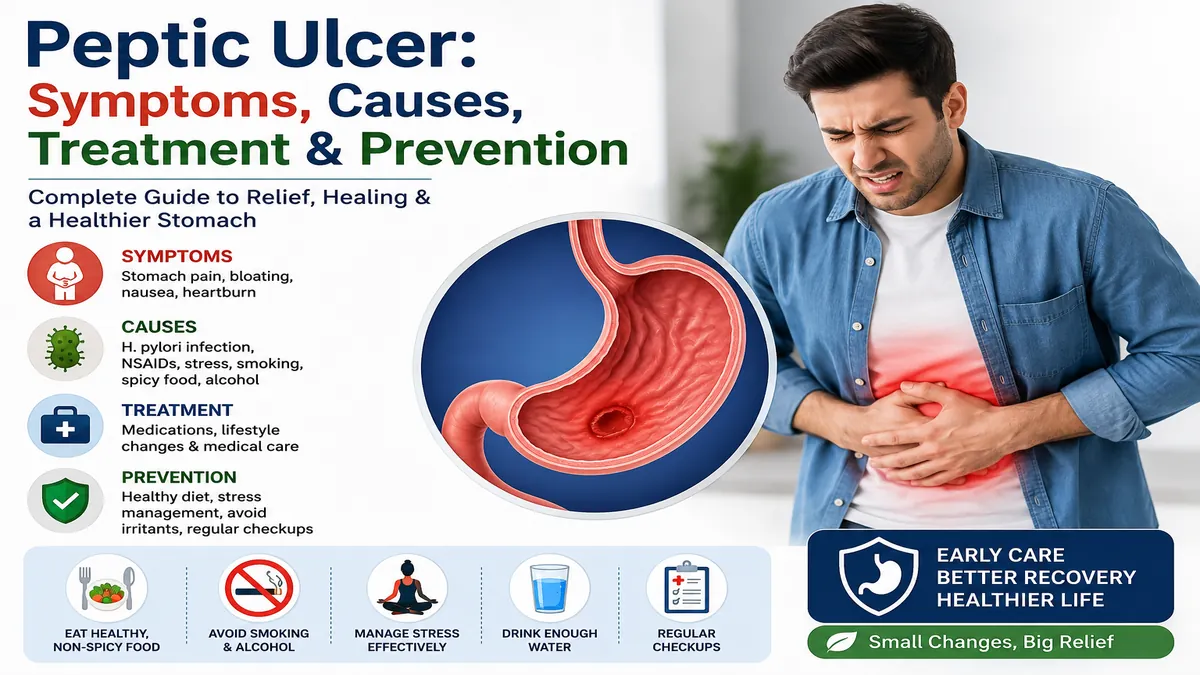
What Is a Peptic Ulcer?
A peptic ulcer is an open sore that develops in the lining of the stomach or the first part of the small intestine, called the duodenum. These ulcers occur when the protective lining of the digestive tract becomes damaged, allowing stomach acid and digestive juices to irritate the underlying tissue.
Peptic ulcers are generally classified into two main types:
- Gastric ulcers: Develop in the lining of the stomach.
- Duodenal ulcers: Develop in the lining of the duodenum.
Peptic ulcers can affect people of different ages. With appropriate diagnosis and treatment, most ulcers can heal successfully.
Peptic Ulcer Symptoms
Some people with peptic ulcers may have mild symptoms or no noticeable symptoms, particularly during the early stages. When symptoms occur, they may include:
1. Burning or Abdominal Pain
A burning, aching, or gnawing sensation in the upper abdomen is one of the most common symptoms. The pain may come and go and can sometimes occur when the stomach is empty.
2. Indigestion
Ulcers may cause indigestion, including discomfort, fullness, or a burning sensation after eating.
3. Bloating and Belching
Some people experience increased bloating, burping, or abdominal discomfort.
4. Nausea or Vomiting
Stomach irritation caused by an ulcer can sometimes result in nausea or vomiting.
5. Feeling Full Quickly
A person may feel full after eating a small amount of food, which can sometimes lead to reduced food intake.
6. Loss of Appetite
Persistent abdominal discomfort or nausea may reduce appetite.
7. Unexplained Weight Loss
Unintentional weight loss can occur when pain, nausea, or reduced appetite causes someone to eat less.
Warning Signs of a Complicated Peptic Ulcer
A peptic ulcer can occasionally cause serious complications such as bleeding or perforation. Seek urgent medical attention if you experience:
- Vomiting blood or material that resembles coffee grounds
- Black, tarry stools
- Sudden or severe abdominal pain
- Fainting, dizziness, or unusual weakness
- Signs of shock, such as rapid heartbeat or severe weakness
These symptoms can indicate internal bleeding or another medical emergency.
What Causes Peptic Ulcers?
The two most common causes of peptic ulcers are Helicobacter pylori (H. pylori) infection and the prolonged or frequent use of certain pain-relieving medicines.
1. H. pylori Infection
H. pylori is a type of bacterium that can live in the stomach and damage its protective lining. It can trigger inflammation and increase the risk of developing peptic ulcers.
Not everyone infected with H. pylori develops an ulcer, but the infection is an important risk factor.
2. NSAID Use
Nonsteroidal anti-inflammatory drugs (NSAIDs), such as ibuprofen, naproxen, and aspirin, can irritate or weaken the stomach’s protective lining.
The risk may increase with:
- High doses
- Long-term use
- Combining more than one NSAID
- Older age
- Previous history of ulcers
- Certain other medicines or medical conditions
If you regularly take NSAIDs, discuss their risks and possible alternatives with a healthcare professional.
Other Risk Factors
Several factors can increase the likelihood of developing or worsening an ulcer, including:
- Smoking
- Heavy alcohol consumption
- Previous peptic ulcer disease
- Certain medications
- Severe physical stress from serious illness or injury
- A family history of ulcer disease in some cases
Does Stress Cause Peptic Ulcers?
Everyday emotional stress is not considered a primary cause of most peptic ulcers. However, severe physical stress associated with serious illness, major injury, burns, or critical illness can contribute to ulcer formation.
Stress may also make existing digestive symptoms feel worse.
How Are Peptic Ulcers Diagnosed?
A healthcare professional may begin with your symptoms, medical history, medication use, and physical examination.
Depending on the situation, tests may include:
H. pylori Tests
Doctors may use breath, stool, or other tests to determine whether H. pylori infection is present.
Upper Endoscopy
An upper gastrointestinal endoscopy allows a doctor to examine the esophagus, stomach, and duodenum using a flexible camera. A small tissue sample may also be collected when necessary.
Other Tests
Blood, stool, or imaging tests may sometimes be used depending on symptoms and suspected complications.
Peptic Ulcer Treatment
Treatment depends on the underlying cause and whether complications are present.
1. Antibiotics for H. pylori
When H. pylori infection is responsible for an ulcer, treatment generally involves a combination of antibiotics and acid-reducing medicines.
Because antibiotic resistance varies, the exact treatment regimen should be selected by a healthcare professional.
Completing the prescribed course is important to help eliminate the infection and reduce the risk of recurrence.
2. Acid-Reducing Medicines
Medicines that reduce stomach acid can help relieve symptoms and give the ulcer time to heal.
Commonly used medicines include:
- Proton pump inhibitors (PPIs)
- H2-receptor blockers
The appropriate medicine and duration depend on the individual’s condition and the cause of the ulcer.
3. Changing or Stopping NSAIDs
If an ulcer is associated with NSAID use, a healthcare professional may recommend reducing the dose, stopping the medicine, or switching to another treatment when appropriate.
Do not stop prescribed aspirin or other medications without medical advice, particularly if they are being used to reduce cardiovascular risk.
4. Protective Medicines
In some situations, doctors may prescribe medicines that help protect the stomach lining, depending on the cause and severity of the ulcer.
Lifestyle Changes That May Help
Lifestyle changes cannot replace medical treatment when an ulcer is present, but they may help reduce irritation and support digestive health.
Avoid Smoking
Smoking can interfere with ulcer healing and may increase the likelihood of complications or recurrence.
Limit Alcohol
Alcohol can irritate the stomach lining and may worsen symptoms. Limiting or avoiding alcohol can be beneficial while an ulcer is healing.
Be Careful With Painkillers
Avoid taking NSAIDs more frequently or at higher doses than recommended. Ask a healthcare professional about safer alternatives if you regularly need pain relief.
Eat According to Your Symptoms
There is no universal “ulcer diet.” However, some foods or drinks may worsen symptoms for certain people. If a particular food consistently causes discomfort, reducing or avoiding it may help.
Foods to Avoid With a Peptic Ulcer
No specific food causes most peptic ulcers, but certain foods and beverages may aggravate symptoms. Depending on individual tolerance, you may want to limit:
- Very spicy foods
- Alcohol
- Large amounts of caffeine
- Highly acidic foods if they trigger symptoms
- Very fatty or greasy meals
Rather than following a highly restrictive diet, focus on balanced meals and identify personal triggers.
Can Peptic Ulcers Heal?
Yes. Most peptic ulcers can heal with appropriate treatment, particularly when the underlying cause is addressed.
For H. pylori-related ulcers, eliminating the infection is an important part of treatment. For NSAID-related ulcers, reducing or stopping the offending medicine under medical guidance and controlling stomach acid can promote healing.
Follow-up may be recommended to confirm that treatment has worked, especially in certain cases.
What Happens If a Peptic Ulcer Is Left Untreated?
An untreated ulcer can sometimes lead to serious complications, including:
Internal Bleeding
An ulcer may damage a blood vessel and cause bleeding. Severe blood loss can become life-threatening.
Perforation
In rare cases, an ulcer can create a hole through the stomach or intestinal wall. This can cause severe abdominal pain and infection inside the abdomen and requires emergency treatment.
Gastric Outlet Obstruction
Swelling or scarring from an ulcer can sometimes interfere with the movement of food out of the stomach, causing persistent vomiting and early fullness.
Peptic Ulcer Prevention
Not every ulcer can be prevented, but several steps can lower the risk:
- Use NSAIDs only as directed.
- Talk to your doctor if you need long-term pain-relieving medication.
- Avoid smoking.
- Limit alcohol consumption.
- Seek medical attention for persistent upper abdominal pain.
- Get tested for H. pylori when recommended.
- Take prescribed ulcer medicines exactly as directed.
Frequently Asked Questions
What is the most common symptom of a peptic ulcer?
Upper abdominal burning or aching pain is a common symptom. However, some people with peptic ulcers may have few or no symptoms.
What are the main causes of peptic ulcers?
The two major causes are H. pylori infection and regular or prolonged use of NSAIDs such as ibuprofen or naproxen.
Can a peptic ulcer go away on its own?
Some ulcers may heal, but untreated ulcers can persist or cause complications. Medical evaluation is important to identify the cause and determine appropriate treatment.
Can stress cause a stomach ulcer?
Ordinary emotional stress is not considered a primary cause of most peptic ulcers. Severe physical stress from critical illness or major injury can contribute to certain types of ulcers.
Is a peptic ulcer curable?
Most peptic ulcers can be successfully treated. Treatment usually focuses on eliminating H. pylori when present, reducing stomach acid, and addressing medicines or lifestyle factors that contribute to the ulcer.
Is milk good for a stomach ulcer?
Milk may provide temporary relief for some people, but it does not heal an ulcer and is not considered a treatment. Large amounts may increase acid production in some circumstances.
When should I see a doctor?
See a healthcare professional if you have persistent upper abdominal pain, recurring indigestion, unexplained weight loss, repeated vomiting, or other ongoing digestive symptoms. Seek emergency care for vomiting blood, black stools, fainting, or sudden severe abdominal pain.
Final Takeaway
Peptic ulcers are open sores that commonly develop in the stomach or duodenum. H. pylori infection and NSAID use are the leading causes. Symptoms may include upper abdominal pain, indigestion, bloating, nausea, and loss of appetite.
The good news is that most peptic ulcers can heal with appropriate treatment. Identifying the underlying cause, using prescribed medicines correctly, and avoiding factors that interfere with healing can help reduce complications and recurrence.