


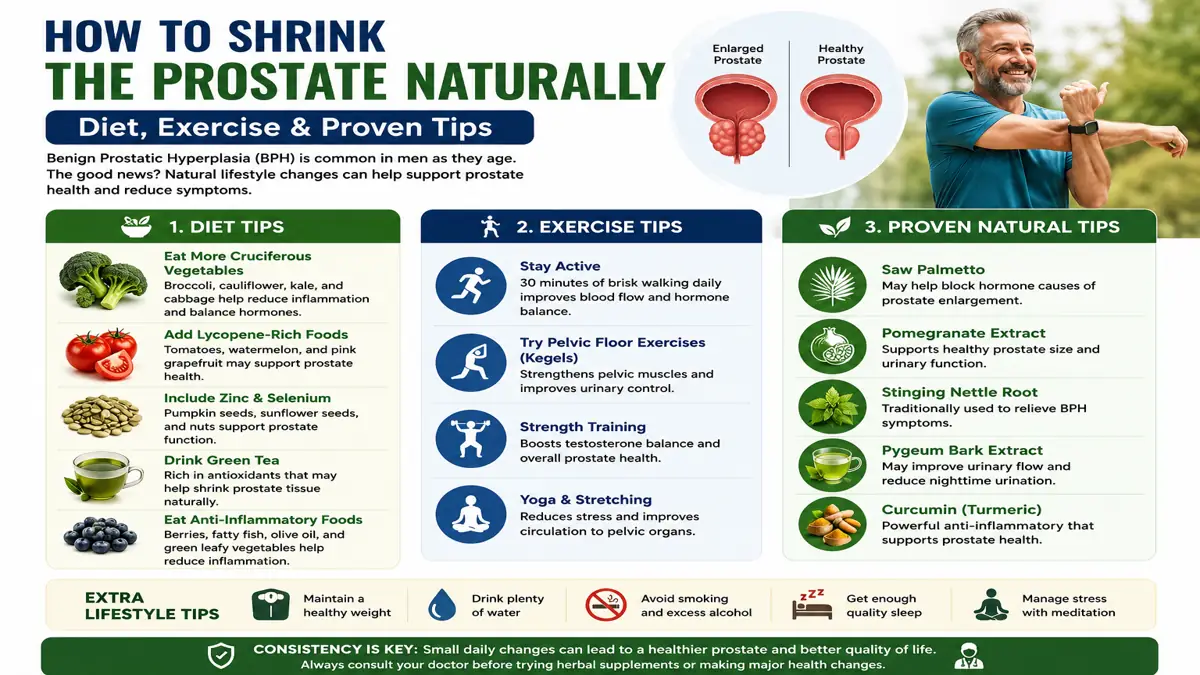
An enlarged prostate, medically known as benign prostatic hyperplasia (BPH), is one of the most common health concerns affecting men over the age of 50. While BPH is not cancer and does not increase the risk of prostate cancer, it can cause uncomfortable urinary symptoms that interfere with daily life.
Many men wonder whether it’s possible to shrink the prostate naturally. Although natural methods may not dramatically reduce prostate size, research suggests that healthy lifestyle changes, proper nutrition, regular exercise, and certain supplements may help reduce inflammation, improve urinary symptoms, and support overall prostate health.
This guide explains the best evidence-based natural approaches and when it’s important to seek medical treatment.
What Is an Enlarged Prostate?
The prostate is a walnut-sized gland located below the bladder. It surrounds the urethra, the tube that carries urine out of the body.
As men age, hormonal changes can cause the prostate to grow larger. When the gland enlarges, it can squeeze the urethra and make urination more difficult.
Common Symptoms
- Frequent urination
- Waking up several times at night to urinate (nocturia)
- Weak urine stream
- Difficulty starting urination
- Dribbling after urination
- Feeling that the bladder doesn’t empty completely
- Sudden urge to urinate
Can You Shrink the Prostate Naturally?
Natural treatments generally do not significantly shrink the prostate the way prescription medications or surgery can. However, they may:
- Reduce prostate inflammation
- Improve urinary flow
- Ease urinary symptoms
- Slow further enlargement
- Improve bladder function
For men with mild to moderate symptoms, lifestyle changes may provide meaningful relief.
1. Maintain a Healthy Weight
Being overweight increases the risk of prostate enlargement and worsens urinary symptoms.
Excess body fat contributes to:
- Chronic inflammation
- Hormonal imbalance
- Insulin resistance
- Increased pressure on the bladder
Losing even 5–10% of body weight may help improve urinary symptoms.
Tips
- Eat balanced meals
- Reduce sugary foods
- Avoid overeating
- Stay physically active
2. Exercise Regularly
Regular physical activity improves blood circulation, reduces inflammation, and supports hormone balance.
Studies have shown that physically active men often experience fewer urinary symptoms than sedentary men.
Best Exercises
- Brisk walking
- Cycling (with a comfortable seat)
- Swimming
- Strength training
- Yoga
- Stretching
Aim for 150 minutes of moderate exercise each week.
3. Eat a Prostate-Friendly Diet
Diet plays an important role in prostate health.
Foods That May Help
Tomatoes
Tomatoes contain lycopene, an antioxidant linked to better prostate health.
Cooked tomatoes may provide more absorbable lycopene than raw tomatoes.
Fatty Fish
Salmon, sardines, tuna, and mackerel provide omega-3 fatty acids that may reduce inflammation.
Leafy Greens
Spinach, kale, broccoli, and cabbage are rich in vitamins and antioxidants.
Nuts and Seeds
Pumpkin seeds, walnuts, flaxseeds, and sunflower seeds provide zinc and healthy fats.
Fruits
Berries, oranges, pomegranates, and watermelon contain antioxidants that may protect prostate cells.
Legumes
Beans and lentils provide fiber and plant protein while supporting heart and metabolic health.
4. Reduce Red Meat and Processed Foods
A diet high in processed foods may contribute to inflammation.
Try limiting:
- Bacon
- Sausages
- Processed meats
- Fried foods
- Sugary drinks
- Fast food
- Highly processed snacks
Instead, choose whole, minimally processed foods.
5. Limit Caffeine and Alcohol
Both caffeine and alcohol can irritate the bladder and increase urinary frequency.
Consider reducing:
- Coffee
- Energy drinks
- Strong tea
- Beer
- Wine
- Spirits
Many men notice symptom improvement after cutting back.
6. Drink Fluids Wisely
Staying hydrated is important, but drinking large amounts at once can worsen urinary urgency.
Helpful habits include:
- Drink water throughout the day.
- Reduce fluid intake 2–3 hours before bedtime.
- Avoid excessive evening beverages.
- Stay hydrated during hot weather or exercise.
7. Train Your Bladder
Bladder training may reduce frequent urination.
Try:
- Delaying urination by a few minutes when possible
- Scheduling bathroom visits
- Practicing relaxation techniques
- Gradually increasing the time between bathroom trips
8. Strengthen Pelvic Floor Muscles
Pelvic floor (Kegel) exercises improve bladder control and may reduce urinary leakage.
How to Perform Kegels
- Tighten the muscles used to stop urine flow.
- Hold for 5 seconds.
- Relax for 5 seconds.
- Repeat 10–15 times.
- Perform three sets daily.
9. Manage Stress
Stress may worsen urinary urgency by increasing muscle tension and bladder sensitivity.
Stress-reducing activities include:
- Meditation
- Deep breathing
- Yoga
- Walking outdoors
- Quality sleep
- Mindfulness
10. Consider Evidence-Based Supplements
Some supplements have been studied for prostate health, but results are mixed. Always consult a healthcare provider before starting supplements, especially if you take other medications.
Saw Palmetto
Saw palmetto is one of the most popular herbal remedies for BPH. While some men report symptom relief, large clinical studies have shown inconsistent benefits.
Beta-Sitosterol
This plant compound may improve urinary flow and reduce symptoms in some men, though it does not appear to shrink the prostate.
Pygeum
Extracted from the African plum tree, pygeum may modestly improve nighttime urination and urinary flow in certain individuals.
Rye Grass Pollen Extract
Some research suggests it may help reduce urinary symptoms, but more high-quality studies are needed.
Foods Rich in Zinc
Zinc supports normal prostate function.
Healthy sources include:
- Pumpkin seeds
- Oysters
- Chickpeas
- Cashews
- Beef (in moderation)
- Lentils
Avoid taking high-dose zinc supplements unless recommended by a healthcare professional.
Get Better Sleep
Poor sleep is associated with increased nighttime urination.
Improve sleep by:
- Keeping a regular sleep schedule
- Limiting screen time before bed
- Reducing caffeine in the afternoon
- Avoiding heavy evening meals
When Natural Remedies Are Not Enough
Natural methods work best for mild symptoms. If symptoms become severe, medical treatment may be necessary.
Your healthcare provider may recommend:
- Alpha-blockers
- 5-alpha reductase inhibitors
- Combination therapy
- Minimally invasive procedures
- Surgery for severe cases
When to See a Doctor
Seek medical attention if you experience:
- Blood in the urine
- Inability to urinate
- Severe pain
- Fever with urinary symptoms
- Recurrent urinary tract infections
- Persistent worsening of symptoms
- Unexplained weight loss
These symptoms require prompt medical evaluation.
Frequently Asked Questions
Can the prostate shrink naturally?
Natural lifestyle changes may help reduce inflammation and improve urinary symptoms, but they generally do not significantly shrink an enlarged prostate. Prescription medications are more effective at reducing prostate size.
What foods are best for prostate health?
Tomatoes, fatty fish, leafy green vegetables, berries, pumpkin seeds, legumes, and foods rich in healthy fats and antioxidants are among the best choices for supporting prostate health.
Does exercise help an enlarged prostate?
Yes. Regular exercise can improve urinary symptoms, support weight management, reduce inflammation, and promote overall prostate health.
Is saw palmetto effective?
Evidence is mixed. Some men experience symptom relief, while high-quality studies have not consistently shown significant benefits. Discuss supplement use with your healthcare provider.
Can drinking less water help?
Do not reduce hydration overall. Instead, spread fluid intake throughout the day and limit beverages a few hours before bedtime to help reduce nighttime urination.
Key Takeaways
While there is no guaranteed natural way to significantly shrink an enlarged prostate, healthy lifestyle changes can play an important role in managing benign prostatic hyperplasia (BPH). Maintaining a healthy weight, exercising regularly, following a balanced diet rich in fruits and vegetables, limiting bladder irritants like caffeine and alcohol, and practicing pelvic floor exercises may improve urinary symptoms and support long-term prostate health.
If your symptoms are persistent, worsening, or affecting your quality of life, consult a healthcare provider. Early evaluation can help determine the best treatment plan and rule out other prostate conditions.