


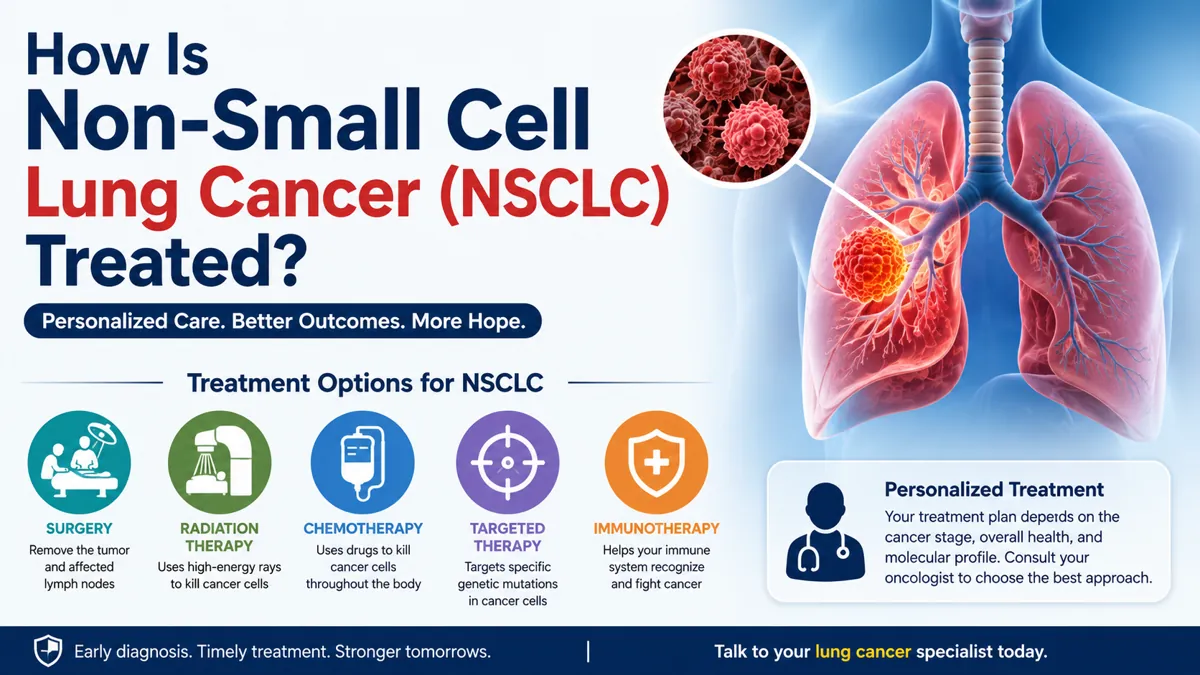
Non-small cell lung cancer (NSCLC) is the most common type of lung cancer, accounting for approximately 85% of all lung cancer cases. Thanks to advances in medical research, treatment options have improved significantly over the past decade, allowing many patients to live longer and maintain a better quality of life.
The best treatment for NSCLC depends on several factors, including the stage of the cancer, its genetic characteristics, the patient’s overall health, and personal preferences. In many cases, doctors combine two or more treatments to achieve the best results.
This guide explains the most effective treatment options for non-small cell lung cancer and what patients can expect during their treatment journey.
How Is NSCLC Diagnosed Before Treatment?
Before recommending a treatment plan, doctors perform several tests to understand the cancer completely.
These may include:
- CT scan
- PET scan
- MRI (if brain involvement is suspected)
- Bronchoscopy
- Needle or surgical biopsy
- Blood tests
- Pulmonary function tests
Doctors also perform molecular biomarker testing on tumor tissue or blood samples. This helps identify genetic mutations that may respond to targeted therapies.
Common biomarkers include:
- EGFR
- ALK
- ROS1
- BRAF
- MET
- RET
- KRAS
- NTRK
- PD-L1 expression
These results help personalize treatment.
Treatment Depends on the Stage of NSCLC
Treatment varies according to how far the cancer has spread.
Stage I NSCLC
Cancer is limited to the lung.
Treatment usually includes:
- Surgery (preferred)
- Stereotactic body radiation therapy (SBRT) if surgery isn’t possible
- Adjuvant chemotherapy in selected high-risk patients
- Targeted therapy after surgery for certain EGFR-positive cancers
Early-stage NSCLC has the highest chance of cure.
Stage II NSCLC
Cancer has spread to nearby lymph nodes.
Treatment often involves:
- Surgical removal of the tumor
- Chemotherapy after surgery
- Immunotherapy or targeted therapy for eligible patients
- Radiation therapy if surgery isn’t possible
Stage III NSCLC
Cancer has spread further within the chest but not to distant organs.
Treatment may include:
- Chemotherapy plus radiation therapy
- Surgery for selected patients
- Immunotherapy after chemoradiation
- Targeted therapy in specific genetic mutations
Management of Stage III disease usually requires a multidisciplinary team.
Stage IV NSCLC
Cancer has spread to distant organs such as the brain, liver, bones, or adrenal glands.
Although Stage IV NSCLC is generally not curable, many treatments can control the disease for years.
Options include:
- Targeted therapy
- Immunotherapy
- Chemotherapy
- Radiation therapy
- Surgery for selected situations
- Palliative care
Surgery for NSCLC
Surgery offers the best chance of curing early-stage NSCLC.
Common surgical procedures include:
Lobectomy
The surgeon removes the entire lobe containing the cancer.
This is considered the gold standard for many early-stage tumors.
Segmentectomy or Wedge Resection
Only part of the lung is removed.
These procedures may be recommended for:
- Small tumors
- Older adults
- Patients with limited lung function
Pneumonectomy
The entire lung is removed.
This is reserved for larger or centrally located tumors.
Risks of Surgery
Possible complications include:
- Infection
- Bleeding
- Pneumonia
- Blood clots
- Reduced lung capacity
Recovery usually takes several weeks.
Radiation Therapy
Radiation uses high-energy beams to destroy cancer cells.
It may be used:
- Instead of surgery
- After surgery
- Alongside chemotherapy
- To relieve symptoms in advanced cancer
Types of Radiation
External Beam Radiation Therapy (EBRT)
The most common approach.
Stereotactic Body Radiation Therapy (SBRT)
Delivers highly focused radiation in a few treatments.
Often used for small tumors when surgery isn’t possible.
Side Effects
- Fatigue
- Skin irritation
- Difficulty swallowing
- Cough
- Inflammation of lung tissue (radiation pneumonitis)
Chemotherapy
Chemotherapy uses drugs that kill rapidly dividing cancer cells.
It may be given:
- Before surgery (neoadjuvant)
- After surgery (adjuvant)
- Along with radiation
- For advanced NSCLC
Common chemotherapy drugs include:
- Cisplatin
- Carboplatin
- Pemetrexed
- Paclitaxel
- Docetaxel
- Gemcitabine
Common Side Effects
- Nausea
- Hair loss
- Fatigue
- Low blood counts
- Increased infection risk
- Mouth sores
Many side effects can now be managed effectively with supportive medications.
Targeted Therapy
Targeted therapy is one of the biggest advances in NSCLC treatment.
These drugs specifically attack cancer cells with certain genetic mutations while causing less damage to healthy cells.
Examples include treatments for:
- EGFR mutations
- ALK rearrangements
- ROS1 fusion
- RET fusion
- MET exon 14 skipping
- BRAF V600E mutation
- KRAS G12C mutation
Benefits
- Often more effective than chemotherapy
- Usually taken as pills
- Better tolerated by many patients
- Can control disease for years in some individuals
Possible Side Effects
- Skin rash
- Diarrhea
- Nail changes
- Liver abnormalities
- Fatigue
Immunotherapy
Immunotherapy helps the body’s immune system recognize and attack cancer cells.
It has transformed treatment for many patients with advanced NSCLC.
Drugs known as immune checkpoint inhibitors block proteins such as PD-1, PD-L1, or CTLA-4.
Immunotherapy may be used:
- Alone
- With chemotherapy
- After chemoradiation
- Following surgery in selected patients
Side Effects
Unlike chemotherapy, immunotherapy may trigger immune-related side effects, including:
- Skin rash
- Thyroid problems
- Colitis
- Hepatitis
- Lung inflammation (pneumonitis)
Early recognition allows prompt treatment.
Combination Therapy
Many patients benefit from combining treatments.
Examples include:
- Surgery plus chemotherapy
- Chemotherapy plus radiation
- Chemotherapy plus immunotherapy
- Surgery followed by targeted therapy
- Immunotherapy after chemoradiation
The combination depends on the stage and molecular characteristics of the cancer.
Clinical Trials
Clinical trials give patients access to promising new therapies before they become widely available.
Researchers continue studying:
- New immunotherapy combinations
- Personalized cancer vaccines
- Novel targeted therapies
- Antibody-drug conjugates
- Cell-based therapies
For eligible patients, participation in a clinical trial may be worth discussing with their oncology team.
Palliative and Supportive Care
Palliative care is not only for end-of-life situations.
It focuses on improving quality of life by managing:
- Pain
- Shortness of breath
- Fatigue
- Anxiety
- Depression
- Nutrition
- Sleep problems
Studies suggest that early palliative care may improve both quality of life and survival in some patients with advanced lung cancer.
Lifestyle Tips During NSCLC Treatment
Patients can support their treatment by:
- Quitting smoking completely
- Eating a balanced, protein-rich diet
- Staying physically active as tolerated
- Getting adequate sleep
- Keeping vaccinations up to date
- Attending all follow-up appointments
- Reporting new symptoms promptly
These habits can improve recovery and overall well-being.
Prognosis
The outlook for NSCLC depends on:
- Stage at diagnosis
- Tumor genetics
- Response to treatment
- Overall health
- Smoking status
While early-stage disease may be cured with surgery, advanced NSCLC is increasingly becoming a manageable chronic illness for many patients due to modern targeted therapies and immunotherapy.
Frequently Asked Questions (FAQs)
Can non-small cell lung cancer be cured?
Yes. Early-stage NSCLC can often be cured with surgery, sometimes combined with chemotherapy or radiation therapy. Advanced stages are usually managed rather than cured, although long-term disease control is possible for some patients.
What is the newest treatment for NSCLC?
Recent advances include targeted therapies for specific gene mutations, immune checkpoint inhibitors, antibody-drug conjugates, and personalized treatment plans based on molecular testing.
Is chemotherapy always required?
No. Some patients are treated with surgery alone, while others may receive targeted therapy or immunotherapy without chemotherapy, depending on the cancer’s stage and molecular profile.
Which treatment works best?
There is no single best treatment for everyone. The most effective approach depends on the cancer stage, genetic mutations, PD-L1 expression, and the patient’s overall health.
How long does NSCLC treatment last?
Treatment duration varies. Surgery is typically a one-time procedure followed by recovery, while chemotherapy often lasts several months. Targeted therapy and immunotherapy may continue for months or years if they remain effective and are well tolerated.
Conclusion
Treatment for non-small cell lung cancer has advanced dramatically in recent years. Instead of relying solely on chemotherapy, doctors now use personalized treatment plans that may include surgery, radiation therapy, targeted therapy, immunotherapy, or combinations of these approaches. Early diagnosis, comprehensive molecular testing, and close collaboration with a multidisciplinary cancer care team are key to achieving the best possible outcomes. If you or a loved one has been diagnosed with NSCLC, discussing all available treatment options with an oncologist can help ensure care is tailored to your specific type of cancer and overall health.
Disclaimer: The information provided in this article is intended for general educational purposes only. It should not be considered medical advice or used as a replacement for consultation with a qualified healthcare professional. Every case of non-small cell lung cancer (NSCLC) is unique, and treatment decisions should always be made in consultation with your doctor or oncology team. If you have symptoms, concerns, or questions about your health, seek personalized guidance from a licensed medical provider.