


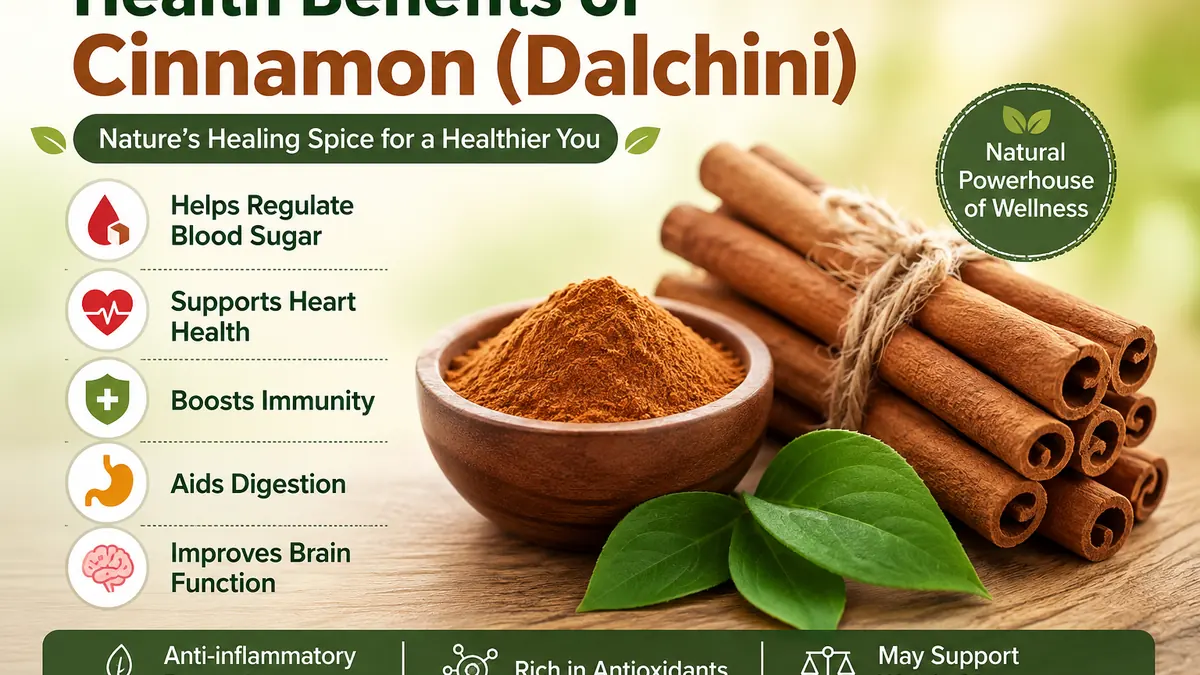
Cinnamon, commonly known as dalchini, is a fragrant spice made from the inner bark of several Cinnamomum tree species. It has been used for centuries in traditional cooking and wellness practices and is now widely studied for its potential health benefits.
From adding flavor to tea and desserts to being used in savory dishes, cinnamon is a versatile spice. Research suggests that its naturally occurring compounds may have antioxidant, anti-inflammatory, and metabolic effects. However, cinnamon should be viewed as part of a balanced diet rather than a replacement for medical treatment.
What Is Cinnamon (Dalchini)?
Cinnamon is obtained by drying and rolling the inner bark of Cinnamomum trees. It is available as cinnamon sticks, ground cinnamon, tea, extracts, and supplements.
The two commonly discussed varieties are:
- Ceylon cinnamon: Sometimes called “true cinnamon,” it contains relatively low amounts of coumarin.
- Cassia cinnamon: Commonly available in grocery stores and generally stronger in flavor, but it contains higher amounts of coumarin.
Coumarin is a naturally occurring compound that can cause liver problems when consumed in excessive amounts over long periods.
Nutritional Value of Cinnamon
Cinnamon is usually consumed in small quantities, so it does not contribute large amounts of calories or nutrients to the diet. However, it contains several plant compounds, including polyphenols and other antioxidants.
Its potential health effects are mainly associated with these bioactive compounds rather than its calorie or vitamin content.
10 Potential Health Benefits of Cinnamon
1. May Support Healthy Blood Sugar Levels
One of the most researched potential benefits of cinnamon is its effect on blood glucose regulation.
Some studies suggest that cinnamon may improve insulin sensitivity and influence glucose metabolism. This has led to interest in cinnamon as a dietary addition for people concerned about blood sugar.
However, evidence is mixed, and cinnamon should not replace prescribed diabetes medication or a medically recommended diet.
2. Rich in Antioxidants
Cinnamon contains plant compounds with antioxidant activity. Antioxidants help protect cells from oxidative stress caused by unstable molecules known as free radicals.
Including antioxidant-rich foods and spices such as cinnamon in a varied diet may contribute to overall health.
3. May Have Anti-Inflammatory Properties
Chronic inflammation is associated with several long-term health conditions. Certain compounds found in cinnamon have demonstrated anti-inflammatory activity in laboratory and experimental research.
While these findings are promising, more human research is needed to determine how much cinnamon is required to produce meaningful effects in people.
4. May Support Heart Health
Some research has explored whether cinnamon may help improve cardiovascular risk factors, including blood lipid levels and blood pressure.
The results of studies vary, so cinnamon should not be considered a treatment for high cholesterol or hypertension. A heart-healthy diet, regular physical activity, adequate sleep, and prescribed treatment remain much more important.
5. May Support Healthy Cholesterol Levels
Research has investigated cinnamon’s potential effects on cholesterol and triglycerides. Some studies have reported improvements in certain lipid measurements, while others have found limited or inconsistent benefits.
More high-quality clinical trials are needed before cinnamon can be recommended specifically for cholesterol management.
6. May Support Digestive Health
Cinnamon has traditionally been used in various cultures to support digestion. Its warming aroma and flavor also make it a popular ingredient in herbal beverages.
Although cinnamon may be a pleasant addition to a meal, there is not enough strong clinical evidence to consider it a treatment for digestive disorders.
7. May Have Antimicrobial Properties
Some compounds in cinnamon have demonstrated antimicrobial activity in laboratory studies. Cinnamon oil and certain cinnamon compounds have been investigated for their effects against various microorganisms.
However, laboratory findings do not mean that eating cinnamon can treat infections. Do not use cinnamon as a substitute for antibiotics or other prescribed treatments.
8. May Support Oral Health
Cinnamon contains compounds that have been studied for their antimicrobial properties, including against microorganisms associated with oral health.
That said, cinnamon cannot replace brushing, flossing, professional dental care, or fluoride toothpaste.
9. May Help Add Flavor Without Excess Sugar
One simple benefit of cinnamon is that it can make foods taste sweeter and more flavorful without adding significant sugar.
You can sprinkle it over oatmeal, fruit, unsweetened yogurt, or whole-grain foods. This can be useful when trying to reduce added sugar while maintaining flavor.
10. May Support Overall Healthy Eating
Cinnamon is an easy way to add variety and flavor to a nutritious diet. Used with fruits, vegetables, whole grains, nuts, seeds, and other nutrient-rich foods, it can contribute to a balanced eating pattern.
Its benefits are best considered as part of an overall healthy lifestyle rather than as a standalone remedy.
How to Use Cinnamon (Dalchini) in Your Diet
Cinnamon can be incorporated into everyday meals in several simple ways:
- Add a small amount to oatmeal or porridge.
- Sprinkle cinnamon over sliced apples or other fruit.
- Mix it into unsweetened yogurt.
- Add it to smoothies.
- Use cinnamon sticks to flavor tea.
- Add ground cinnamon to homemade soups or curries where appropriate.
- Use it in healthy baked dishes while limiting added sugar.
A small culinary amount is generally sufficient for flavor.
Cinnamon Tea: Is It Healthy?
Cinnamon tea is a popular way to consume dalchini. You can prepare it by steeping a small cinnamon stick in hot water.
Cinnamon tea can be a flavorful, low-calorie beverage, particularly when it is consumed without added sugar. However, drinking cinnamon tea should not be considered a proven treatment for diabetes, weight loss, infections, or other medical conditions.
Cinnamon and Weight Loss
Cinnamon is sometimes promoted as a natural weight-loss remedy. While research has investigated possible effects on blood sugar, metabolism, and body composition, evidence is not strong enough to conclude that cinnamon alone causes meaningful weight loss.
For sustainable weight management, focus on:
- A balanced calorie-controlled diet
- Adequate protein and fiber
- Regular physical activity
- Good sleep
- Limiting highly processed foods and excess added sugar
Adding cinnamon to healthy foods may improve flavor, but it is not a magic fat-burning ingredient.
How Much Cinnamon Should You Consume?
There is no universally established daily dose of cinnamon for general health. The appropriate amount depends on the type of cinnamon, how it is consumed, and individual health circumstances.
For routine culinary use, small amounts used in food are generally preferable to taking concentrated cinnamon supplements without professional guidance.
Cassia cinnamon deserves particular caution because it can contain substantially more coumarin than Ceylon cinnamon.
Cinnamon Side Effects and Safety
Cinnamon is generally well tolerated when consumed in normal food amounts. Excessive consumption, particularly of cassia cinnamon, may cause problems because of its coumarin content.
Potential concerns include:
- Liver injury with excessive long-term exposure to coumarin
- Mouth irritation in sensitive individuals
- Allergic reactions
- Interaction with certain medications
- Possible blood sugar changes when combined with diabetes medicines
Cinnamon essential oil is highly concentrated and should not be consumed internally unless specifically directed by a qualified healthcare professional.
Who Should Be Careful With Cinnamon?
People who have liver disease, diabetes, allergies to cinnamon, or take regular medications should talk with a healthcare professional before using large amounts of cinnamon or cinnamon supplements.
Pregnant or breastfeeding individuals should also seek professional advice before using concentrated cinnamon products or supplements.
Ceylon Cinnamon vs. Cassia Cinnamon
The two main types differ in their chemical composition.
Ceylon cinnamon generally contains much less coumarin, making it a potentially preferable choice for frequent culinary use.
Cassia cinnamon is widely available and has a stronger, more intense flavor, but its higher coumarin content means that consuming large quantities regularly may carry greater risk.
For everyday cooking, using modest quantities is the key consideration.
Frequently Asked Questions About Cinnamon
Is cinnamon good for health?
Cinnamon contains antioxidants and other plant compounds that may have beneficial biological effects. Research suggests possible benefits related to blood sugar, inflammation, and cardiovascular risk factors, but the evidence is not strong enough to treat cinnamon as a medicine.
Can cinnamon lower blood sugar?
Some studies suggest cinnamon may modestly influence blood glucose and insulin sensitivity, but results are inconsistent. People with diabetes should not use cinnamon instead of prescribed medication.
Is cinnamon good for digestion?
Cinnamon has traditionally been used to support digestion, but strong clinical evidence for treating digestive disorders is limited.
Can cinnamon help with weight loss?
There is insufficient evidence to show that cinnamon alone produces significant weight loss. It can be a useful flavoring in a healthy diet because it adds flavor without much sugar or calories.
Which cinnamon is healthier: Ceylon or Cassia?
Ceylon cinnamon contains considerably less coumarin than cassia cinnamon. If cinnamon is consumed frequently or in larger culinary amounts, Ceylon cinnamon may be a preferable option.
Can I drink cinnamon tea every day?
A moderate amount of cinnamon tea may be suitable for many healthy adults, but excessive intake is not recommended. Avoid consuming large amounts regularly, particularly when using cassia cinnamon.
Bottom Line
Cinnamon (dalchini) is more than just a flavorful spice. It contains antioxidant and other bioactive compounds that may support aspects of metabolic and cardiovascular health. However, many of its proposed benefits still require stronger human evidence.
For most people, the best approach is to use cinnamon in modest culinary amounts as part of a balanced diet. Avoid relying on cinnamon supplements or large doses to treat medical conditions, and consult a healthcare professional if you have an underlying condition or take medications.