
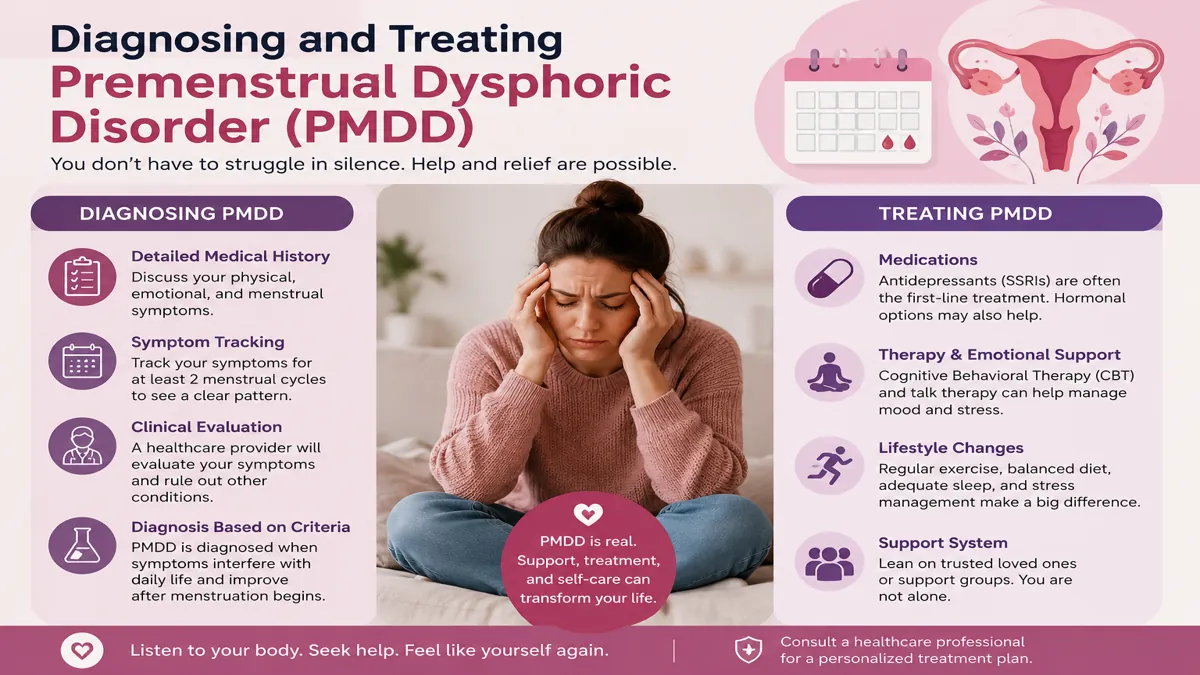
Premenstrual dysphoric disorder (PMDD) is a severe form of premenstrual syndrome (PMS) that affects a small percentage of women of reproductive age. While PMS may cause mild discomfort before a menstrual period, PMDD can significantly impact emotional well-being, relationships, work performance, and daily life.
The good news is that PMDD is a recognized medical condition, and effective treatments are available. Early diagnosis and the right combination of medication, therapy, and lifestyle changes can greatly improve symptoms and quality of life.
This guide explains how PMDD is diagnosed, treatment options available, and practical strategies for managing symptoms.
What Is Premenstrual Dysphoric Disorder (PMDD)?
Premenstrual dysphoric disorder is a hormone-sensitive mood disorder that develops during the luteal phase of the menstrual cycle, typically one to two weeks before menstruation begins.
Symptoms usually improve within a few days after the period starts and disappear completely until the next cycle.
Unlike ordinary PMS, PMDD causes severe emotional and psychological symptoms that interfere with daily functioning.
How Common Is PMDD?
Research suggests that approximately 3% to 8% of menstruating women experience PMDD. Although less common than PMS, PMDD often goes undiagnosed because its symptoms can resemble depression, anxiety disorders, or other mental health conditions.
Symptoms of PMDD
Symptoms generally appear during the second half of the menstrual cycle and improve after menstruation begins.
Emotional Symptoms
Women with PMDD may experience:
- Extreme mood swings
- Irritability or anger
- Persistent sadness
- Feelings of hopelessness
- Anxiety or panic attacks
- Increased sensitivity to rejection
- Crying spells
- Difficulty concentrating
- Feeling overwhelmed
- Loss of interest in usual activities
Physical Symptoms
Physical symptoms may include:
- Fatigue
- Headaches
- Breast tenderness
- Bloating
- Muscle or joint pain
- Changes in appetite
- Food cravings
- Sleep disturbances
- Weight gain due to fluid retention
Behavioral Symptoms
PMDD may also cause:
- Social withdrawal
- Difficulty completing daily tasks
- Relationship conflicts
- Reduced productivity at work or school
What Causes PMDD?
The exact cause remains unknown, but experts believe PMDD results from an abnormal response to the normal hormonal changes that occur during the menstrual cycle.
Several factors may contribute.
Hormonal Sensitivity
Women with PMDD appear to be unusually sensitive to normal fluctuations in estrogen and progesterone.
Brain Chemistry
Hormonal changes may affect serotonin, a brain chemical that regulates mood, sleep, and appetite.
Lower serotonin activity is thought to play an important role in PMDD symptoms.
Genetics
Family history may increase the likelihood of developing PMDD.
Stress
Chronic stress does not directly cause PMDD but may worsen symptoms.
How Is PMDD Diagnosed?
There is no single blood test or imaging scan that confirms PMDD.
Instead, healthcare providers diagnose the condition based on symptom patterns and medical history.
Step 1: Track Symptoms
Doctors usually recommend keeping a symptom diary for at least two menstrual cycles.
Patients record:
- Mood changes
- Physical symptoms
- Symptom severity
- Menstrual dates
Tracking helps determine whether symptoms occur only before menstruation and resolve afterward.
Step 2: Medical Evaluation
A healthcare provider may perform:
- Physical examination
- Gynecological assessment
- Medical history review
- Mental health evaluation
This helps rule out other conditions.
Step 3: Rule Out Other Disorders
Conditions with similar symptoms include:
- Major depressive disorder
- Anxiety disorders
- Bipolar disorder
- Thyroid disease
- Chronic fatigue syndrome
- Perimenopause
Proper diagnosis ensures appropriate treatment.
Diagnostic Criteria for PMDD
According to established psychiatric guidelines, PMDD diagnosis generally requires:
- Symptoms during most menstrual cycles
- Symptoms appearing in the week before menstruation
- Symptoms improving shortly after the period begins
- Symptoms disappearing after menstruation
- At least five symptoms, including one significant mood-related symptom
- Symptoms severe enough to interfere with work, school, or relationships
Treatment Options for PMDD
Treatment depends on symptom severity and individual health needs.
Many women benefit from combining several approaches.
1. Lifestyle Changes
Healthy habits can reduce symptom severity.
Exercise
Regular physical activity may:
- Improve mood
- Reduce anxiety
- Increase energy
- Improve sleep
Aim for 150 minutes of moderate exercise per week.
Healthy Diet
Eating a balanced diet may help stabilize mood.
Recommended foods include:
- Whole grains
- Fruits
- Vegetables
- Lean protein
- Healthy fats
- Calcium-rich foods
Limit:
- Salt
- Sugar
- Alcohol
- Caffeine
- Highly processed foods
Better Sleep
Good sleep hygiene includes:
- Going to bed at the same time
- Avoiding screens before bedtime
- Keeping the bedroom cool and quiet
- Limiting caffeine late in the day
Stress Management
Helpful techniques include:
- Yoga
- Meditation
- Deep breathing
- Journaling
- Mindfulness exercises
2. Medications
For moderate to severe PMDD, medications are often effective.
Selective Serotonin Reuptake Inhibitors (SSRIs)
SSRIs are considered the first-line treatment for PMDD.
Common medications include:
- Fluoxetine
- Sertraline
- Paroxetine
- Escitalopram
Unlike depression treatment, some women take SSRIs only during the luteal phase.
Hormonal Birth Control
Certain birth control pills may reduce hormone fluctuations and relieve symptoms.
Not every contraceptive works equally well, so treatment should be individualized.
Pain Relievers
Over-the-counter medications may help relieve:
- Headaches
- Muscle aches
- Menstrual cramps
Examples include ibuprofen and naproxen, if appropriate for your health.
Hormone-Suppressing Medications
For severe, treatment-resistant PMDD, specialists may prescribe medications that temporarily suppress ovulation.
These treatments are generally reserved for women who do not respond to standard therapies because they can have significant side effects.
3. Cognitive Behavioral Therapy (CBT)
CBT is one of the most effective non-medication treatments.
It helps women:
- Identify negative thought patterns
- Manage emotional reactions
- Reduce anxiety
- Improve coping skills
- Handle stress more effectively
Research shows CBT can provide lasting benefits, especially when combined with medical treatment.
Nutritional Supplements
Some studies suggest certain supplements may help, though evidence varies.
These include:
- Calcium
- Vitamin B6
- Magnesium
- Vitamin D
Always consult a healthcare provider before starting supplements, as they may interact with medications or may not be appropriate for everyone.
Can PMDD Be Cured?
There is currently no permanent cure for PMDD.
However, most women can successfully manage symptoms through:
- Medication
- Therapy
- Healthy lifestyle habits
- Stress reduction
- Regular medical follow-up
Symptoms often improve after menopause because menstrual cycles stop.
When Should You See a Doctor?
Seek medical advice if:
- Mood changes interfere with daily life.
- Symptoms occur every month.
- Depression or anxiety worsens before menstruation.
- You experience thoughts of self-harm or suicide.
- Home remedies are not helping.
Early diagnosis can prevent unnecessary suffering and improve long-term outcomes.
Tips for Living With PMDD
Managing PMDD is easier with a proactive approach:
- Track symptoms every month.
- Exercise regularly.
- Eat a nutrient-rich diet.
- Prioritize consistent sleep.
- Practice stress-management techniques.
- Limit alcohol and caffeine if they worsen symptoms.
- Follow your treatment plan as prescribed.
- Stay connected with supportive family members or friends.
Frequently Asked Questions (FAQs)
Is PMDD the same as PMS?
No. PMDD is much more severe than PMS. It involves significant emotional and physical symptoms that interfere with daily functioning.
Can PMDD affect mental health?
Yes. PMDD can cause severe mood changes, anxiety, irritability, and depression during the premenstrual phase. These symptoms usually improve after menstruation begins.
How long does PMDD last?
Symptoms generally begin 7–14 days before a menstrual period and resolve within a few days after menstruation starts.
Can exercise help PMDD?
Yes. Regular aerobic exercise may reduce stress, improve mood, enhance sleep quality, and lessen fatigue.
Is PMDD a lifelong condition?
PMDD affects women during their reproductive years and often improves or resolves after menopause.
Conclusion
Premenstrual dysphoric disorder is more than severe PMS—it is a medical condition that can have a profound impact on emotional health and everyday life. Fortunately, timely diagnosis and evidence-based treatment can make a substantial difference.
Tracking symptoms over multiple menstrual cycles, obtaining a proper medical evaluation, and using a personalized treatment plan that may include lifestyle changes, cognitive behavioral therapy, and medications can help most women manage PMDD effectively. If symptoms are disrupting your daily activities or relationships, don’t ignore them. Speaking with a healthcare professional is the first step toward finding relief and improving your quality of life.