
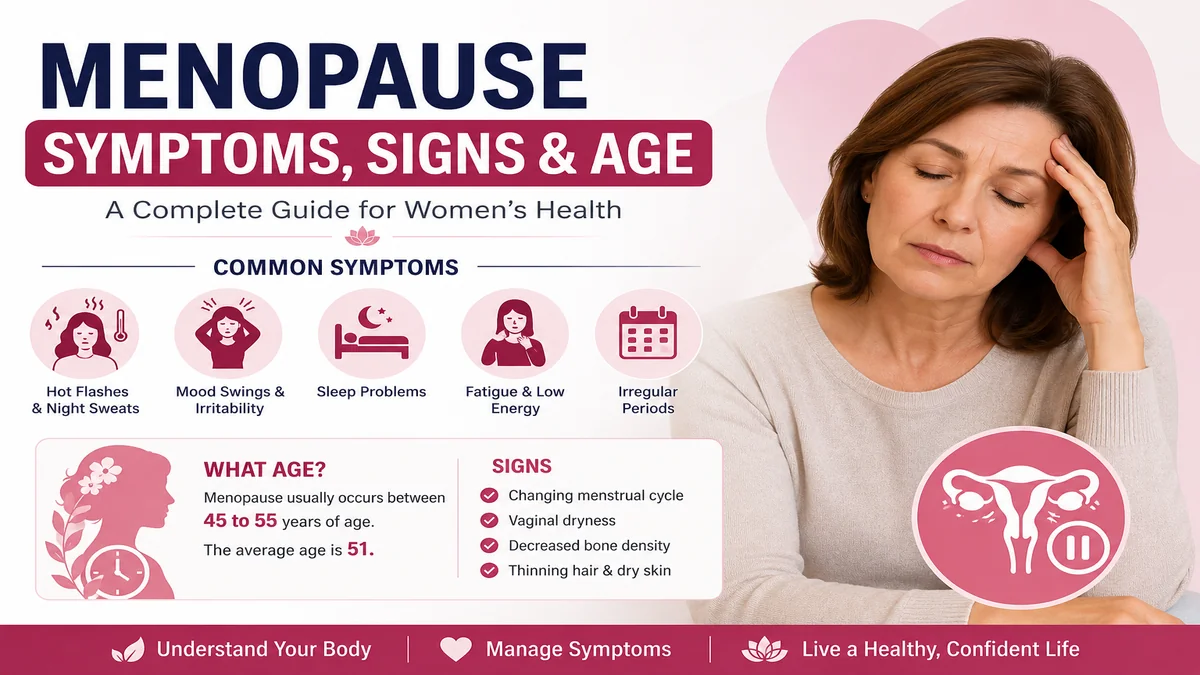
Menopause is a natural stage of aging that marks the end of a woman’s menstrual periods and reproductive years. It does not happen suddenly for most women. Instead, hormonal changes usually develop gradually during perimenopause, the transition leading up to menopause.
Understanding the common menopause symptoms, early signs, typical age, and available treatment options can help women recognize changes in their bodies and seek appropriate medical care when needed.
What Is Menopause?
Menopause is reached when a woman has gone 12 consecutive months without a menstrual period, provided there is no other medical explanation for the absence of periods.
The main reason menopause occurs is a natural decline in ovarian function and the production of hormones such as estrogen and progesterone. These hormonal changes can affect menstruation, sleep, mood, body temperature, sexual health, and other aspects of well-being.
Menopause is a normal biological process, not a disease.
At What Age Does Menopause Usually Start?
In many women, natural menopause occurs between the ages of 45 and 55, with the average age being around 51 in many populations.
However, the timing can vary considerably.
Perimenopause
Perimenopause is the period before menopause when hormone levels begin to fluctuate. It may start several years before the final menstrual period.
During this stage, women may notice:
- Irregular menstrual cycles
- Heavier or lighter periods
- Changes in cycle length
- Hot flashes
- Night sweats
- Mood changes
- Sleep difficulties
Menopause
A woman is considered to have reached menopause after she has gone 12 months without a menstrual period.
Postmenopause
The years after menopause are called postmenopause. Some symptoms, particularly hot flashes and sleep problems, may continue for several years, although their intensity often changes over time.
Common Menopause Symptoms
Menopause symptoms vary from person to person. Some women experience only mild changes, while others have symptoms that significantly affect daily life.
1. Irregular Periods
Changes in menstrual patterns are often among the earliest signs of perimenopause. Periods may become shorter, longer, heavier, lighter, or less predictable.
Skipping periods can also become increasingly common as menopause approaches.
2. Hot Flashes
Hot flashes are one of the most recognizable menopause symptoms. They can cause a sudden feeling of heat, particularly in the face, neck, and upper body.
Some women also experience:
- Sweating
- Skin flushing
- Chills after the hot flash
- Increased heart rate
- Anxiety or discomfort
3. Night Sweats
Hot flashes that occur during sleep are commonly called night sweats. They may cause excessive sweating and repeated awakenings, which can contribute to daytime tiredness.
4. Sleep Problems
Hormonal changes, night sweats, stress, and changes in sleep patterns can make it harder to fall asleep or stay asleep.
Poor sleep may subsequently affect concentration, mood, and energy levels.
5. Mood Changes
Some women experience increased irritability, anxiety, low mood, or emotional changes during perimenopause and menopause.
Hormonal fluctuations combined with sleep disruption and life changes during midlife may contribute to these symptoms.
6. Vaginal Dryness
Declining estrogen levels can cause changes in vaginal tissues. This may result in dryness, irritation, burning, or discomfort during sexual activity.
7. Changes in Sexual Desire
Some women notice a decrease in sexual desire during or after menopause. Vaginal dryness, sleep problems, stress, mood changes, and hormonal changes can all play a role.
8. Urinary Changes
Menopause-related changes in estrogen levels can affect the urinary and genital tissues. Some women experience increased urinary frequency, urgency, or recurrent urinary symptoms.
9. Fatigue
Poor sleep, night sweats, emotional changes, and other menopause symptoms may contribute to tiredness and reduced energy.
Persistent or severe fatigue should not automatically be attributed to menopause because other medical conditions can also cause it.
10. Difficulty Concentrating
Some women report forgetfulness, difficulty concentrating, or feeling mentally “foggy” during perimenopause and menopause.
These changes are generally mild, but persistent or severe cognitive symptoms should be discussed with a healthcare professional.
11. Headaches
Hormonal fluctuations may trigger or worsen headaches in some women, particularly those who previously experienced hormone-related headaches or migraines.
12. Joint and Muscle Aches
Some women experience muscle or joint discomfort around menopause. Several factors, including aging and changes in physical activity, can contribute to these symptoms.
13. Skin and Hair Changes
Lower estrogen levels may be associated with changes in skin elasticity, dryness, and hair texture or thickness.
These changes can vary widely between individuals.
Early Signs of Menopause
The earliest signs often appear during perimenopause rather than after menopause has already occurred.
Common early signs include:
- Changes in menstrual cycle length
- Irregular periods
- Heavier or lighter menstrual bleeding
- Hot flashes
- Night sweats
- Sleep disturbances
- Mood changes
- Vaginal dryness
- Reduced sexual desire
- Difficulty concentrating
Not every woman experiences all of these symptoms.
Can Menopause Start Before Age 45?
Yes. Menopause that occurs before age 45 is sometimes referred to as early menopause.
When menopause occurs before age 40, it is generally considered premature menopause or premature ovarian insufficiency, depending on the underlying cause and clinical assessment.
Menopause occurring earlier than expected may have different causes, including certain medical treatments, surgery involving the ovaries, autoimmune conditions, or other factors. Women experiencing very early or unexpected menstrual changes should speak with a healthcare professional.
How Is Menopause Diagnosed?
For women in the typical age range with characteristic symptoms and menstrual changes, healthcare professionals can often identify perimenopause or menopause based on medical history and symptoms.
Laboratory hormone testing is not always necessary because hormone levels can fluctuate considerably during perimenopause.
However, testing may sometimes be recommended when symptoms occur at an unusual age or when another medical condition needs to be ruled out.
How Long Do Menopause Symptoms Last?
There is no single duration that applies to everyone.
Some women have symptoms for a relatively short period, while others experience symptoms for several years. Hot flashes and night sweats can sometimes continue into the postmenopausal years.
The frequency and severity of symptoms may also change over time.
How Can Menopause Symptoms Be Managed?
Treatment depends on the symptoms, their severity, medical history, age, and personal preferences.
Lifestyle Changes
Some strategies that may help include:
- Exercising regularly
- Maintaining a healthy weight
- Eating a balanced diet
- Limiting smoking and avoiding tobacco
- Limiting alcohol
- Keeping the bedroom cool if night sweats are a problem
- Wearing lightweight clothing
- Maintaining a regular sleep schedule
- Practicing stress-management techniques
Identifying personal triggers for hot flashes, such as very spicy foods, hot drinks, caffeine, or heat, may also be helpful for some women.
Hormone Therapy
Menopausal hormone therapy can be an effective treatment for certain symptoms, particularly bothersome hot flashes and night sweats. It may also help with some menopause-related vaginal and urinary symptoms.
However, hormone therapy is not suitable for everyone. A healthcare professional should evaluate the potential benefits and risks based on an individual’s medical history.
Vaginal Estrogen and Other Local Treatments
For vaginal dryness and related symptoms, local treatments may be considered. These can include vaginal estrogen and certain non-hormonal options.
A healthcare professional can help determine which approach is appropriate.
Non-Hormonal Treatments
Certain prescription medicines and behavioral approaches may help manage hot flashes, sleep problems, mood symptoms, or other menopause-related concerns.
Treatment should be individualized rather than based on a one-size-fits-all approach.
When Should You See a Doctor?
Menopause is natural, but not every symptom experienced during midlife is caused by menopause.
Talk to a healthcare professional if symptoms are severe, interfere with daily activities, or are difficult to manage.
Any vaginal bleeding after menopause should be evaluated by a healthcare professional. Bleeding after 12 months without a period is not considered a normal menopause symptom and can have several possible causes.
You should also seek medical advice for unexplained weight loss, persistent severe fatigue, significant depression, unusual pelvic pain, or other concerning symptoms.
Frequently Asked Questions About Menopause
What is the average age of menopause?
Natural menopause commonly occurs between ages 45 and 55, although the exact age varies among individuals. Menopause is officially reached after 12 consecutive months without a menstrual period.
What are the first signs of menopause?
Irregular periods are often one of the earliest signs. Other early symptoms can include hot flashes, night sweats, sleep problems, mood changes, vaginal dryness, and difficulty concentrating.
Can you have menopause symptoms but still have periods?
Yes. During perimenopause, hormone levels fluctuate and symptoms can occur while menstrual periods are still happening.
Is menopause the same as perimenopause?
No. Perimenopause is the transition leading up to menopause. Menopause is confirmed after 12 consecutive months without a menstrual period.
Can menopause cause weight gain?
Weight changes are common during midlife, but they can involve multiple factors, including aging, changes in muscle mass, activity levels, sleep, diet, and hormonal changes. Menopause may contribute to changes in body-fat distribution.
Can menopause cause anxiety?
Some women experience increased anxiety or mood changes during perimenopause and menopause. Hormonal fluctuations, sleep problems, and other life factors may contribute.
Final Takeaway
Menopause is a natural stage of life that usually occurs between 45 and 55 years of age. Common symptoms include irregular periods, hot flashes, night sweats, sleep problems, mood changes, vaginal dryness, changes in sexual desire, and difficulty concentrating.
Although menopause itself does not require treatment, symptoms that affect quality of life can often be managed. If symptoms are severe, occur unusually early, or include bleeding after menopause, medical evaluation is important.