
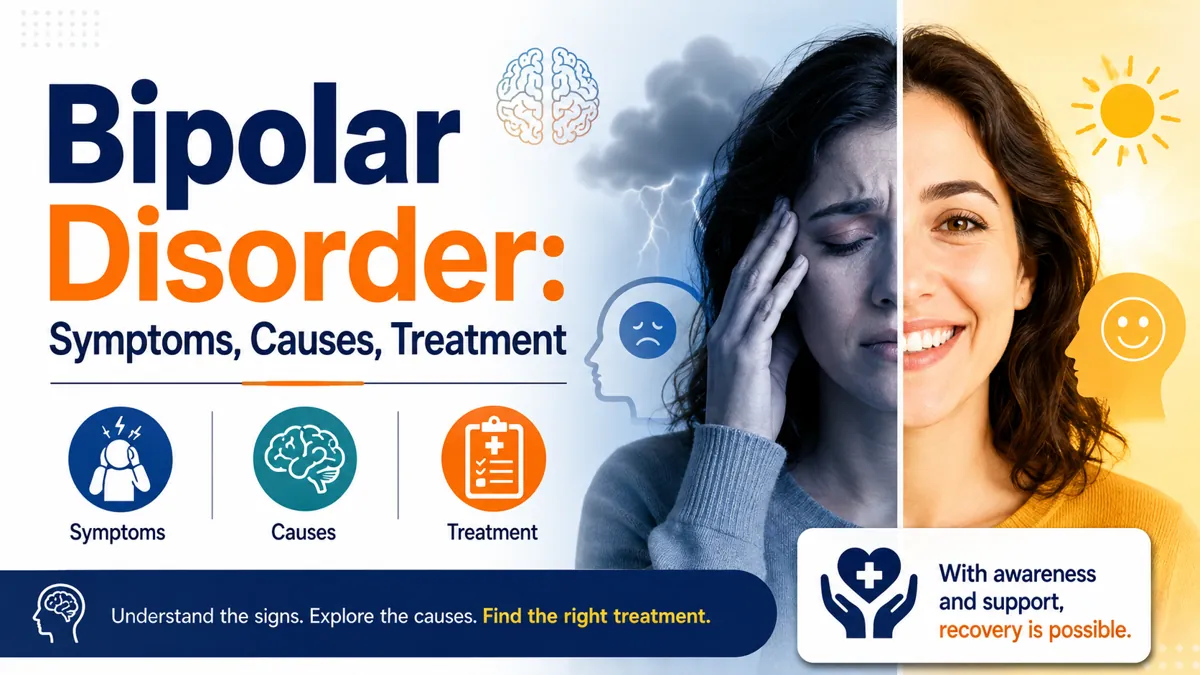
Bipolar disorder is a mental health condition that causes extreme changes in mood, energy, activity levels, and the ability to perform everyday tasks. These mood changes range from emotional highs (known as mania or hypomania) to deep emotional lows (depression).
Unlike normal mood swings, bipolar disorder episodes can last for days or weeks and significantly affect relationships, work, education, and overall quality of life. Fortunately, with proper diagnosis, medication, therapy, and lifestyle changes, many people with bipolar disorder lead healthy and productive lives.
In this guide, we’ll cover everything you need to know about bipolar disorder, including its symptoms, causes, diagnosis, treatment options, and coping strategies.
What Is Bipolar Disorder?
Bipolar disorder is a chronic mental illness characterized by recurring episodes of:
- Mania
- Hypomania
- Depression
During manic episodes, a person may feel unusually energetic, confident, or euphoric. During depressive episodes, they may feel hopeless, tired, or lose interest in activities they once enjoyed.
The condition affects millions of people worldwide and can develop at any age, although it most commonly begins during the late teenage years or early adulthood.
Types of Bipolar Disorder
There are several forms of bipolar disorder.
1. Bipolar I Disorder
This type involves at least one manic episode lasting at least seven days or requiring hospitalization.
Many people also experience major depressive episodes.
2. Bipolar II Disorder
Bipolar II includes:
- At least one major depressive episode
- At least one hypomanic episode
Hypomania is less severe than full mania but can still interfere with daily life.
3. Cyclothymic Disorder (Cyclothymia)
People experience recurring periods of mild hypomanic and depressive symptoms for at least two years (one year in children and adolescents).
Symptoms are less intense than Bipolar I or II but persist over time.
4. Other Specified and Unspecified Bipolar Disorders
These include bipolar symptoms that don’t fully meet the diagnostic criteria for the above categories but still cause significant distress.
Symptoms of Bipolar Disorder
Symptoms vary depending on whether someone is experiencing mania, hypomania, or depression.
Symptoms of Mania
A manic episode may include:
- Feeling unusually happy or euphoric
- Increased energy
- Needing very little sleep
- Rapid speech
- Racing thoughts
- Inflated self-esteem
- Increased goal-directed activities
- Impulsive spending
- Reckless driving
- Risky sexual behavior
- Poor judgment
- Increased irritability
- Easily distracted
Severe mania may include hallucinations or delusions.
Symptoms of Hypomania
Hypomania causes similar symptoms but is generally less severe.
People often:
- Feel unusually productive
- Need less sleep
- Become more talkative
- Feel overly confident
- Become easily distracted
Although less disruptive than mania, hypomania can still lead to significant problems.
Symptoms of Bipolar Depression
Depressive episodes often include:
- Persistent sadness
- Hopelessness
- Loss of interest in activities
- Fatigue
- Sleeping too much or too little
- Appetite changes
- Difficulty concentrating
- Feelings of guilt
- Low self-esteem
- Slowed movements
- Thoughts of death or suicide
Early Warning Signs
Recognizing symptoms early can help prevent severe episodes.
Common warning signs include:
- Sudden changes in sleep
- Increased irritability
- Rapid mood changes
- Spending excessively
- Unusual excitement
- Withdrawal from family and friends
- Loss of motivation
- Difficulty concentrating
- Increased anxiety
Causes of Bipolar Disorder
The exact cause remains unknown, but experts believe several factors contribute.
Genetics
People with a family history of bipolar disorder have a higher risk.
Brain Structure and Function
Research suggests differences in brain chemistry and communication between brain cells may contribute.
Stressful Life Events
Major life stressors may trigger episodes, including:
- Divorce
- Job loss
- Death of a loved one
- Financial stress
- Trauma
Substance Abuse
Alcohol and recreational drugs may trigger or worsen mood episodes.
Hormonal and Biological Factors
Sleep disruption, hormonal changes, and certain medical conditions may influence symptoms in some individuals.
Risk Factors
Several factors increase the likelihood of developing bipolar disorder:
- Family history
- Childhood trauma
- Chronic stress
- Substance misuse
- Sleep deprivation
- Anxiety disorders
- Certain neurological conditions
How Is Bipolar Disorder Diagnosed?
There is no single laboratory test for bipolar disorder.
Healthcare professionals diagnose it through:
- Medical history
- Mental health evaluation
- Symptom review
- Family history
- Physical examination
- Blood tests (to rule out other conditions)
Keeping a mood diary can help identify recurring mood patterns.
Treatment for Bipolar Disorder
Treatment usually involves long-term management rather than a cure.
1. Medications
Common medications include:
Mood Stabilizers
These help prevent manic and depressive episodes.
Examples include:
- Lithium
- Valproate
- Lamotrigine
Atypical Antipsychotics
These may help manage mania and some depressive episodes.
Antidepressants
Sometimes prescribed alongside mood stabilizers because antidepressants alone may trigger mania in susceptible individuals.
2. Psychotherapy
Therapy plays a vital role in treatment.
Effective approaches include:
- Cognitive Behavioral Therapy (CBT)
- Family-focused therapy
- Interpersonal and Social Rhythm Therapy
- Psychoeducation
- Group therapy
3. Lifestyle Changes
Healthy daily habits can reduce mood fluctuations.
Helpful strategies include:
- Following a regular sleep schedule
- Exercising regularly
- Eating a balanced diet
- Limiting alcohol
- Avoiding recreational drugs
- Managing stress
- Practicing mindfulness
- Maintaining social support
4. Hospitalization
Hospital care may be necessary during severe manic episodes, psychosis, or when someone is at immediate risk of harming themselves or others.
Can Bipolar Disorder Be Cured?
There is currently no cure for bipolar disorder.
However, many people achieve long-term stability through:
- Consistent medication
- Therapy
- Healthy routines
- Stress management
- Regular follow-up with healthcare providers
Early treatment often leads to better outcomes.
Possible Complications
Without treatment, bipolar disorder may increase the risk of:
- Relationship problems
- Financial difficulties
- Job loss
- Substance misuse
- Anxiety disorders
- Suicide attempts
- Legal problems
- Poor physical health
Seeking treatment early can reduce these risks.
Living Well With Bipolar Disorder
Many people successfully manage bipolar disorder by:
- Taking medications as prescribed
- Attending therapy sessions
- Tracking mood changes
- Getting adequate sleep
- Avoiding alcohol and drugs
- Building a strong support network
- Learning personal triggers
- Creating a relapse prevention plan
Consistency is one of the most important aspects of long-term management.
When to See a Doctor
Seek medical advice if you or someone you know experiences:
- Extreme mood swings
- Unusual periods of excessive energy
- Persistent depression
- Risk-taking behaviors
- Hallucinations
- Thoughts of self-harm or suicide
Early diagnosis and treatment can greatly improve quality of life.
If someone is in immediate danger of harming themselves or others, contact your local emergency services or a crisis service immediately.
Frequently Asked Questions (FAQs)
Is bipolar disorder hereditary?
Genetics play an important role, but having a family history does not guarantee that someone will develop the condition.
At what age does bipolar disorder usually start?
It commonly begins between the late teens and early 30s, although it can develop earlier or later in life.
Can stress cause bipolar disorder?
Stress alone does not cause bipolar disorder, but it can trigger mood episodes in people who are already susceptible.
Can people with bipolar disorder live normal lives?
Yes. With appropriate treatment, many people maintain successful careers, relationships, and fulfilling lives.
What is the difference between bipolar I and bipolar II?
Bipolar I involves at least one full manic episode, while bipolar II involves hypomanic episodes and major depressive episodes without full mania.
Conclusion
Bipolar disorder is a lifelong mental health condition that affects mood, energy, and daily functioning. Although it can be challenging, early diagnosis, appropriate medication, psychotherapy, and healthy lifestyle habits allow many individuals to manage symptoms effectively. Understanding the warning signs and seeking professional support can improve long-term outcomes and enhance overall well-being.