
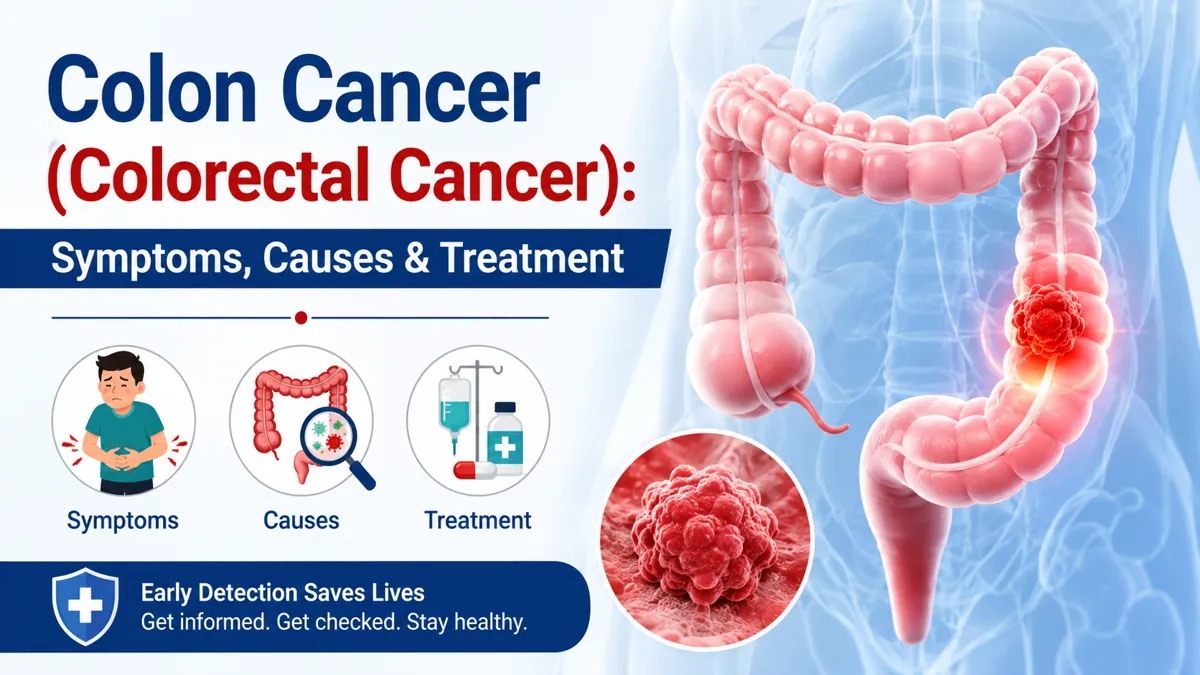
Colon cancer, also known as colorectal cancer, is one of the most common cancers worldwide. It develops in the large intestine (colon) or the rectum, which is the final part of the digestive tract. In many cases, colorectal cancer begins as small, noncancerous growths called polyps. Over time, some polyps can become cancerous if they are not detected and removed.
The good news is that colorectal cancer is often preventable through regular screening, and when diagnosed early, it has a much higher chance of successful treatment. Understanding the symptoms, causes, risk factors, diagnosis, and treatment options can help you recognize warning signs and seek medical care promptly.
What Is Colon Cancer?
Colon cancer occurs when abnormal cells in the lining of the colon grow uncontrollably and form a tumor. When cancer develops in the rectum, it is called rectal cancer. Together, these cancers are known as colorectal cancer because they affect different parts of the large intestine.
Most colorectal cancers develop slowly over several years, usually starting as benign polyps.
Colon Cancer Symptoms
Early-stage colon cancer often causes no noticeable symptoms, which is why routine screening is so important.
As the disease progresses, symptoms may include:
- Blood in the stool or rectal bleeding
- Persistent changes in bowel habits
- Diarrhea or constipation lasting several weeks
- Narrow or pencil-thin stools
- Abdominal pain, cramping, or bloating
- Feeling that the bowel doesn’t empty completely
- Weakness and fatigue
- Unexplained weight loss
- Iron-deficiency anemia
- Loss of appetite
Symptoms can vary depending on the tumor’s location and size.
Warning Signs That Should Never Be Ignored
Contact your healthcare provider if you experience:
- Blood in your stool repeatedly
- Ongoing abdominal pain
- Unexplained weight loss
- Persistent constipation or diarrhea
- Changes in stool shape lasting more than a few weeks
- Fatigue caused by anemia
- Rectal bleeding
Although these symptoms may result from conditions such as hemorrhoids or inflammatory bowel disease, they should always be evaluated by a medical professional.
Causes of Colon Cancer
The exact cause of colon cancer isn’t always known. It develops due to genetic mutations that cause colon cells to multiply uncontrollably.
Several factors contribute to these mutations, including:
- Aging
- Genetic inheritance
- Lifestyle habits
- Chronic inflammation of the colon
- Environmental influences
Most cases develop gradually over many years.
Risk Factors
Several factors increase the risk of colorectal cancer.
1. Age
Risk increases significantly after age 50, although younger adults are increasingly being diagnosed.
2. Family History
Your risk is higher if:
- A parent has colorectal cancer
- A sibling has colorectal cancer
- Multiple family members have colon polyps
3. Personal History of Polyps
Large or multiple adenomatous polyps increase future cancer risk.
4. Inherited Genetic Syndromes
Certain inherited conditions greatly increase risk, including:
- Lynch syndrome
- Familial adenomatous polyposis (FAP)
5. Inflammatory Bowel Disease
Long-term ulcerative colitis or Crohn’s disease affecting the colon increases the risk.
6. Lifestyle Factors
- Smoking
- Heavy alcohol consumption
- Obesity
- Physical inactivity
- Diet high in processed meat
- High intake of red meat
- Low-fiber diet
7. Type 2 Diabetes
People with diabetes have a modestly increased risk of colorectal cancer.
Can Young Adults Get Colon Cancer?
Yes.
Although colorectal cancer has traditionally affected older adults, cases among people under 50 have been increasing globally.
Because younger adults are not always screened routinely, symptoms may be overlooked or mistaken for less serious conditions.
Stages of Colon Cancer
Doctors classify colorectal cancer into stages.
Stage 0
Cancer is limited to the inner lining of the colon.
Stage I
Cancer has grown into the colon wall but has not spread.
Stage II
Cancer has grown through the colon wall but hasn’t reached nearby lymph nodes.
Stage III
Cancer has spread to nearby lymph nodes.
Stage IV
Cancer has spread to distant organs such as:
- Liver
- Lungs
- Peritoneum
- Less commonly, bones or brain
The stage helps determine the most appropriate treatment.
How Colon Cancer Is Diagnosed
Diagnosis usually involves several tests.
Medical History and Physical Examination
Your doctor will ask about symptoms, family history, and perform a physical examination.
Colonoscopy
A colonoscopy is the gold standard screening and diagnostic test.
During the procedure:
- A flexible camera examines the entire colon.
- Polyps can be removed immediately.
- Tissue samples (biopsies) can be collected.
Biopsy
A biopsy confirms whether abnormal tissue is cancerous.
Blood Tests
Blood tests may include:
- Complete blood count (CBC)
- Liver function tests
- Carcinoembryonic antigen (CEA)
Imaging Tests
Doctors may order:
- CT scan
- MRI
- PET scan
- Chest imaging
These tests help determine whether the cancer has spread.
Colon Cancer Treatment
Treatment depends on:
- Cancer stage
- Tumor location
- Overall health
- Patient preferences
Most people receive a combination of treatments.
1. Surgery
Surgery is the primary treatment for localized colon cancer.
Procedures include:
- Polypectomy
- Local excision
- Partial colectomy
- Total colectomy (when necessary)
Nearby lymph nodes are often removed and examined.
2. Chemotherapy
Chemotherapy uses medications to destroy cancer cells.
It may be recommended:
- After surgery
- Before surgery
- For advanced cancer
- To reduce recurrence risk
3. Radiation Therapy
Radiation therapy is used more commonly for rectal cancer than colon cancer.
It may:
- Shrink tumors before surgery
- Lower recurrence risk
- Relieve symptoms in advanced disease
4. Targeted Therapy
Targeted drugs attack specific proteins involved in cancer growth.
They are mainly used for advanced or metastatic colorectal cancer.
5. Immunotherapy
Some colorectal cancers with specific genetic features (such as MSI-high or dMMR tumors) may respond well to immunotherapy.
6. Palliative Care
For advanced cancer, palliative care focuses on:
- Pain relief
- Symptom management
- Emotional support
- Improved quality of life
It can be provided alongside cancer treatment.
Can Colon Cancer Be Prevented?
Although not every case is preventable, healthy habits can reduce your risk.
Prevention Tips
- Eat plenty of fruits and vegetables
- Choose whole grains
- Limit processed and red meat
- Maintain a healthy weight
- Exercise regularly
- Avoid smoking
- Limit alcohol
- Get recommended colorectal cancer screening
- Remove precancerous polyps during colonoscopy
Screening remains one of the most effective ways to prevent colorectal cancer.
Colon Cancer Screening
Routine screening can detect polyps before they become cancer.
Common screening tests include:
- Colonoscopy
- Stool-based FIT test
- Stool DNA test
- Flexible sigmoidoscopy
- CT colonography
People at average risk are generally advised to begin screening at age 45, while those with a strong family history or certain medical conditions may need earlier screening. Follow your healthcare provider’s recommendations.
Possible Complications
Without treatment, colorectal cancer may lead to:
- Intestinal obstruction
- Internal bleeding
- Severe anemia
- Spread to the liver
- Lung metastasis
- Perforation of the bowel
- Malnutrition
Early diagnosis greatly reduces these risks.
When to See a Doctor
Seek medical attention if you have:
- Blood in your stool
- Persistent abdominal pain
- Ongoing constipation or diarrhea
- Unexplained weight loss
- Fatigue lasting several weeks
- Iron-deficiency anemia without a clear cause
- A strong family history of colorectal cancer
Prompt evaluation can lead to earlier diagnosis and better treatment outcomes.
Frequently Asked Questions (FAQs)
Is colon cancer curable?
Yes. When detected early, colon cancer is often highly treatable, and many people are cured with surgery and other appropriate treatments.
What are the first symptoms of colon cancer?
Early colon cancer may cause no symptoms. When symptoms occur, they can include blood in the stool, changes in bowel habits, abdominal discomfort, fatigue, and unexplained weight loss.
What causes colon cancer?
Colon cancer develops due to genetic mutations in colon cells. Age, family history, inherited conditions, lifestyle factors, inflammatory bowel disease, obesity, smoking, and diet can all contribute to risk.
Is colon cancer hereditary?
Most cases are not inherited, but a family history or inherited syndromes such as Lynch syndrome or familial adenomatous polyposis (FAP) significantly increase the risk.
Can colon cancer be prevented?
While not all cases can be prevented, regular screening, removing precancerous polyps, maintaining a healthy lifestyle, avoiding tobacco, limiting alcohol, and eating a fiber-rich diet can lower the risk.
What foods should people with colon cancer eat?
During treatment, many people benefit from a balanced diet that includes lean proteins, fruits, vegetables, whole grains (as tolerated), and adequate fluids. Dietary needs vary depending on treatment and symptoms, so a registered dietitian or healthcare provider can provide personalized guidance.
Key Takeaways
- Colon cancer often begins as precancerous polyps in the large intestine.
- Early stages may not cause symptoms, making screening essential.
- Blood in the stool, changes in bowel habits, abdominal pain, and unexplained weight loss should never be ignored.
- Treatment may include surgery, chemotherapy, radiation therapy, targeted therapy, immunotherapy, or a combination of these approaches.
- Healthy lifestyle choices and routine screening can significantly reduce the risk of colorectal cancer and improve outcomes through early detection.
Disclaimer: The information provided in this article is for educational purposes only and is not medical advice. Consult a licensed healthcare professional for diagnosis, treatment, or guidance related to your individual health needs.