
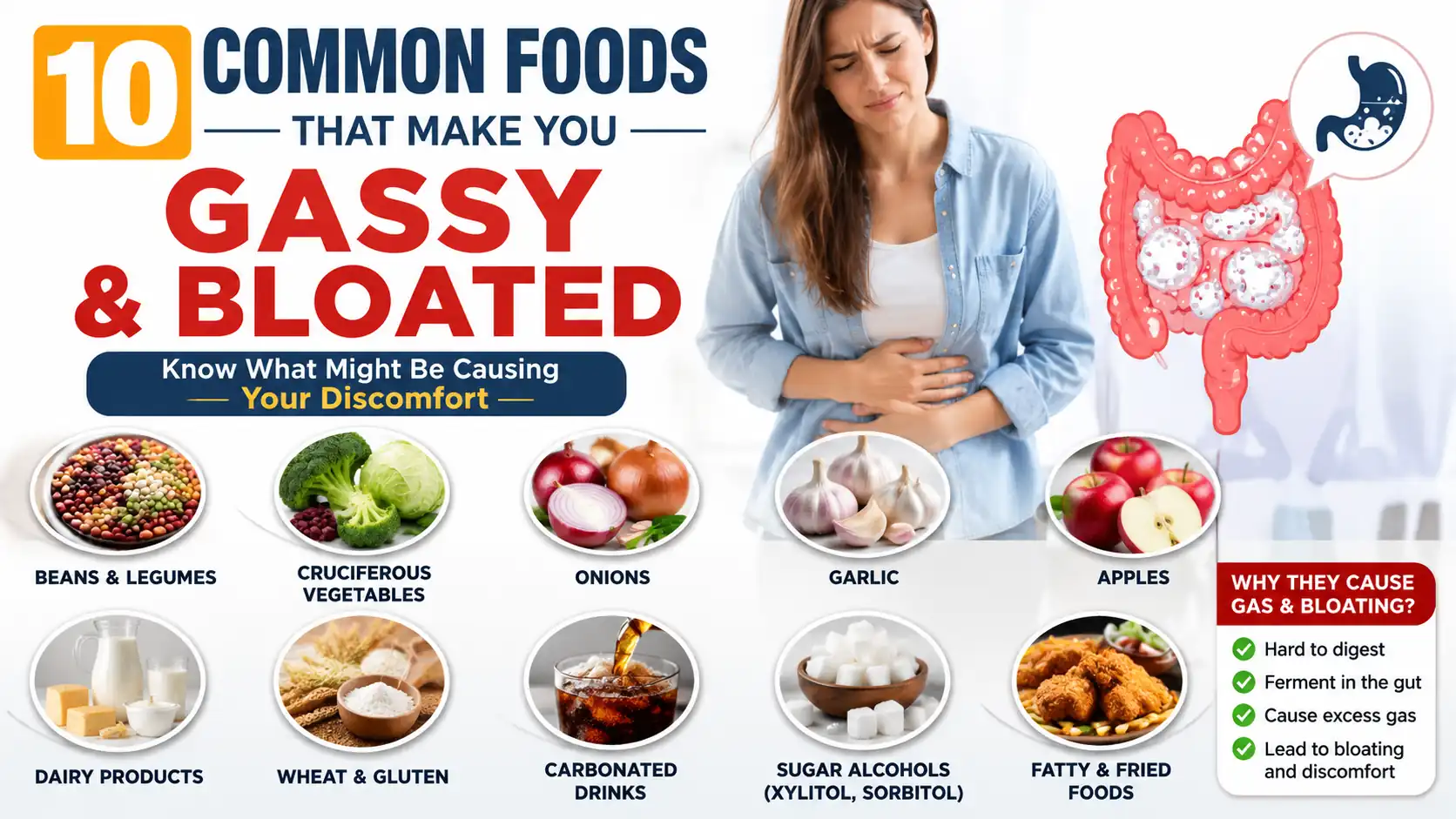
Feeling bloated after eating can be uncomfortable and frustrating. While occasional gas is a normal part of digestion, certain foods can produce more gas than others, especially if your digestive system is sensitive. The good news is that you don’t have to eliminate these foods completely. Understanding why they cause bloating can help you enjoy them in moderation while minimizing discomfort.
In this guide, we’ll explore 10 common foods that make you gassy and bloated, explain why they have this effect, and share practical ways to reduce digestive discomfort.
Why Do Some Foods Cause Gas and Bloating?
Gas forms naturally when bacteria in your large intestine break down carbohydrates and fibers that weren’t fully digested in the small intestine. This fermentation process produces gases such as hydrogen, methane, and carbon dioxide.
Bloating occurs when excess gas builds up in the digestive tract, causing your abdomen to feel tight, swollen, or uncomfortable.
Several factors can increase gas production, including:
- Eating too quickly
- Swallowing excess air
- High-fiber foods
- Food intolerances
- Carbonated drinks
- Changes in gut bacteria
1. Beans and Lentils
Beans, chickpeas, black beans, kidney beans, and lentils are among the healthiest foods you can eat. They’re packed with protein, fiber, vitamins, and minerals.
However, they also contain raffinose, a complex sugar that humans can’t digest completely. Gut bacteria ferment raffinose, producing gas.
How to Reduce Gas
- Soak dried beans overnight.
- Rinse canned beans thoroughly.
- Increase serving sizes gradually.
- Cook beans until very soft.
2. Broccoli, Cauliflower, and Cabbage
These cruciferous vegetables are rich in antioxidants and fiber but also contain raffinose and sulfur compounds.
Many people notice increased gas after eating:
- Broccoli
- Cauliflower
- Brussels sprouts
- Cabbage
- Kale
Tip
Cooking these vegetables instead of eating them raw often makes them easier to digest.
3. Onions
Onions contain fructans, a type of carbohydrate belonging to the FODMAP family.
Fructans can be difficult to digest, especially for people with irritable bowel syndrome (IBS).
Raw onions are usually more likely to cause bloating than cooked onions.
Better Option
Use green onion tops or chives, which contain fewer fructans.
4. Garlic
Garlic is another high-FODMAP food rich in fructans.
Although it offers many health benefits, some people experience:
- Gas
- Abdominal discomfort
- Bloating
- Stomach cramps
Tip
Garlic-infused oil provides flavor without most of the fructans since they aren’t oil-soluble.
5. Dairy Products
Milk, ice cream, soft cheese, and yogurt can cause gas in people with lactose intolerance.
Lactose is the natural sugar found in milk. People who don’t produce enough lactase enzyme have trouble digesting lactose.
Symptoms include:
- Bloating
- Gas
- Diarrhea
- Stomach cramps
Better Alternatives
Choose:
- Lactose-free milk
- Almond milk
- Soy milk
- Oat milk
6. Carbonated Drinks
Soft drinks, sparkling water, beer, and other fizzy beverages contain dissolved carbon dioxide.
When consumed, the gas can become trapped in your digestive system.
Common culprits include:
- Soda
- Sparkling water
- Energy drinks
- Beer
Tip
Switch to still water or herbal tea if bloating is frequent.
7. Apples
Apples are nutritious but high in both fructose and fiber.
Some people have difficulty absorbing fructose, leading to fermentation in the colon and increased gas production.
Better Options
If apples trigger bloating, try:
- Bananas
- Blueberries
- Strawberries
- Kiwi
8. Wheat Products
Bread, pasta, cereals, crackers, and baked goods contain fructans.
For sensitive individuals, especially those with IBS, wheat products may contribute to:
- Gas
- Bloating
- Abdominal discomfort
People with celiac disease or wheat allergy should avoid wheat entirely under medical guidance.
Alternative Choices
- Rice
- Oats
- Quinoa
- Gluten-free bread (when appropriate)
9. Artificial Sweeteners
Sugar-free gum, candies, protein bars, and diet foods often contain sugar alcohols such as:
- Sorbitol
- Mannitol
- Xylitol
- Maltitol
These sweeteners aren’t fully absorbed in the digestive tract, allowing gut bacteria to ferment them.
Tip
Read ingredient labels if you experience unexplained bloating.
10. Chewing Gum
Chewing gum doesn’t directly create gas from digestion, but it increases the amount of air you swallow.
Many gums also contain artificial sweeteners that may worsen bloating.
Better Habit
Choose mint leaves or simply reduce gum chewing if gas is a recurring problem.
Foods Less Likely to Cause Bloating
If you’re prone to gas, these foods are generally easier on digestion:
- White rice
- Bananas
- Eggs
- Chicken
- Fish
- Cucumbers
- Zucchini
- Carrots
- Spinach
- Blueberries
Remember that individual tolerance varies, so keeping a food diary can help identify your personal triggers.
Tips to Reduce Gas and Bloating
Simple lifestyle changes can make a significant difference:
- Eat slowly and chew food thoroughly.
- Avoid overeating.
- Drink plenty of water.
- Exercise regularly to support digestion.
- Increase fiber gradually rather than all at once.
- Limit carbonated beverages.
- Consider smaller, more frequent meals.
- Identify food intolerances with the help of a healthcare professional if symptoms persist.
When Should You See a Doctor?
Occasional gas is normal. However, consult a healthcare provider if bloating is:
- Persistent or severe
- Accompanied by unexplained weight loss
- Associated with blood in the stool
- Causing frequent vomiting
- Accompanied by severe abdominal pain
- Linked with ongoing diarrhea or constipation
These symptoms may indicate an underlying digestive condition that requires medical evaluation.
Frequently Asked Questions (FAQs)
What food causes the most gas?
Beans, lentils, broccoli, cabbage, onions, garlic, dairy products (for lactose-intolerant individuals), carbonated beverages, wheat, and foods containing sugar alcohols are among the most common gas-producing foods.
Does drinking water reduce bloating?
Yes. Staying hydrated supports healthy digestion and may help relieve constipation, which can contribute to bloating. Water itself doesn’t eliminate gas but can help your digestive system function more efficiently.
Is bloating always caused by food?
No. Bloating may also result from constipation, swallowing excess air, hormonal changes, IBS, food intolerances, or certain medical conditions.
Should I stop eating high-fiber foods?
Not necessarily. High-fiber foods provide many health benefits. Instead of avoiding them completely, increase your intake gradually and drink enough water to help your body adjust.
Can probiotics help with bloating?
Some probiotic strains may reduce bloating in certain individuals, but their effectiveness varies depending on the cause of symptoms and the specific probiotic used.
Final Thoughts
Many nutritious foods naturally produce gas because they’re rich in fiber or contain carbohydrates that gut bacteria ferment. Rather than eliminating these foods, focus on understanding your personal triggers, controlling portion sizes, cooking foods differently, and eating more slowly. If bloating becomes frequent, severe, or interferes with daily life, speak with a healthcare professional to rule out an underlying digestive disorder.