
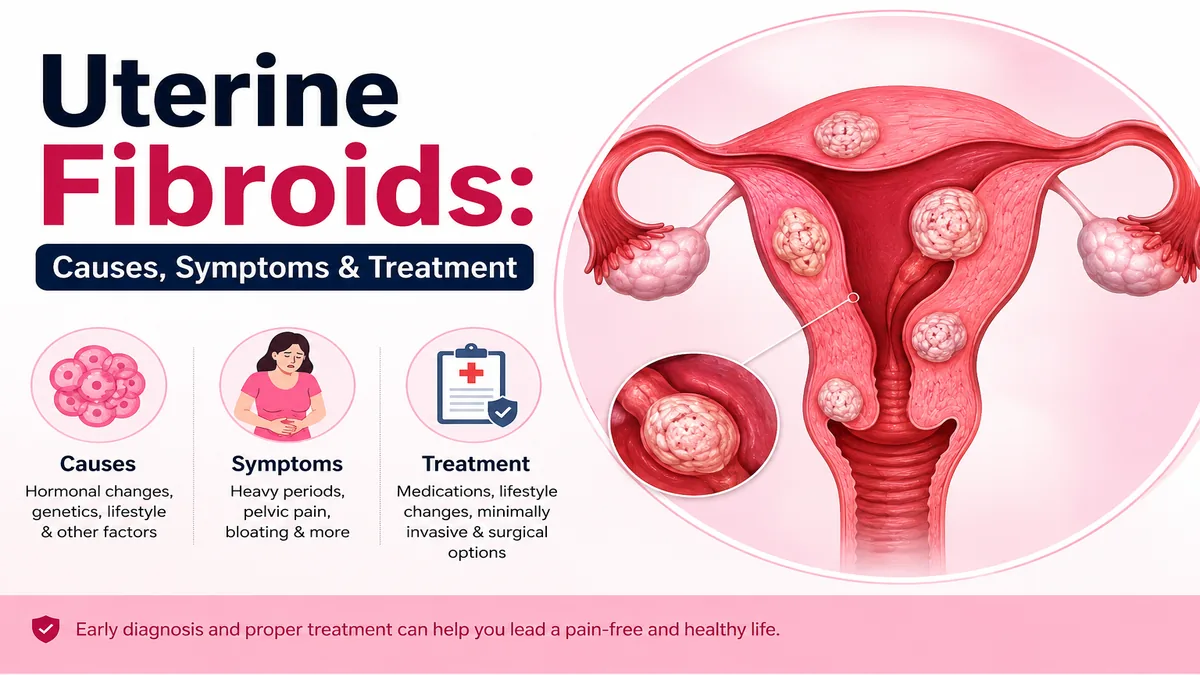
Uterine fibroids are common, noncancerous growths that develop in or around the uterus. They can be very small and cause no noticeable problems, or they may grow larger and lead to heavy menstrual bleeding, pelvic pressure, pain, frequent urination, or fertility-related concerns.
Although fibroids are usually not cancerous, their symptoms can sometimes interfere significantly with everyday life. Understanding the causes, symptoms, diagnosis, and treatment options for uterine fibroids can help you recognize when medical evaluation may be necessary.
What Are Uterine Fibroids?
Uterine fibroids, also called leiomyomas or myomas, are growths that develop from the muscle and connective tissue of the uterus. They can occur as a single growth or as multiple fibroids.
Fibroids vary considerably in size. Some are so small that they cannot be seen without imaging, while others can become large enough to enlarge the uterus.
Most fibroids are benign, meaning they are not cancerous. Having uterine fibroids also does not mean that a person has uterine cancer.
Types of Uterine Fibroids
Doctors commonly classify fibroids according to where they develop:
- Intramural fibroids: These grow within the muscular wall of the uterus and are among the most common types.
- Submucosal fibroids: These develop beneath the inner lining of the uterus and may contribute to heavy menstrual bleeding.
- Subserosal fibroids: These grow toward the outside of the uterus and may cause pressure on nearby organs.
- Pedunculated fibroids: These develop on a stalk attached to the uterus and can occur on either the inside or outside surface.
The location, number, and size of fibroids can influence the symptoms a person experiences.
What Causes Uterine Fibroids?
The exact cause of uterine fibroids is not fully understood. However, several factors appear to influence their development and growth.
1. Hormonal Factors
The hormones estrogen and progesterone appear to play an important role in fibroid growth. Fibroids often develop or enlarge during the reproductive years when these hormones are more active.
Fibroids may shrink after menopause as hormone levels decline.
2. Genetic Factors
Genetics may also contribute. Women with a close family member who has had uterine fibroids may have a higher likelihood of developing them.
3. Other Growth Factors
Certain substances that help the body maintain tissues and promote cell growth may influence fibroid development. Researchers continue to study how these biological factors contribute to fibroid formation.
4. Age and Reproductive Factors
Fibroids are more commonly diagnosed during the reproductive years. Their growth can be influenced by hormonal changes over time.
5. Body Weight and Lifestyle
Some research suggests that being overweight or obese may be associated with a greater risk of developing fibroids. However, weight alone does not cause fibroids, and people at any body weight can develop them.
Uterine Fibroid Symptoms
Many people with fibroids have no symptoms and may discover them during a routine pelvic examination or imaging test.
When symptoms occur, they can vary depending on the fibroids’ size, number, and location.
Common uterine fibroid symptoms include:
Heavy Menstrual Bleeding
One of the most common symptoms is unusually heavy or prolonged menstrual bleeding. Some people may need to change sanitary products frequently or experience bleeding that interferes with normal activities.
Heavy menstrual bleeding can eventually contribute to iron-deficiency anemia, which may cause tiredness, weakness, dizziness, or shortness of breath.
Pelvic Pressure or Pain
Larger fibroids can create pressure or discomfort in the lower abdomen or pelvis. Some people describe the sensation as heaviness, fullness, or pressure.
Painful Periods
Fibroids may make menstrual cramps more painful or uncomfortable.
Lower Back Pain
Depending on their size and location, fibroids may contribute to lower back discomfort.
Frequent Urination
A fibroid located near the bladder can put pressure on it, leading to frequent urination or an increased urge to urinate.
Constipation or Bowel Problems
Large fibroids may press against the rectum or bowel and contribute to constipation, bloating, or difficulty passing stool.
Pain During Sex
Some people with fibroids experience discomfort or pain during sexual intercourse.
Abdominal Enlargement
Large fibroids can make the abdomen appear larger or cause a sensation of abdominal fullness.
Fertility or Pregnancy Problems
Some fibroids, particularly those that distort the inside of the uterus, may affect fertility or increase the risk of certain pregnancy complications. However, many women with fibroids become pregnant and have healthy pregnancies.
When Should You See a Doctor?
Consider talking to a healthcare professional if you experience:
- Very heavy or prolonged menstrual bleeding
- Bleeding between periods
- Severe or persistent pelvic pain
- Increasing abdominal pressure or swelling
- Pain during sex
- Frequent urination without another obvious cause
- Unexplained fatigue or weakness
- Difficulty becoming pregnant
- Any unusual vaginal bleeding, especially after menopause
Seek urgent medical attention for very heavy bleeding accompanied by severe weakness, fainting, chest pain, shortness of breath, or other signs of significant blood loss.
How Are Uterine Fibroids Diagnosed?
A healthcare professional may begin with your medical history and a pelvic examination. Imaging tests can then help identify fibroids and determine their size and location.
Ultrasound
Ultrasound is commonly used to detect uterine fibroids. It uses sound waves to create images of the uterus and can help identify the number, size, and location of growths.
MRI
Magnetic resonance imaging (MRI) can provide more detailed images of the uterus. It may be recommended when doctors need additional information about fibroids or are planning certain treatments.
Hysteroscopy
During hysteroscopy, a thin instrument with a camera is inserted through the vagina and cervix to examine the inside of the uterus. It can be particularly useful for evaluating fibroids that extend into the uterine cavity.
Other Tests
Blood tests may sometimes be recommended to check for anemia when heavy menstrual bleeding is present.
Uterine Fibroid Treatment
Not every fibroid requires treatment. If fibroids are small and do not cause symptoms, a doctor may recommend watchful waiting and periodic monitoring.
Treatment depends on factors such as:
- Symptoms and their severity
- Fibroid size and location
- Number of fibroids
- Age and overall health
- Desire for future pregnancy
- Whether symptoms are getting worse
1. Medications
Medicines may help control symptoms, particularly heavy bleeding and pain.
Depending on the situation, a healthcare professional may recommend:
- Nonsteroidal anti-inflammatory drugs (NSAIDs): These can help reduce menstrual pain.
- Hormonal birth control: Certain hormonal contraceptives may help reduce heavy menstrual bleeding.
- Tranexamic acid: This medication can reduce menstrual blood loss in some people.
- Hormonal intrauterine devices (IUDs): Certain IUDs can reduce heavy bleeding, although they do not remove fibroids.
- GnRH-related medications: These can temporarily lower hormone stimulation and may shrink fibroids or reduce bleeding in appropriate patients.
Medication choices should be individualized because some treatments may not be appropriate for everyone.
2. Uterine Artery Embolization
Uterine artery embolization (UAE) is a minimally invasive procedure that reduces blood flow to fibroids. Reduced blood supply causes the fibroids to shrink over time.
This option may be appropriate for some people who want symptom relief without undergoing traditional surgery.
3. Radiofrequency Ablation
Radiofrequency ablation uses heat energy to destroy fibroid tissue. It can be performed through different approaches depending on the device and the patient’s situation.
4. Myomectomy
A myomectomy removes fibroids while preserving the uterus. It may be considered for people who want to preserve fertility or retain their uterus.
Myomectomy can be performed through different surgical approaches, including hysteroscopic, laparoscopic, robotic-assisted, or abdominal surgery, depending on the fibroids.
5. Hysterectomy
A hysterectomy involves removing the uterus and provides a definitive treatment for uterine fibroids because fibroids cannot return after the uterus is removed.
However, hysterectomy permanently ends the ability to become pregnant, so it is generally considered based on the person’s symptoms, reproductive plans, health, and preferences.
Can Uterine Fibroids Go Away on Their Own?
Fibroids may shrink naturally, particularly after menopause when estrogen and progesterone levels decrease.
However, fibroids do not always disappear on their own. Some remain stable, while others may grow, particularly during the reproductive years.
If symptoms are mild or absent, regular medical monitoring may be all that is necessary.
Can Uterine Fibroids Cause Infertility?
Most people with uterine fibroids do not become infertile because of them. However, certain fibroids can interfere with conception or pregnancy.
Fibroids that distort the uterine cavity may have a greater impact on fertility than fibroids located elsewhere.
If you are having difficulty becoming pregnant and have fibroids, a gynecologist or fertility specialist can assess whether the fibroids may be contributing to the problem.
Uterine Fibroids and Pregnancy
Many women with fibroids have uncomplicated pregnancies. However, depending on their size and location, fibroids can sometimes increase the risk of pregnancy complications.
Possible concerns may include:
- Pelvic pain
- Abnormal fetal positioning
- Preterm birth
- Placental problems
- Cesarean delivery
The risks vary considerably from person to person. Pregnant women with fibroids may require additional monitoring based on their individual circumstances.
Can Uterine Fibroids Be Prevented?
There is currently no guaranteed way to prevent uterine fibroids.
Maintaining a healthy lifestyle may support overall health, but fibroids can occur even in people who eat well, exercise regularly, and maintain a healthy weight.
Regular gynecological care can help identify problems early, particularly when symptoms such as heavy menstrual bleeding develop.
Uterine Fibroids vs. Uterine Cancer
Uterine fibroids are benign growths, whereas uterine cancers are malignant conditions.
A fibroid itself does not normally turn into cancer. A rare cancer called uterine leiomyosarcoma is a separate condition that develops from uterine muscle tissue.
Unusual or rapidly changing symptoms should always be evaluated by a healthcare professional rather than assumed to be caused by fibroids.
Frequently Asked Questions
Are uterine fibroids cancerous?
Most uterine fibroids are benign and are not cancerous. They are different from uterine cancers.
What is the most common symptom of fibroids?
Heavy or prolonged menstrual bleeding is one of the most common symptoms. Pelvic pressure, pain, frequent urination, and abdominal enlargement can also occur.
Can fibroids cause weight gain?
Large fibroids can increase abdominal size and may make a person feel heavier or bloated. However, fibroids are not usually a direct cause of generalized weight gain.
Can fibroids shrink naturally?
Yes. Fibroids may shrink, especially after menopause when estrogen and progesterone levels decrease. The amount of shrinkage varies.
Do all fibroids need treatment?
No. Fibroids that do not cause significant symptoms may only require observation and periodic medical evaluation.
Can you get pregnant with fibroids?
Yes. Many women with fibroids become pregnant and have healthy pregnancies. However, certain fibroids may affect fertility or pregnancy outcomes.
Final Thoughts
Uterine fibroids are common, noncancerous growths that can cause heavy menstrual bleeding, pelvic pain, pressure, urinary symptoms, and other problems. Some fibroids cause no symptoms and require only monitoring, while others may need medication, minimally invasive procedures, or surgery.
If heavy bleeding, persistent pelvic pain, anemia symptoms, or fertility concerns are affecting your quality of life, speak with a gynecologist. An individualized evaluation can determine whether fibroids are responsible and which treatment, if any, is appropriate.