
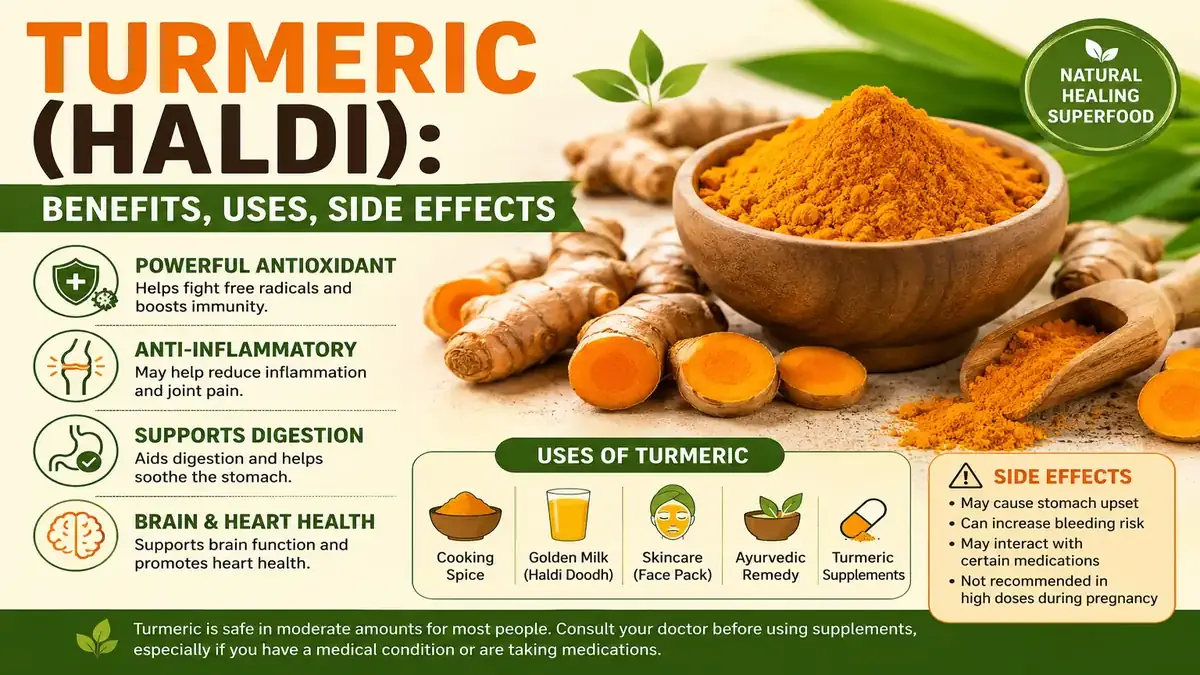
Turmeric, commonly known as haldi, is a bright yellow spice widely used in Indian cooking and traditional Ayurvedic practices. It contains curcumin, a naturally occurring compound that has been studied for its antioxidant and anti-inflammatory properties.
From supporting joint health to adding flavor and color to meals, turmeric has become popular worldwide. However, consuming large amounts of turmeric or concentrated curcumin supplements may not be appropriate for everyone.
This article explains the health benefits of turmeric (haldi), its nutritional properties, common uses, possible side effects, and important safety precautions.
What Is Turmeric (Haldi)?
Turmeric is a flowering plant scientifically known as Curcuma longa. Its underground stem, called a rhizome, is dried and ground into the yellow-orange powder commonly used as a spice.
Turmeric has been used in Indian and other Asian cuisines for centuries. Its distinctive color and flavor come partly from compounds called curcuminoids, with curcumin being the best known.
Turmeric can be consumed as:
- Fresh turmeric root
- Dried turmeric powder
- Turmeric tea
- Turmeric milk or “haldi doodh”
- Food and spice preparations
- Curcumin supplements
It is important to distinguish ordinary culinary turmeric from concentrated curcumin supplements, which can provide much higher amounts of active compounds.
Health Benefits of Turmeric
1. May Help Reduce Inflammation
One of the most researched properties of turmeric is its potential anti-inflammatory activity.
Curcumin may influence several biological pathways involved in inflammation. This is one reason turmeric and curcumin supplements have been investigated for conditions associated with inflammation.
Adding turmeric to food can be part of a healthy diet, but turmeric should not be considered a replacement for prescribed treatment.
2. Provides Antioxidant Compounds
Turmeric contains compounds with antioxidant properties. Antioxidants help protect cells from oxidative stress caused by unstable molecules known as free radicals.
Curcumin itself has antioxidant activity and may also influence the body’s own antioxidant defenses.
A diet rich in vegetables, fruits, whole grains, nuts, seeds, and spices such as turmeric can provide a variety of beneficial plant compounds.
3. May Support Joint Health
Turmeric and curcumin have been studied for their potential role in maintaining joint comfort, particularly in people with osteoarthritis.
Some clinical studies suggest that curcumin preparations may help reduce joint pain and improve physical function in certain people. However, research quality varies, and products differ considerably in their formulations.
Turmeric supplements should therefore be viewed as a possible complementary option rather than a guaranteed treatment.
4. May Support Heart Health
Curcumin has been investigated for several factors related to cardiovascular health, including inflammation and oxidative stress.
Some research suggests that certain curcumin supplements may have modest effects on blood vessel function and other cardiovascular markers. However, turmeric alone cannot prevent or treat heart disease.
For heart health, established measures such as regular physical activity, a balanced diet, healthy cholesterol levels, blood pressure control, avoiding tobacco, and maintaining a healthy weight remain much more important.
5. May Support Brain Health
Curcumin has attracted scientific interest because of its antioxidant and anti-inflammatory properties.
Researchers are studying whether curcumin could play a role in maintaining brain health and cognitive function. However, evidence in humans is still developing, and more research is needed before turmeric or curcumin can be recommended for preventing neurological diseases.
6. May Support Digestive Health
Turmeric has traditionally been used to support digestion. Its use in cooking may be well tolerated by many people.
However, concentrated turmeric or curcumin products can sometimes cause digestive problems, particularly when taken in large quantities.
People with existing digestive or gallbladder problems should talk to a healthcare professional before taking turmeric supplements.
7. May Support Overall Wellness
Turmeric is an easy way to add flavor and plant compounds to everyday meals. Using it as a culinary spice can contribute to dietary variety without requiring high-dose supplements.
However, it is important not to assume that taking more turmeric automatically provides greater health benefits.
Nutritional Value of Turmeric
Turmeric powder contains small amounts of several nutrients, including:
- Dietary fiber
- Iron
- Manganese
- Potassium
- Vitamin B6
- Other naturally occurring plant compounds
Because turmeric is generally used in relatively small quantities, it should not be relied upon as a major source of vitamins or minerals.
Its main nutritional interest comes from its bioactive plant compounds, particularly curcuminoids.
How to Use Turmeric (Haldi)
Turmeric can be incorporated into a variety of foods and drinks.
Turmeric in Cooking
Add turmeric powder to:
- Curries
- Dal
- Vegetable dishes
- Soups
- Rice dishes
- Eggs
- Marinades
- Homemade spice blends
Turmeric Milk
Haldi doodh is a traditional drink made by combining turmeric with warm milk or a milk alternative. It can be flavored with ingredients such as cinnamon, ginger, or black pepper.
Remember that traditional turmeric milk is a food or beverage, not a substitute for medical treatment.
Turmeric Tea
Turmeric tea can be prepared using turmeric powder or fresh turmeric root. Lemon, ginger, or other ingredients can be added according to taste.
Turmeric and Black Pepper: Does It Improve Absorption?
Curcumin is not absorbed particularly well by the body when consumed alone. Piperine, a compound found in black pepper, can increase curcumin absorption.
For this reason, some curcumin supplements contain piperine or other ingredients designed to improve bioavailability.
However, higher absorption is not automatically better for everyone. Piperine can also affect how the body absorbs or processes certain medications, so people taking regular medicines should check with a healthcare professional before using concentrated curcumin products.
Turmeric Side Effects
Turmeric used in normal cooking is generally well tolerated by many people. However, larger amounts or concentrated supplements may cause side effects.
Possible turmeric side effects include:
1. Stomach Upset
Some people may experience:
- Nausea
- Indigestion
- Stomach discomfort
- Diarrhea
- Acid reflux
These effects may be more likely with high-dose supplements.
2. Increased Risk of Bleeding
Curcumin may have effects on blood clotting. Taking concentrated turmeric or curcumin supplements alongside blood-thinning medicines could potentially increase bleeding risk.
People taking anticoagulant or antiplatelet medications should speak with a healthcare professional before using turmeric supplements.
3. Gallbladder Problems
High-dose turmeric or curcumin supplements may not be suitable for people with certain gallbladder or bile-duct problems.
Anyone with gallstones or related conditions should seek medical advice before taking concentrated turmeric products.
4. Kidney Stone Concerns
Turmeric contains oxalates. In susceptible individuals, high intake of oxalates may contribute to kidney stone formation.
People with a history of certain types of kidney stones should discuss regular high-dose turmeric supplementation with their healthcare professional.
5. Allergic Reactions
Although uncommon, some people may be allergic to turmeric. Stop using it and seek medical attention if you develop symptoms such as swelling, difficulty breathing, or a severe rash after consuming it.
Who Should Be Careful With Turmeric Supplements?
Extra caution may be appropriate if you:
- Take blood-thinning medication
- Have gallstones or bile-duct disease
- Have a history of kidney stones
- Have a bleeding disorder
- Are scheduled for surgery
- Take multiple prescription medications
- Are pregnant or breastfeeding and are considering high-dose supplements
Using turmeric as a normal culinary spice is different from taking concentrated curcumin capsules.
Turmeric vs. Curcumin: What’s the Difference?
The terms turmeric and curcumin are sometimes used interchangeably, but they are not the same.
Turmeric is the whole spice obtained from the Curcuma longa plant. It contains curcumin along with other compounds.
Curcumin is one of the major active compounds found in turmeric and is often concentrated in dietary supplements.
Therefore, research involving concentrated curcumin supplements does not necessarily mean that eating ordinary amounts of turmeric powder will produce the same effects.
How Much Turmeric Should You Take?
There is no universally established dose of turmeric that is appropriate for everyone for treating a health condition.
The amount used in cooking is generally much lower than the doses found in supplements. Supplement products can also vary significantly in curcumin concentration, absorption-enhancing ingredients, and formulation.
If you are considering turmeric or curcumin supplements for a specific health problem, consult a doctor or qualified healthcare professional rather than choosing a high dose on your own.
Frequently Asked Questions About Turmeric
Is turmeric good for you?
Yes. Turmeric can be a healthy culinary spice and contains compounds such as curcumin with antioxidant and anti-inflammatory properties. However, its health effects depend on the amount, formulation, and individual health circumstances.
Can I take turmeric every day?
Turmeric used regularly in normal cooking is generally considered safe for most people. Daily high-dose turmeric or curcumin supplements should be discussed with a healthcare professional, particularly if you take medications or have an underlying health condition.
Does turmeric help with inflammation?
Curcumin, a compound in turmeric, has anti-inflammatory properties and has been studied for several inflammatory conditions. Some evidence suggests potential benefits, particularly for joint symptoms, but turmeric should not replace medical treatment.
Can turmeric cause side effects?
Yes. High amounts or concentrated supplements may cause digestive symptoms such as nausea, indigestion, diarrhea, or stomach discomfort. Turmeric supplements may also interact with medications or be unsuitable for certain health conditions.
Is turmeric safe during pregnancy?
Using turmeric in normal food amounts is different from taking concentrated supplements. Pregnant people should consult their healthcare professional before using high-dose turmeric or curcumin supplements.
Does black pepper make turmeric more effective?
Piperine in black pepper can increase the absorption of curcumin. However, increased absorption can also affect medication interactions, so people taking medicines should seek professional advice before using concentrated curcumin products.
Bottom Line
Turmeric (haldi) is a versatile spice containing curcuminoids, including curcumin, that have been studied for antioxidant and anti-inflammatory effects. Research suggests potential benefits for areas such as joint health, inflammation, and overall wellness, although evidence varies depending on the condition and type of turmeric product.
For most people, using turmeric as part of a balanced diet is a simple way to enjoy its flavor and beneficial plant compounds. High-dose turmeric or curcumin supplements require more caution, especially for people taking medications or living with certain medical conditions.