


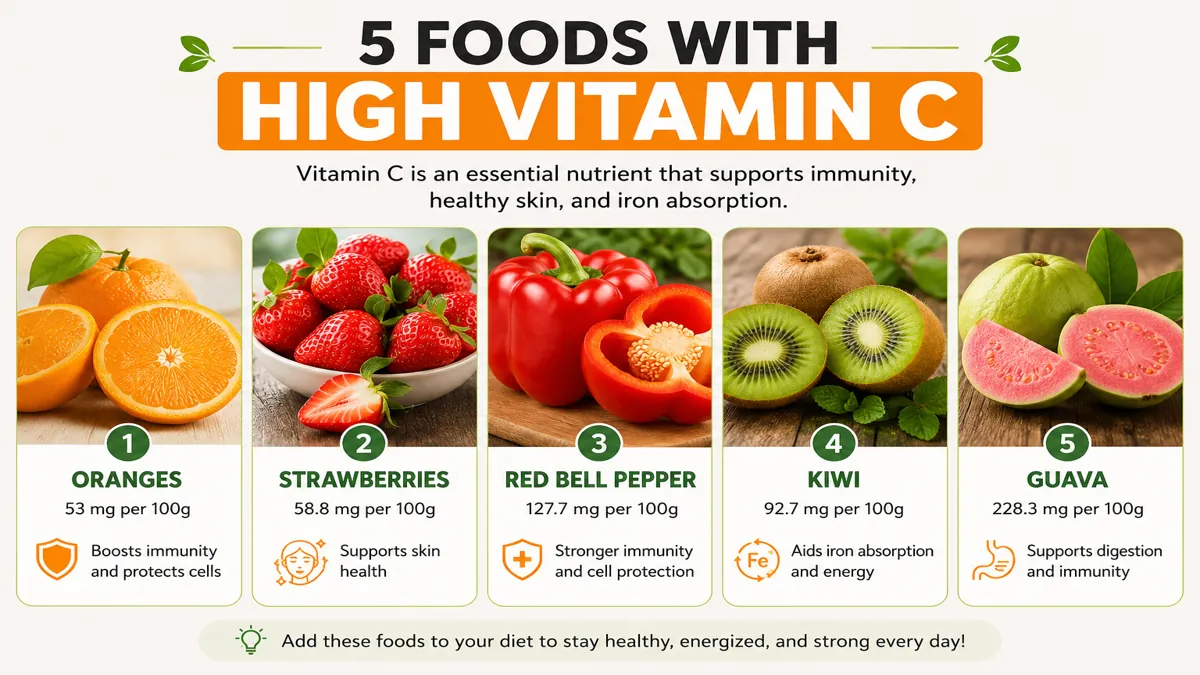
Vitamin C is one of the most important nutrients your body needs every day. It plays a key role in supporting the immune system, promoting healthy skin, helping wounds heal faster, and protecting cells from damage caused by harmful free radicals. Since the human body cannot produce or store vitamin C, it’s essential to get enough of it through your diet.
Many people immediately think of oranges when they hear “vitamin C,” but several other fruits and vegetables actually contain even more of this powerful nutrient. Including a variety of vitamin C-rich foods in your meals can help you meet your daily requirements while enjoying delicious, colorful, and nutritious foods.
In this article, we’ll explore five foods with high vitamin C, their health benefits, nutritional value, and simple ways to add them to your diet.
Why Is Vitamin C Important?
Vitamin C, also known as ascorbic acid, is a water-soluble vitamin that supports numerous bodily functions.
Its major benefits include:
- Strengthens the immune system
- Promotes collagen production for healthy skin
- Supports wound healing
- Improves iron absorption from plant-based foods
- Acts as a powerful antioxidant
- Helps maintain healthy blood vessels, cartilage, and bones
- May reduce the duration of common cold symptoms
Recommended Daily Intake
According to health guidelines:
- Adult men: 90 mg/day
- Adult women: 75 mg/day
- Pregnant women: 85 mg/day
- Breastfeeding women: 120 mg/day
- Smokers require about 35 mg more per day due to increased oxidative stress.
Fortunately, eating a balanced diet rich in fruits and vegetables makes meeting these requirements relatively easy.
1. Guava

Vitamin C Content
Approximately 228 mg per 100 grams
Guava is one of the richest natural sources of vitamin C. A single medium-sized guava can provide more than twice the daily recommended intake.
Health Benefits
- Supports immune function
- Rich in dietary fiber for digestive health
- Helps regulate blood sugar levels
- Contains potassium for heart health
- High in antioxidants that combat inflammation
How to Eat Guava
- Fresh as a snack
- Added to fruit salads
- Blended into smoothies
- Mixed with yogurt
- Homemade guava juice (without added sugar)
2. Red Bell Peppers
Vitamin C Content
Approximately 190 mg per 100 grams
Red bell peppers contain even more vitamin C than oranges. They are also rich in beta-carotene, which supports healthy vision.
Health Benefits
- Supports immune health
- Rich in antioxidants
- Promotes healthy skin
- May reduce inflammation
- Low in calories and high in nutrients
Best Ways to Eat
- Raw in salads
- Roasted as a side dish
- Stir-fried with vegetables
- Added to sandwiches
- Mixed into pasta dishes
Cooking may reduce some vitamin C, so eating them raw preserves the highest nutrient content.
3. Kiwi
Vitamin C Content
Approximately 93 mg per 100 grams
Kiwi is a nutrient-dense fruit packed with vitamin C, vitamin K, potassium, fiber, and antioxidants.
Health Benefits
- Supports immune defense
- Improves digestion due to natural enzymes
- Helps maintain healthy blood pressure
- Supports collagen formation
- May improve sleep quality
Easy Ways to Enjoy Kiwi
- Eat fresh with a spoon
- Add to fruit bowls
- Blend into smoothies
- Top oatmeal or yogurt
- Use in homemade fruit salsa
4. Strawberries
Vitamin C Content
Approximately 59 mg per 100 grams
Strawberries are delicious, naturally sweet, and packed with antioxidants called anthocyanins.
Health Benefits
- Helps reduce inflammation
- Supports heart health
- Promotes glowing skin
- Rich in fiber
- May help regulate blood sugar
Serving Ideas
- Fresh snack
- Smoothies
- Fruit salads
- Yogurt topping
- Overnight oats
5. Oranges
Vitamin C Content
Approximately 53 mg per 100 grams
Oranges remain one of the world’s most popular vitamin C-rich fruits. One medium orange typically provides around 70 mg of vitamin C, covering most adults’ daily needs.
Health Benefits
- Boosts immunity
- Supports collagen production
- Improves iron absorption
- Hydrates the body
- Rich in flavonoids that protect heart health
Healthy Ways to Eat
- Fresh whole oranges
- Freshly squeezed juice (without added sugar)
- Fruit salads
- Smoothies
- Citrus-infused water
Whole oranges are generally healthier than juice because they contain fiber.
Other Excellent Sources of Vitamin C
Besides the five foods above, many other fruits and vegetables provide impressive amounts of vitamin C:
| Food | Vitamin C (per 100 g) |
|---|---|
| Kakadu Plum | 3,000+ mg |
| Acerola Cherry | 1,600+ mg |
| Green Chili Peppers | 242 mg |
| Broccoli | 89 mg |
| Brussels Sprouts | 85 mg |
| Papaya | 61 mg |
| Pineapple | 48 mg |
| Mango | 36 mg |
| Cabbage | 37 mg |
| Tomatoes | 23 mg |
Tips to Preserve Vitamin C
Vitamin C is sensitive to heat, light, and prolonged storage. To retain the maximum amount:
- Eat fruits and vegetables fresh whenever possible.
- Steam vegetables instead of boiling them.
- Avoid overcooking.
- Store produce in the refrigerator.
- Cut fruits just before serving.
- Use minimal water during cooking.
Signs of Vitamin C Deficiency
A lack of vitamin C can lead to symptoms such as:
- Frequent infections
- Fatigue
- Slow wound healing
- Dry or rough skin
- Swollen or bleeding gums
- Joint pain
- Easy bruising
- Weak immune function
Severe deficiency can cause scurvy, a rare but serious condition.
Can You Take Too Much Vitamin C?
Vitamin C from food is generally considered safe. However, very high doses from supplements (typically above 2,000 mg per day) may cause:
- Stomach cramps
- Diarrhea
- Nausea
- Kidney stones in susceptible individuals
Most people can meet their vitamin C needs through a balanced diet without requiring supplements.
Frequently Asked Questions (FAQs)
Which fruit has the highest vitamin C?
Guava is among the richest commonly available fruits, providing about 228 mg of vitamin C per 100 grams, much more than oranges.
Are oranges the best source of vitamin C?
No. While oranges are an excellent source, foods like guava, red bell peppers, kiwi, and some berries contain even higher amounts.
Does cooking destroy vitamin C?
Yes. Vitamin C is heat-sensitive, and prolonged cooking can reduce its content. Steaming or eating foods raw helps preserve more of the vitamin.
Can vitamin C prevent colds?
Vitamin C does not typically prevent the common cold, but regular intake may slightly reduce the duration and severity of symptoms in some people.
Is it better to get vitamin C from food or supplements?
For most people, getting vitamin C from whole foods is the best option because fruits and vegetables also provide fiber, antioxidants, and other beneficial nutrients.
Final Thoughts
Vitamin C is essential for maintaining a healthy immune system, supporting skin health, promoting collagen production, and protecting your body from oxidative stress. While oranges are a well-known source, foods such as guava, red bell peppers, kiwi, strawberries, and oranges offer excellent amounts of this vital nutrient.
Including a colorful variety of fruits and vegetables in your daily meals is one of the easiest and most effective ways to meet your vitamin C needs naturally. Combined with an overall balanced diet and healthy lifestyle, these nutrient-rich foods can contribute to better health and long-term wellness.