


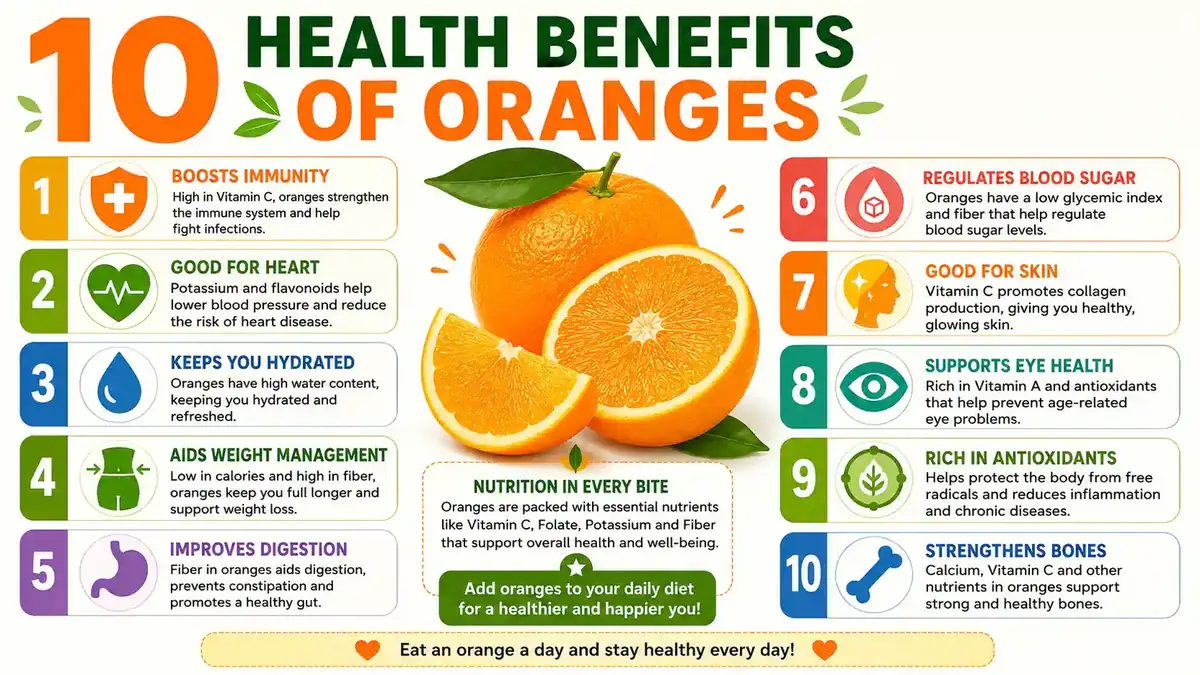
Oranges are among the world’s most popular fruits—and for good reason. Sweet, juicy, and packed with essential nutrients, oranges are a delicious way to improve your overall health. Whether enjoyed fresh, juiced, or added to salads and desserts, oranges provide a wide range of vitamins, minerals, antioxidants, and plant compounds that support the body in many ways.
A medium-sized orange contains around 60–80 calories and is rich in vitamin C, fiber, potassium, folate, and powerful antioxidants. Regularly including oranges in your diet may help strengthen your immune system, protect your heart, improve digestion, and even support healthy skin.
Nutritional Value of Oranges
Before diving into the health benefits, let’s look at what makes oranges so nutritious.
One medium orange (about 130–150 grams) provides approximately:
- Calories: 62
- Carbohydrates: 15.4 grams
- Fiber: 3 grams
- Protein: 1.2 grams
- Fat: 0.2 grams
- Vitamin C: Over 90% of the Daily Value (DV)
- Folate: 10% of the DV
- Potassium: 5% of the DV
- Calcium: Small amounts
- Magnesium: Small amounts
In this article, we’ll explore the 10 science-backed health benefits of oranges and why they deserve a place in your daily diet.
Oranges also contain flavonoids, carotenoids, and citric acid, all of which contribute to their health-promoting effects.
1. Strengthens the Immune System
Oranges are famous for their high vitamin C content, one of the most important nutrients for immune health.
Vitamin C helps:
- Stimulate white blood cell production
- Protect immune cells from damage
- Reduce inflammation
- Speed up wound healing
Eating oranges regularly may help your body fight common infections such as colds and flu while supporting faster recovery.
Although vitamin C cannot completely prevent illness, it can reduce the severity and duration of some respiratory infections.
2. Supports Heart Health
Heart disease remains one of the leading causes of death worldwide, and diet plays an important role in prevention.
Oranges benefit heart health in several ways:
Rich in Potassium
Potassium helps regulate blood pressure by balancing sodium levels in the body.
High in Fiber
The soluble fiber in oranges helps lower LDL (“bad”) cholesterol.
Loaded with Antioxidants
Flavonoids such as hesperidin help reduce inflammation and improve blood vessel function.
Together, these nutrients support healthy circulation and reduce cardiovascular risk.
3. Improves Digestive Health
Oranges are an excellent source of dietary fiber.
Fiber helps:
- Promote regular bowel movements
- Prevent constipation
- Feed beneficial gut bacteria
- Improve digestive comfort
A healthy gut is associated with better nutrient absorption, stronger immunity, and improved overall wellness.
Eating whole oranges offers significantly more fiber than drinking orange juice.
4. Promotes Healthy Skin
Healthy skin starts from within, and oranges provide nutrients that nourish your skin naturally.
Vitamin C is essential for collagen production, the protein responsible for keeping skin firm and youthful.
Regular consumption of oranges may help:
- Improve skin elasticity
- Reduce wrinkles
- Support wound healing
- Protect against sun-related damage
- Promote a healthy glow
The antioxidants in oranges also fight free radicals that contribute to premature aging.
5. Helps Reduce the Risk of Kidney Stones
Oranges naturally contain citric acid, which may reduce the formation of kidney stones.
Citrate binds to calcium in urine, preventing calcium oxalate crystals from forming.
People who are prone to kidney stones may benefit from regularly consuming citrus fruits such as oranges and lemons as part of a balanced diet.
Staying hydrated remains equally important for kidney stone prevention.
6. Supports Healthy Blood Pressure
High blood pressure increases the risk of heart attack, stroke, and kidney disease.
Oranges contain nutrients that naturally support healthy blood pressure:
- Potassium
- Magnesium
- Vitamin C
- Flavonoids
These compounds help relax blood vessels and improve blood flow.
Replacing salty snacks with fruits like oranges is a simple lifestyle change that may contribute to healthier blood pressure levels.
7. Helps Manage Weight
Oranges make an excellent snack for people trying to maintain or lose weight.
Here’s why:
- Low in calories
- High in water content
- Rich in fiber
- Naturally sweet
- Highly satisfying
Fiber slows digestion and keeps you feeling full longer, reducing the likelihood of overeating.
Choosing whole oranges instead of sugary desserts can help satisfy sweet cravings while providing valuable nutrients.
8. Provides Powerful Antioxidants
Oranges contain several antioxidants that protect cells from oxidative stress.
Important antioxidants include:
- Vitamin C
- Hesperidin
- Beta-carotene
- Flavonoids
- Carotenoids
Oxidative stress contributes to aging and many chronic diseases, including heart disease and certain cancers.
By reducing free radical damage, antioxidants help support long-term health.
9. Supports Brain Function
The nutrients found in oranges may help keep your brain healthy as you age.
Folate plays a role in:
- DNA synthesis
- Nerve function
- Brain development
Vitamin C protects brain cells from oxidative damage, while flavonoids may improve blood flow to the brain.
Some research suggests that diets rich in fruits and vegetables are associated with better memory and cognitive performance over time.
10. Helps Prevent Iron Deficiency
Although oranges contain only small amounts of iron, they significantly improve iron absorption from plant-based foods.
Vitamin C converts plant-based iron into a form the body absorbs more efficiently.
For example, eating an orange with:
- Spinach
- Lentils
- Chickpeas
- Beans
- Tofu
can help reduce the risk of iron deficiency, especially for vegetarians and vegans.
Additional Health Benefits of Oranges
Besides the top ten benefits, oranges may also:
- Support healthy pregnancy due to folate
- Improve hydration because of their high water content
- Promote eye health with carotenoids
- Support healthy bones through vitamin C
- Help reduce inflammation
- Contribute to healthier blood vessels
Best Ways to Eat Oranges
There are many delicious ways to enjoy oranges:
- Eat them fresh as a snack
- Add slices to salads
- Blend into smoothies
- Mix into yogurt
- Add to fruit bowls
- Use orange zest in cooking
- Pair with nuts for a balanced snack
- Add segments to oatmeal
Whenever possible, choose whole oranges instead of juice to maximize fiber intake.
Are There Any Side Effects?
Oranges are safe for most people, but a few precautions are worth noting.
Acid Reflux
Their acidity may worsen symptoms in people with gastroesophageal reflux disease (GERD).
Tooth Enamel
Frequent exposure to citrus acids may weaken tooth enamel over time. Rinsing your mouth with water after eating oranges can help.
Potassium Intake
People with advanced kidney disease may need to monitor potassium intake under medical guidance.
Tips for Choosing and Storing Oranges
Choose oranges that:
- Feel heavy for their size
- Have firm, smooth skin
- Are brightly colored
- Smell fresh and citrusy
Store them:
- At room temperature for up to one week
- In the refrigerator for up to three weeks
Frequently Asked Questions (FAQs)
How many oranges should you eat per day?
One to two medium oranges per day fits well into a healthy, balanced diet for most adults.
Is orange juice as healthy as whole oranges?
Whole oranges are generally healthier because they contain more fiber and are more filling. Choose 100% orange juice without added sugar if drinking juice.
Can people with diabetes eat oranges?
Yes. Whole oranges have a relatively low glycemic index and contain fiber, which helps slow sugar absorption. Portion control remains important.
Are oranges good for weight loss?
Yes. Their low calorie content, high fiber, and natural sweetness make them an excellent snack for weight management.
When is the best time to eat oranges?
Oranges can be enjoyed any time of day. They make an excellent breakfast addition, mid-morning snack, or post-workout fruit.
Conclusion
Oranges are much more than a tasty citrus fruit—they’re a nutritional powerhouse that offers a wide range of health benefits. From strengthening your immune system and protecting your heart to improving digestion, supporting healthy skin, and helping maintain healthy blood pressure, oranges provide essential nutrients your body needs every day.
Eating one or two whole oranges as part of a balanced diet is an easy and delicious way to boost your intake of vitamin C, fiber, antioxidants, and other beneficial plant compounds. Combined with regular exercise, adequate sleep, and a healthy lifestyle, this vibrant fruit can play an important role in supporting long-term health and wellness.
So the next time you’re looking for a refreshing, nutrient-rich snack, reach for an orange—your body will thank you.