


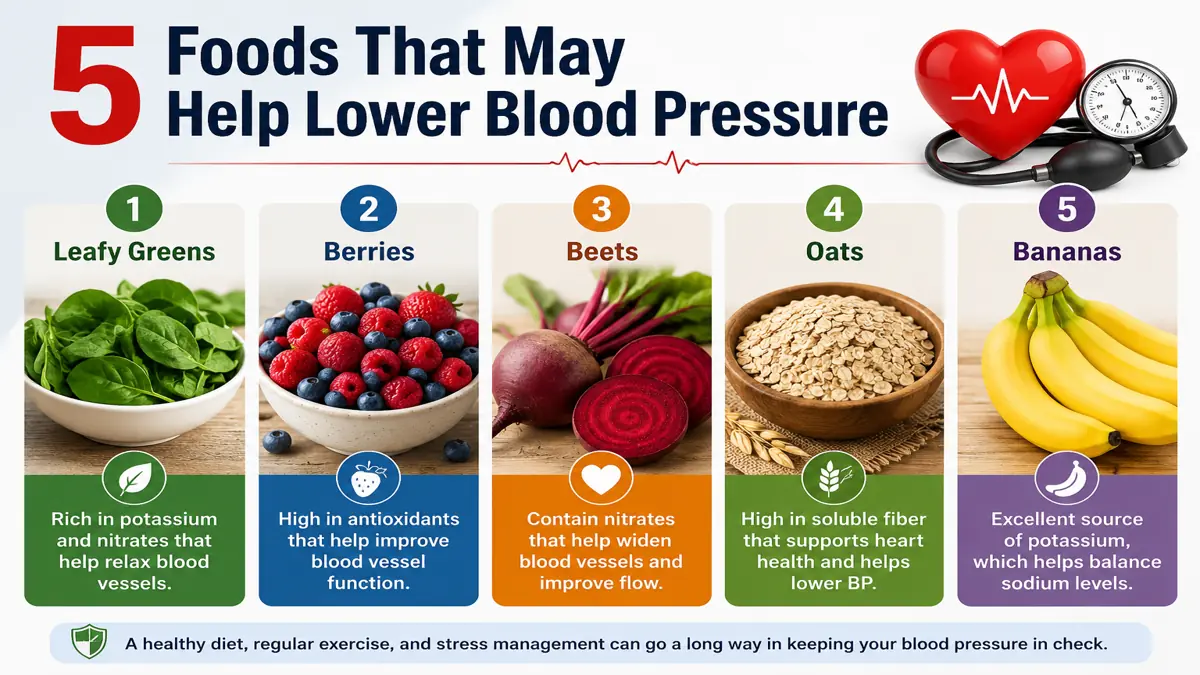
High blood pressure, also known as hypertension, affects millions of people worldwide and is one of the leading risk factors for heart disease and stroke. While medication is often necessary for some individuals, making healthy dietary choices can also play an important role in managing blood pressure.
Certain foods contain nutrients such as potassium, magnesium, fiber, and nitrates that support healthy blood vessel function and help regulate blood pressure naturally. Below are five foods that may help lower blood pressure when included as part of a balanced diet.
1. Leafy Green Vegetables
Leafy greens like spinach, kale, Swiss chard, and collard greens are packed with potassium. Potassium helps the body eliminate excess sodium through urine, reducing the strain on blood vessels.
Benefits
- Rich in potassium and magnesium
- Supports healthy circulation
- Low in calories and high in antioxidants
How to Add Them to Your Diet
- Toss spinach into salads.
- Blend kale into smoothies.
- Add greens to soups, curries, or stir-fries.
2. Berries
Blueberries, strawberries, and raspberries are loaded with flavonoids—natural plant compounds that may improve blood vessel function and reduce blood pressure over time.
Benefits
- High in antioxidants
- May improve blood vessel flexibility
- Supports overall heart health
Easy Ways to Eat More Berries
- Add to yogurt or oatmeal.
- Blend into smoothies.
- Enjoy as a healthy snack.
3. Bananas
Bananas are one of the best-known sources of potassium. Increasing potassium intake while limiting sodium may help maintain healthy blood pressure levels.
Benefits
- Excellent source of potassium
- Convenient and affordable
- Supports muscle and nerve function
Serving Ideas
- Eat as a snack.
- Slice over breakfast cereal.
- Blend into protein shakes.
4. Oats
Oats are rich in soluble fiber, particularly beta-glucan, which may help reduce cholesterol and support healthy blood pressure.
Benefits
- High in fiber
- Promotes heart health
- Helps keep you full longer
Healthy Serving Tips
- Choose plain rolled or steel-cut oats.
- Top with fresh fruit and nuts instead of sugary syrups.
- Use oats in smoothies or homemade energy bars.
5. Beets
Beets are naturally high in dietary nitrates, which the body converts into nitric oxide. Nitric oxide helps relax and widen blood vessels, improving blood flow and potentially lowering blood pressure.
Benefits
- Rich in nitrates
- Supports healthy blood circulation
- Packed with vitamins and minerals
Ways to Enjoy Beets
- Roast them as a side dish.
- Add sliced beets to salads.
- Drink unsweetened beet juice in moderation.
Additional Tips for Managing Blood Pressure
Diet is just one part of maintaining healthy blood pressure. Consider these lifestyle habits:
- Limit sodium intake.
- Exercise for at least 150 minutes each week.
- Maintain a healthy body weight.
- Reduce alcohol consumption.
- Avoid smoking.
- Manage stress through meditation, yoga, or deep breathing.
- Get adequate sleep each night.
Foods to Limit
To help keep blood pressure under control, try to reduce your intake of:
- Processed meats
- Salty snacks
- Fast food
- Sugary beverages
- Highly processed packaged foods
- Excess alcohol
Final Thoughts
Adding nutrient-rich foods such as leafy greens, berries, bananas, oats, and beets to your diet may help support healthy blood pressure as part of an overall heart-healthy lifestyle. While these foods can contribute to better cardiovascular health, they are not a substitute for medical treatment. If you have high blood pressure, work with your healthcare provider to develop a personalized treatment plan that may include dietary changes, physical activity, and medication when necessary.
Frequently Asked Questions (FAQs)
What is the best food to lower blood pressure quickly?
There is no single food that lowers blood pressure immediately. However, foods rich in potassium and dietary nitrates, such as bananas and beets, may support healthy blood pressure over time.
Can drinking water lower blood pressure?
Staying hydrated helps your body function properly and may support healthy blood pressure, but water alone is not a treatment for hypertension.
Are eggs good for people with high blood pressure?
For most people, eggs can be part of a balanced diet. The overall dietary pattern matters more than any single food.
How much sodium should adults consume daily?
Most adults should aim for less than 2,300 mg of sodium per day, while many people with high blood pressure may benefit from consuming even less, as advised by their healthcare provider.
Disclaimer
This article is for educational purposes only and should not be considered medical advice. Always consult a qualified healthcare professional before making significant changes to your diet or treatment plan.