
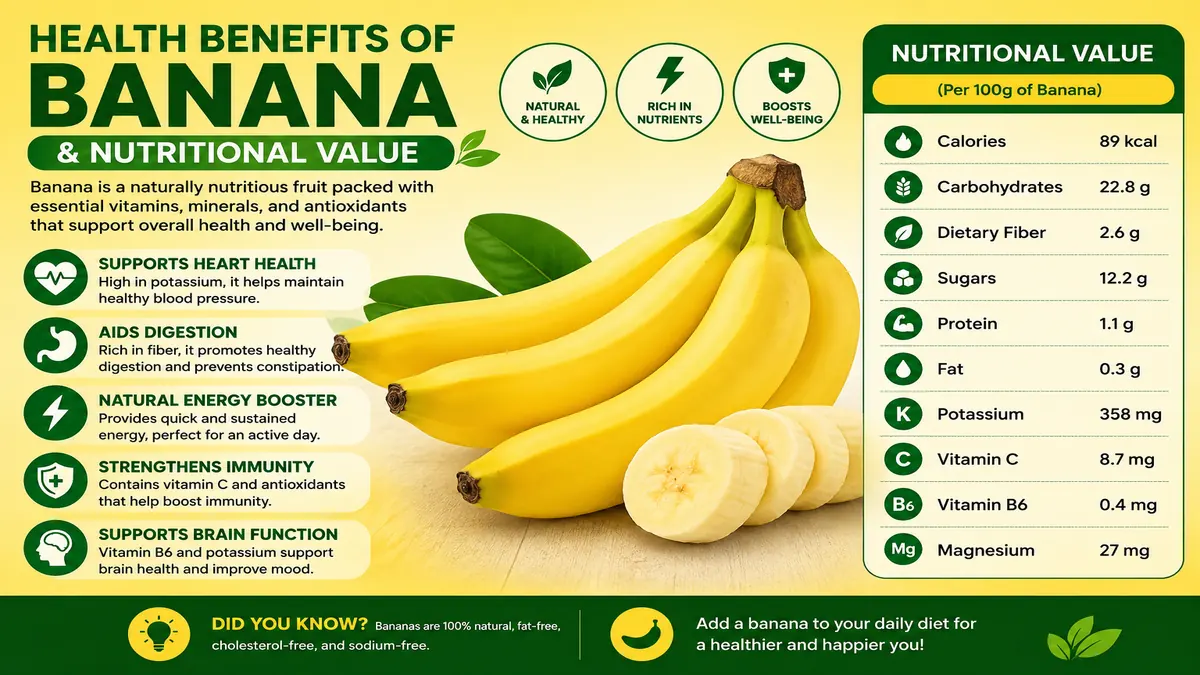
Bananas are one of the most popular fruits worldwide, and for good reason. They are naturally sweet, convenient, affordable, and packed with important nutrients. From supporting heart health and digestion to providing quick energy, bananas can be a nutritious addition to a balanced diet.
This article explores the health benefits of bananas, their nutritional value, potential benefits for different aspects of health, and simple ways to include them in your daily diet.
Nutritional Value of Bananas
Bananas provide several essential nutrients, including carbohydrates, dietary fiber, vitamin B6, vitamin C, potassium, and manganese. They also contain naturally occurring plant compounds and antioxidants.
A medium banana provides approximately:
- Calories: 105
- Carbohydrates: 27 grams
- Dietary fiber: 3 grams
- Protein: 1.3 grams
- Potassium: 422 mg
- Vitamin C: 10 mg
- Vitamin B6: 0.4 mg
- Magnesium: 32 mg
The exact nutritional content can vary depending on the banana’s size and ripeness.
10 Health Benefits of Bananas
1. Supports Heart Health
Bananas are a good source of potassium, a mineral that plays an important role in maintaining normal blood pressure and supporting proper muscle and nerve function.
Getting enough potassium through a balanced diet may help support cardiovascular health, particularly when combined with an overall healthy eating pattern that is not excessive in sodium.
2. May Help Support Healthy Blood Pressure
Potassium helps balance the effects of sodium in the body and contributes to normal blood vessel function. Because bananas contain potassium, they can be part of a heart-friendly diet.
However, eating bananas alone cannot prevent or treat high blood pressure. People with hypertension should follow their healthcare professional’s advice and maintain an overall balanced diet.
3. Promotes Digestive Health
Bananas contain dietary fiber, which supports regular bowel movements and healthy digestion.
They also contain resistant starch, particularly when they are less ripe. Resistant starch can act as a type of prebiotic fiber and may help support beneficial bacteria in the gut.
4. Provides a Convenient Source of Energy
Bananas contain carbohydrates that the body can use as fuel. This makes them a convenient snack before physical activity or when you need a quick source of energy.
Their combination of carbohydrates and natural sugars can be particularly useful for people who exercise regularly.
5. Supports Muscle Function
Potassium and magnesium contribute to normal muscle and nerve function. Bananas can therefore be included as part of a balanced diet for people who want to maintain adequate intake of these minerals.
Despite the popular belief that bananas completely prevent muscle cramps, research suggests that cramps can have multiple causes, including exercise intensity, fatigue, hydration, and electrolyte balance.
6. Supports Immune Function
Bananas provide vitamin C and other antioxidant compounds. Vitamin C contributes to normal immune system function and helps protect cells from oxidative stress.
A banana should not be considered an immunity booster on its own, but it can contribute useful nutrients to an overall nutrient-rich diet.
7. May Help With Weight Management
Bananas can be included in a weight-management diet because they provide fiber and can be satisfying compared with many highly processed snacks.
However, bananas still contain calories and carbohydrates. Portion size and overall dietary intake matter when trying to lose or maintain weight.
8. Supports Brain and Nervous System Function
Vitamin B6, which is present in bananas, is involved in several important processes in the body, including normal nervous system function and energy metabolism.
Eating bananas alongside other nutrient-rich foods can help contribute to adequate vitamin B6 intake.
9. May Support Gut Health
The type and amount of fiber in a banana can vary with ripeness. Less-ripe bananas generally contain more resistant starch, while ripening increases the amount of naturally occurring sugars.
Resistant starch can be fermented by certain gut bacteria, producing compounds that may support intestinal health.
10. Easy to Include in a Healthy Diet
One of the biggest advantages of bananas is convenience. They require no washing, cutting, or cooking before eating and are easy to carry as a snack.
You can add sliced bananas to:
- Oatmeal
- Yogurt
- Smoothies
- Whole-grain cereal
- Peanut or nut butter toast
- Homemade pancakes
- Chia pudding
Bananas and Exercise
Bananas are popular among athletes because they provide easily available carbohydrates and useful electrolytes such as potassium.
Eating a banana before exercise may provide energy, while having one after exercise can contribute carbohydrates to a recovery meal or snack.
For longer or particularly intense workouts, however, bananas may not provide all the fluids, carbohydrates, sodium, or other nutrients required for recovery.
Are Ripe or Unripe Bananas Healthier?
Both ripe and unripe bananas can have a place in a healthy diet.
Unripe bananas generally contain more resistant starch and less sugar, while ripe bananas become softer and sweeter as starch is converted into sugars.
The better choice depends on your dietary needs, taste preferences, and how you plan to eat the fruit.
Are Bananas Good for Diabetes?
People with diabetes can generally include bananas in a balanced diet, but portion size and overall carbohydrate intake are important.
Riper bananas tend to contain more readily available sugars. Pairing a banana with a source of protein or healthy fat, such as unsweetened yogurt or nuts, may help create a more balanced snack.
If you have diabetes, your individual carbohydrate needs should be discussed with your doctor or registered dietitian.
Are Bananas Good for Weight Loss?
Bananas can be part of a weight-loss diet, but no single food causes weight loss.
Their fiber content may contribute to fullness, while their natural sweetness can make them a useful alternative to some highly processed desserts or sugary snacks.
For weight management, focus on overall calorie intake, adequate protein, vegetables, fruits, whole grains, physical activity, sleep, and other healthy lifestyle habits.
How Many Bananas Should You Eat a Day?
There is no universal number of bananas that everyone should eat daily. For many healthy adults, one banana can easily fit into a balanced diet.
Your ideal fruit intake depends on your total diet, calorie needs, activity level, and individual health considerations. Eating a variety of fruits is generally preferable to relying heavily on one type.
Possible Side Effects of Eating Too Many Bananas
Bananas are generally safe for most people when eaten as part of a varied diet. However, consuming very large amounts may contribute significant calories and carbohydrates.
People with certain kidney conditions may need to monitor potassium intake and should follow individualized dietary advice from a healthcare professional.
People taking medications that affect potassium levels should also discuss their diet with their healthcare provider if they have concerns.
Best Ways to Eat Bananas
For a nutritious snack, try combining a banana with a source of protein or healthy fat.
Some simple combinations include:
- Banana + unsweetened Greek yogurt
- Banana + almonds or walnuts
- Banana + natural peanut butter
- Banana + oatmeal
- Banana + chia seeds
These combinations can make a more filling snack than eating a banana alone.
Frequently Asked Questions
Is it good to eat a banana every day?
For most healthy people, eating a banana every day can be part of a balanced diet. Bananas provide carbohydrates, fiber, potassium, vitamin B6, and other nutrients.
What is the best time to eat a banana?
There is no scientifically established “best” time to eat a banana. You can enjoy one as a breakfast addition, snack, pre-workout food, or part of a post-workout meal.
Are bananas good for digestion?
Yes. Bananas contain dietary fiber and resistant starch, particularly when less ripe, which can support normal digestion and gut health.
Do bananas help with muscle cramps?
Bananas provide potassium and carbohydrates, but muscle cramps have many possible causes. Eating a banana may contribute to overall nutrition, but it should not be considered a guaranteed treatment for cramps.
Are bananas high in sugar?
Bananas contain naturally occurring sugars, and their sugar content increases as they ripen. However, they also provide fiber and several important nutrients, making them different from foods containing added sugars.
Can I eat bananas at night?
Yes. There is no general rule that bananas must be avoided at night. A banana can be a suitable evening snack depending on your overall dietary needs.
Bottom Line
Bananas are a nutritious, affordable, and convenient fruit that can provide potassium, fiber, vitamin B6, vitamin C, carbohydrates, and other beneficial compounds. Regularly including bananas in a varied and balanced diet may support heart health, digestion, energy production, muscle function, and overall nutrition.
However, bananas are not a cure for any disease, and eating a variety of fruits, vegetables, whole grains, protein sources, and healthy fats is important for a well-rounded diet.