
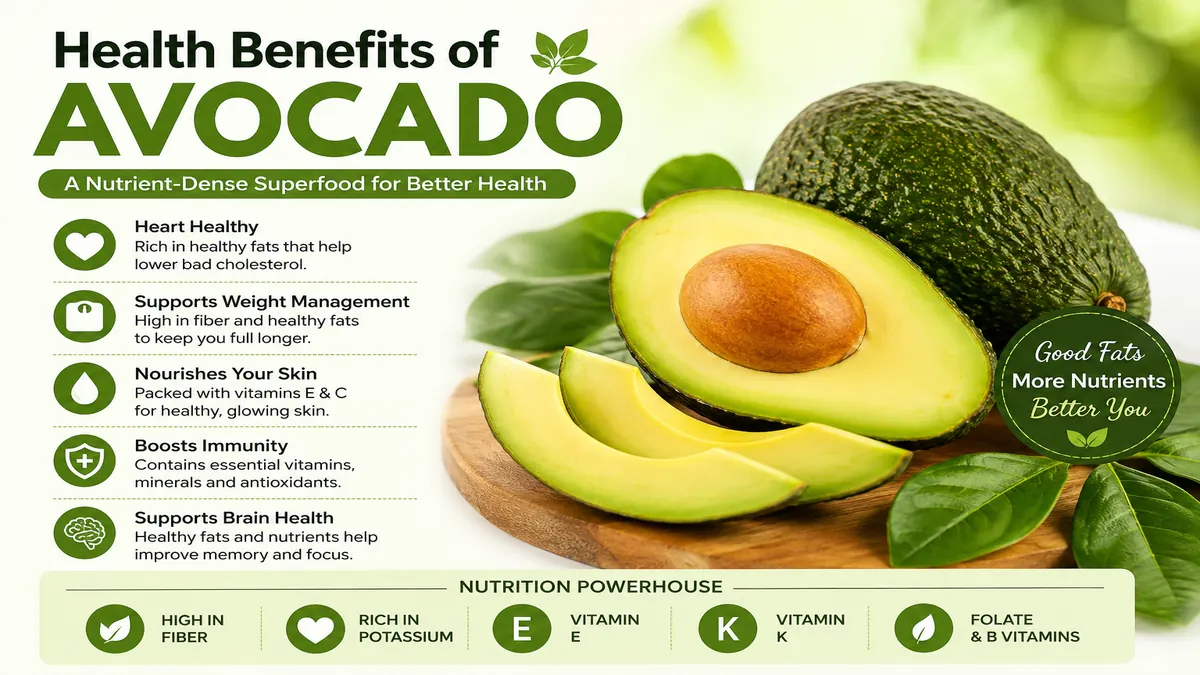
Avocado is a nutrient-rich fruit known for its creamy texture, mild flavor, and versatility. Unlike most fruits, avocados are naturally high in healthy fats while also providing fiber, vitamins, minerals, and antioxidant compounds.
Adding avocado to a balanced diet may support heart health, digestion, healthy skin, and overall nutrition. However, because avocados are relatively calorie-dense, portion size can still matter.
In this article, we explore the health benefits of avocado, its nutritional value, potential uses, and simple ways to include it in your diet.
What Is an Avocado?
Avocado is the edible fruit of the avocado tree (Persea americana). Although botanically a fruit, it is commonly used in savory dishes such as salads, sandwiches, toast, dips, and smoothies.
Avocados contain primarily monounsaturated fat, along with dietary fiber, potassium, folate, vitamin K, vitamin E, and several other nutrients.
Avocado Nutrition
Avocado provides a combination of healthy fats, fiber, and micronutrients.
A typical serving can provide:
- Healthy monounsaturated fats
- Dietary fiber
- Potassium
- Folate
- Vitamin K
- Vitamin E
- Vitamin C
- Magnesium
- B vitamins
- Antioxidant compounds
Its nutritional profile makes avocado a useful addition to a balanced eating pattern.
10 Health Benefits of Avocado
1. May Support Heart Health
One of the most well-known health benefits of avocado is its healthy fat content. Avocados are rich in monounsaturated fatty acids, which can be part of a heart-healthy eating pattern.
Replacing foods high in saturated fats with sources of unsaturated fats may help support healthy cholesterol levels and cardiovascular health.
Avocados also provide potassium, a mineral involved in blood pressure regulation.
2. May Help Improve Digestion
Avocados are a good source of dietary fiber. Fiber helps add bulk to stool and supports regular bowel movements.
A diet containing adequate fiber may also support a healthy gut microbiome. Increasing fiber gradually and drinking enough water can help reduce digestive discomfort.
3. May Support Healthy Weight Management
Although avocado contains relatively more calories than many other fruits, its combination of healthy fats and fiber can contribute to fullness.
Including satisfying foods in meals may help reduce the tendency to snack excessively between meals. However, avocado should be eaten in reasonable portions as part of an overall balanced diet.
4. Provides Antioxidants
Avocados contain antioxidant nutrients and plant compounds, including vitamin E and carotenoids.
Antioxidants help protect cells from oxidative stress caused by unstable molecules known as free radicals. Eating a variety of colorful fruits and vegetables is one way to obtain a broad range of protective plant compounds.
5. May Support Eye Health
Avocado contains carotenoids such as lutein and zeaxanthin. These compounds are associated with eye health.
Including avocado alongside other nutrient-rich foods may contribute to an overall diet that supports normal vision and eye function.
6. Supports Healthy Skin
The healthy fats and vitamin E found in avocado can contribute to normal skin function.
Adequate intake of essential nutrients is important for maintaining the skin barrier and protecting the body from environmental stress. Avocado can be one nutritious component of a diet that supports healthy skin.
7. May Help the Body Absorb Certain Nutrients
Some vitamins and plant compounds are fat-soluble, meaning dietary fat can help the body absorb them.
Adding avocado to meals containing vegetables may improve the absorption of certain carotenoids. This makes avocado a useful addition to salads and vegetable-based meals.
8. Provides Potassium
Potassium is an essential mineral that helps regulate fluid balance and supports normal muscle and nerve function.
Avocado is a useful source of potassium and can contribute to overall potassium intake when included in a varied diet.
9. May Support Blood Sugar-Friendly Eating Patterns
Avocado is naturally low in carbohydrates and provides fiber and healthy fats. These characteristics can make it a useful addition to meals designed around balanced nutrition.
However, people with diabetes should consider their overall meal pattern, portion sizes, medications, and individual nutritional needs rather than relying on one food to control blood sugar.
10. Supports Overall Nutrient Intake
Avocado provides several important nutrients in one food, including fiber, potassium, folate, vitamin K, and vitamin E.
Adding nutrient-dense foods such as avocado to a varied diet can make it easier to meet daily nutritional needs.
Avocado and Weight Loss: Does It Help?
Avocado can be included in a weight-management diet, but it is not a weight-loss food by itself.
Its fiber and healthy fats may help promote fullness, potentially making meals more satisfying. At the same time, avocado is calorie-dense, so eating large quantities can increase total calorie intake.
For weight management, focus on overall calorie balance, dietary quality, physical activity, sleep, and sustainable eating habits.
How to Eat Avocado
There are many simple ways to add avocado to your meals:
- Spread mashed avocado on whole-grain toast.
- Add sliced avocado to salads.
- Mix avocado into sandwiches or wraps.
- Prepare homemade guacamole.
- Add avocado to grain bowls.
- Blend avocado into smoothies.
- Serve it with eggs or vegetables.
- Add diced avocado to beans or legumes.
- Use mashed avocado as a creamy ingredient in some recipes.
How Much Avocado Should You Eat?
There is no single amount of avocado that is appropriate for everyone. A practical serving is often around one-quarter to one-half of an avocado, depending on your calorie and nutritional needs.
People who need more calories may comfortably include larger portions, while those following a calorie-controlled diet may prefer smaller servings.
Are There Any Side Effects of Eating Avocado?
Avocado is generally well tolerated by most people when eaten as part of a balanced diet. However, some individuals may experience problems.
Possible concerns include:
- Allergic reactions: People with avocado allergies should avoid it.
- Digestive discomfort: Eating large amounts of fiber suddenly may cause gas or bloating.
- High calorie content: Large portions can add significant calories.
- Medication considerations: People taking certain medications or following medically prescribed diets should discuss dietary changes with their healthcare professional when appropriate.
If you experience symptoms of a food allergy after eating avocado, seek appropriate medical advice.
Frequently Asked Questions
Is avocado good for you every day?
For most healthy people, avocado can be part of a balanced diet every day. Portion size should depend on your overall calorie and nutritional needs.
Is avocado good for the heart?
Avocado contains monounsaturated fats, fiber, potassium, and other nutrients that can fit well into a heart-healthy dietary pattern.
Does avocado help with constipation?
Avocado provides dietary fiber, which can support regular bowel movements. Adequate fluid intake and an overall fiber-rich diet are also important for digestive health.
Is avocado good for the skin?
Avocado provides healthy fats, vitamin E, and other nutrients that support normal skin health. However, eating avocado alone cannot prevent or treat skin conditions.
Can I eat avocado while trying to lose weight?
Yes. Avocado can be included in a weight-management diet. Because it is calorie-dense, paying attention to portion size is useful.
Is avocado high in protein?
No. Avocado is not considered a high-protein food. It is better known for its healthy fats, fiber, potassium, and other nutrients.
The Bottom Line
Avocado is a nutrient-dense fruit that can provide healthy monounsaturated fats, fiber, potassium, folate, vitamin E, and antioxidant compounds. Its nutritional profile may support heart health, digestion, healthy eating patterns, and overall nutrient intake.
For the greatest benefit, include avocado as part of a varied diet containing vegetables, fruits, whole grains, legumes, nuts, seeds, and other nutritious foods. Remember that no single food provides everything your body needs.