
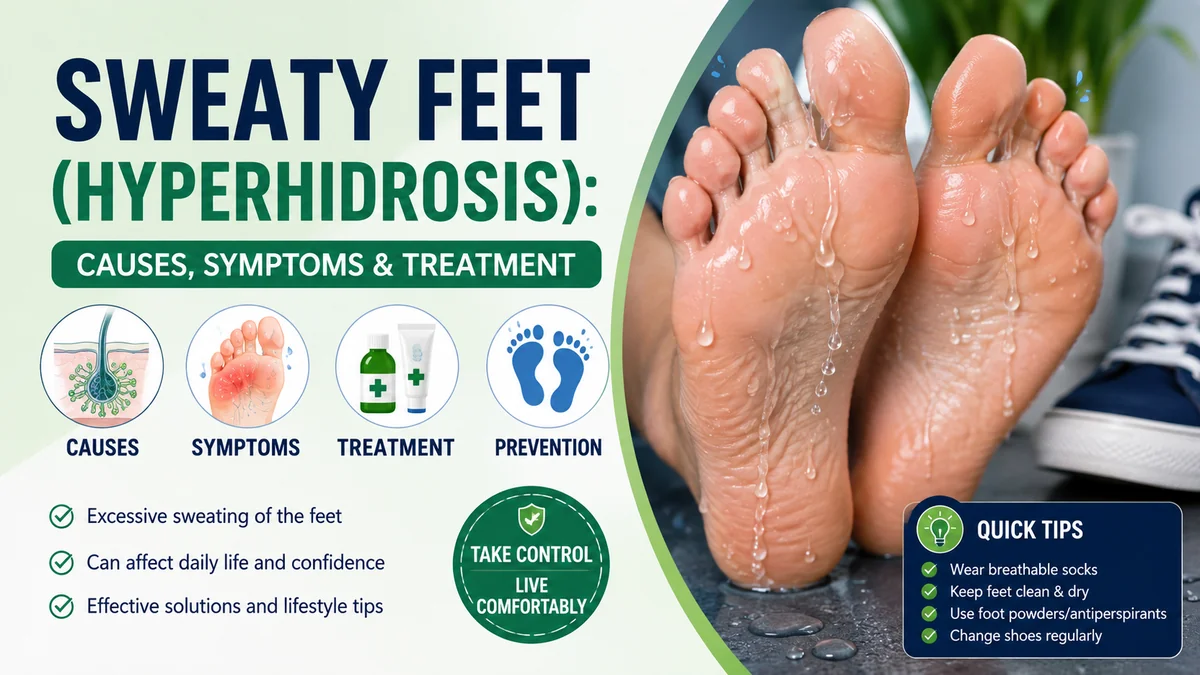
Sweaty feet are common, especially in hot weather, during exercise, or when you are feeling stressed. However, if your feet sweat excessively even when your body does not need to cool down, you may have plantar hyperhidrosis, a condition characterized by unusually heavy sweating of the soles of the feet.
Excessive foot sweating can make socks and shoes damp, contribute to unpleasant odor, and increase the risk of certain skin problems. Fortunately, several treatments and everyday measures can help control the condition.
What Is Plantar Hyperhidrosis?
Plantar hyperhidrosis is excessive sweating that primarily affects the soles of the feet. Sweating normally helps regulate body temperature. In people with hyperhidrosis, the sweat glands may produce more sweat than necessary.
Plantar hyperhidrosis may occur by itself or alongside excessive sweating of the hands, underarms, face, or other areas.
The condition can affect daily activities, exercise, footwear choices, social interactions, and confidence.
What Causes Excessive Foot Sweating?
The causes of sweaty feet vary from person to person. In many cases, excessive sweating occurs because the nerves that control the sweat glands are unusually active.
1. Primary Hyperhidrosis
Primary hyperhidrosis often begins during childhood or adolescence and may run in families. It is not necessarily caused by another medical condition.
People with primary hyperhidrosis may experience excessive sweating on both feet and often have similar symptoms affecting the hands or other areas.
2. Secondary Hyperhidrosis
Secondary hyperhidrosis occurs because of another condition, medication, or physiological change. Possible causes include:
- Certain infections
- Diabetes
- Thyroid disorders
- Nerve-related conditions
- Hormonal changes
- Some medications
- Low blood sugar
- Menopause
- Certain neurological conditions
Sudden or unexplained excessive sweating should be discussed with a healthcare professional, particularly when it occurs with other symptoms.
Symptoms of Plantar Hyperhidrosis
The most noticeable symptom is excessive sweating on the soles of the feet.
Other symptoms may include:
- Persistently wet or damp feet
- Socks becoming soaked quickly
- Difficulty keeping feet dry
- Slippery feet inside shoes
- Strong foot odor
- Skin irritation
- Peeling or softened skin between the toes
- Increased risk of fungal or bacterial infections
- Emotional discomfort or embarrassment
Sweating may become worse during stress, heat, physical activity, or certain emotional situations.
Why Do My Feet Sweat So Much?
Feet contain a large number of sweat glands, so some sweating is normal. Hot temperatures, exercise, tight shoes, synthetic socks, anxiety, and prolonged standing can all increase sweating.
If your feet remain excessively sweaty even when you are resting in a cool environment, plantar hyperhidrosis could be a possible explanation.
Is Plantar Hyperhidrosis Serious?
Plantar hyperhidrosis is usually not dangerous by itself, but persistent moisture can create an environment where certain skin infections develop more easily.
Constantly wet skin can become soft and irritated. People with excessive foot sweating may also be more prone to conditions such as athlete’s foot.
The condition can also have a significant impact on quality of life. Some people avoid certain shoes, social activities, sports, or situations where their sweaty feet may become noticeable.
How Is Plantar Hyperhidrosis Diagnosed?
A healthcare professional usually diagnoses hyperhidrosis based on your symptoms and medical history.
They may ask:
- When did the excessive sweating begin?
- How often does it happen?
- Does sweating occur on both feet?
- Does it happen while sleeping?
- Are other parts of the body affected?
- Are you taking any medications?
- Do you have other symptoms?
If secondary hyperhidrosis is suspected, your doctor may recommend tests to look for an underlying medical cause.
Treatment for Plantar Hyperhidrosis
Treatment depends on how severe the sweating is and whether an underlying condition is responsible.
1. Antiperspirants
Over-the-counter or prescription-strength antiperspirants containing aluminum salts may help reduce excessive sweating.
For foot sweating, antiperspirants are generally applied to dry skin, often at night, according to the product instructions or healthcare professional’s advice.
Some people may experience skin irritation, so stop or modify treatment and seek medical advice if significant irritation develops.
2. Iontophoresis
Iontophoresis is a commonly used treatment for excessive sweating of the hands and feet.
During treatment, the feet are placed in shallow trays of water while a mild electrical current passes through the water. The treatment temporarily reduces sweat production.
It may require repeated sessions to maintain results and is often performed at home using a suitable medical device after receiving proper instructions.
3. Prescription Medicines
In some cases, doctors may prescribe medications that reduce sweating. These medicines can have side effects, so they should only be used under medical supervision.
4. Botulinum Toxin Injections
Botulinum toxin injections can temporarily reduce excessive sweating by interfering with the nerve signals that stimulate sweat glands.
This treatment may be considered when other approaches do not provide adequate relief. Because foot injections can be uncomfortable, treatment should be performed by an appropriately qualified healthcare professional.
5. Treatment of an Underlying Condition
If excessive sweating is caused by another medical condition or medication, treating the underlying cause may improve sweating.
For this reason, sudden-onset or widespread excessive sweating deserves medical evaluation.
Home Remedies and Lifestyle Tips for Sweaty Feet
Simple habits can help keep your feet drier and reduce discomfort.
Keep Your Feet Clean and Dry
Wash your feet regularly and dry them thoroughly, particularly between the toes.
Choose Breathable Socks
Moisture-wicking or breathable socks can help move moisture away from the skin. Change socks whenever they become damp.
Wear Breathable Shoes
Choose shoes made from breathable materials rather than footwear that traps heat and moisture.
Rotate Your Shoes
Allow shoes to dry completely before wearing them again. Rotating footwear can reduce moisture buildup.
Use Foot Powder
An appropriate foot powder may help absorb moisture and keep the skin drier.
Avoid Wearing Damp Socks
Keeping damp socks on for long periods can increase skin irritation and may encourage fungal growth.
Manage Stress
Stress and anxiety can trigger or worsen sweating in some people. Relaxation techniques, regular physical activity, adequate sleep, and other stress-management strategies may help.
Sweaty Feet and Foot Odor
Sweat itself generally does not have a strong smell. Foot odor often develops when bacteria break down substances in sweat and on the skin.
Excessive moisture can make this problem more noticeable.
Keeping the feet clean and dry, changing socks regularly, and allowing shoes to dry can help reduce odor.
When Should You See a Doctor?
Consider seeing a healthcare professional if:
- Foot sweating is interfering with your daily life.
- Sweating suddenly becomes much heavier than usual.
- You develop excessive sweating throughout the body.
- Sweating occurs frequently at night.
- You have unexplained weight loss, fever, dizziness, chest discomfort, or other concerning symptoms.
- Your feet develop persistent redness, sores, cracking, itching, or signs of infection.
- Home measures are not helping.
A doctor can determine whether you have primary hyperhidrosis or whether another condition may be contributing to the sweating.
Can Plantar Hyperhidrosis Be Prevented?
Primary plantar hyperhidrosis cannot always be prevented because it may be related to how the nervous system controls the sweat glands.
However, you can reduce discomfort and moisture by:
- Wearing breathable footwear
- Choosing moisture-wicking socks
- Changing socks when they become wet
- Keeping feet clean and dry
- Allowing shoes to dry between uses
- Avoiding footwear that traps heat
- Using an appropriate antiperspirant if recommended
Frequently Asked Questions
Is sweaty feet the same as plantar hyperhidrosis?
Not necessarily. Sweaty feet are normal in response to heat, exercise, or stress. Plantar hyperhidrosis involves excessive sweating that is disproportionate to the body’s need for cooling and may occur frequently.
What is the best treatment for plantar hyperhidrosis?
There is no single best treatment for everyone. Antiperspirants, iontophoresis, prescription medicines, and botulinum toxin injections may be considered depending on the severity and cause.
Can drinking less water stop sweaty feet?
No. Reducing water intake is not a safe or reliable way to treat hyperhidrosis. Adequate hydration is important for normal body function.
Does plantar hyperhidrosis go away?
Some people experience improvement over time, while others have persistent symptoms. Treatment can often reduce sweating and improve quality of life.
Can sweaty feet cause athlete’s foot?
Excessive moisture can create conditions that favor fungal growth, potentially increasing the risk of athlete’s foot. Keeping the feet dry and changing damp socks can help.
Is plantar hyperhidrosis contagious?
No. Plantar hyperhidrosis itself is not contagious because it is related to excessive sweat production rather than an infectious disease.
Final Takeaway
Sweaty feet are common, but persistent and excessive sweating may be a sign of plantar hyperhidrosis. Although the condition is usually not dangerous, it can cause odor, skin irritation, infections, and emotional distress.
Keeping your feet dry, wearing breathable footwear, changing damp socks, and using suitable antiperspirants may help manage mild symptoms. If excessive sweating is persistent, severe, suddenly develops, or affects your daily life, consult a healthcare professional to determine the cause and discuss appropriate treatment options.