
Constipation is one of the most common digestive problems, affecting millions of people worldwide. It can cause infrequent bowel movements, hard stools, bloating, and discomfort. While occasional constipation is usually not a serious concern, making simple dietary changes can often provide significant relief.
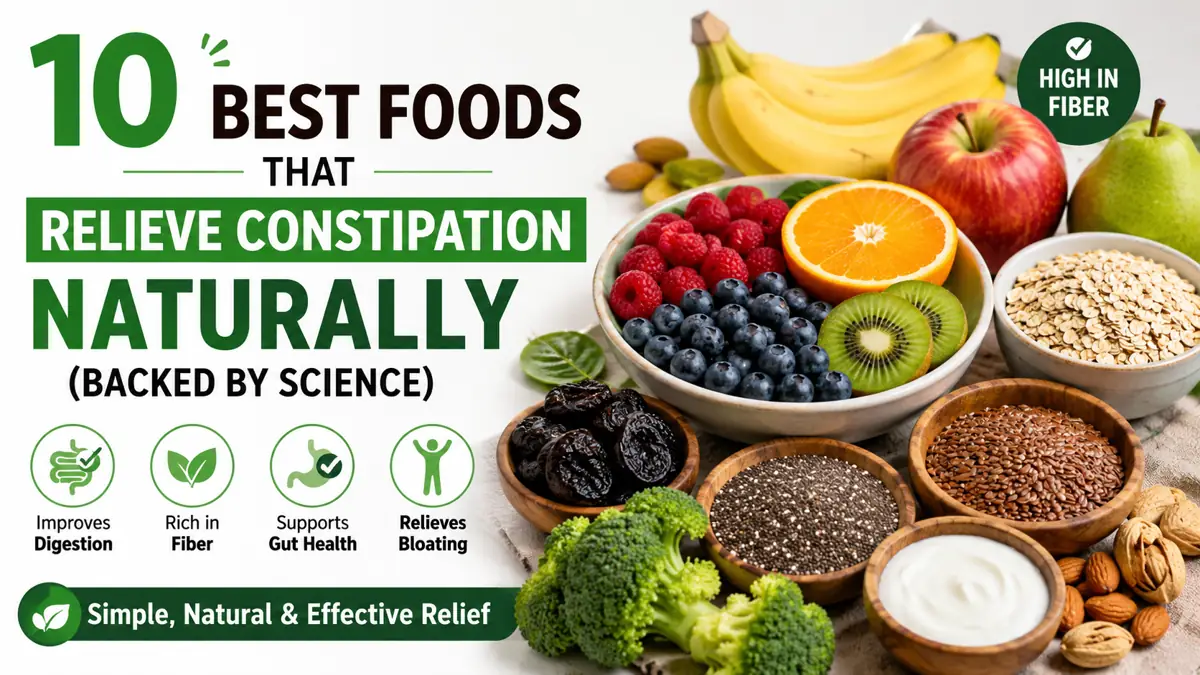
Eating the right foods can help soften stools, improve gut health, and encourage regular bowel movements naturally. In this article, you’ll discover 10 foods that relieve constipation naturally, how they work, and tips to improve digestive health.
What Is Constipation?
Constipation generally means having fewer than three bowel movements per week or passing stools that are hard, dry, or difficult to pass. Common symptoms include:
- Hard or lumpy stools
- Straining during bowel movements
- Feeling that the bowel isn’t completely empty
- Abdominal discomfort or bloating
Constipation can result from low fiber intake, dehydration, lack of physical activity, certain medications, stress, or underlying medical conditions.
1. Prunes
Prunes are widely considered one of the best natural remedies for constipation.
They contain:
- High amounts of dietary fiber
- Sorbitol, a natural sugar alcohol that draws water into the intestines
- Phenolic compounds that support digestive health
Benefits
- Softens stool
- Stimulates bowel movements
- Improves stool frequency
How to eat: Consume 4–6 prunes daily or drink a small glass of unsweetened prune juice.
2. Apples
Apples are an excellent source of both soluble and insoluble fiber.
The peel contains insoluble fiber that adds bulk to stool, while the flesh contains pectin, a soluble fiber that helps soften stool.
Benefits
- Supports healthy gut bacteria
- Promotes regular bowel movements
- Easy to include in daily meals
Tip: Eat apples with the skin on for maximum fiber.
3. Pears
Pears contain more fiber than many other fruits and are naturally high in fructose and sorbitol, which may help stimulate bowel movements.
Benefits
- Adds bulk to stool
- Increases water in the colon
- Supports healthy digestion
Enjoy pears fresh or sliced into salads and oatmeal.
4. Kiwi
Kiwi is increasingly recognized as a natural remedy for constipation.
Research suggests that eating one or two kiwis daily may improve bowel movement frequency without causing diarrhea.
Benefits
- Rich in fiber
- Contains digestive enzymes
- Supports healthy intestinal function
Eat fresh kiwi as a snack or add it to smoothies.
5. Chia Seeds
Tiny but nutrient-dense, chia seeds absorb water and form a gel-like texture that softens stool.
Benefits
- Extremely high in fiber
- Promotes stool softness
- Supports beneficial gut bacteria
How to use:
- Mix into yogurt
- Add to smoothies
- Make chia pudding
Always drink plenty of water when eating chia seeds.
6. Flaxseeds
Flaxseeds are another fiber powerhouse.
They contain both soluble and insoluble fiber, along with healthy omega-3 fatty acids.
Benefits
- Improves stool consistency
- Supports colon health
- May reduce constipation symptoms
Ground flaxseed is easier to digest than whole seeds.
Add one tablespoon to oatmeal, cereal, or smoothies.
7. Leafy Green Vegetables
Spinach, kale, collard greens, and Swiss chard provide fiber, magnesium, and water.
Magnesium helps draw water into the intestines, making stools easier to pass.
Benefits
- Improves digestive function
- Increases stool bulk
- Provides essential vitamins
Aim for at least one serving of leafy greens daily.
8. Oats
Oats are packed with soluble fiber known as beta-glucan.
Unlike refined cereals, oats help regulate digestion and support healthy gut bacteria.
Benefits
- Softens stool
- Keeps digestion regular
- Provides long-lasting fullness
Choose plain rolled oats or steel-cut oats instead of sugary instant varieties.
9. Beans and Lentils
Beans, lentils, chickpeas, and black beans are among the richest plant-based sources of fiber.
A single serving can provide a significant portion of your daily fiber needs.
Benefits
- Promotes regular bowel movements
- Supports healthy gut microbes
- Keeps stools soft
Introduce legumes gradually to reduce gas and bloating.
10. Yogurt with Live Probiotics
Constipation isn’t always caused by low fiber. Sometimes an imbalance in gut bacteria contributes to digestive problems.
Probiotic-rich yogurt contains beneficial bacteria that may improve bowel regularity.
Benefits
- Supports healthy gut microbiome
- May improve stool frequency
- Helps maintain digestive balance
Choose yogurt with live active cultures and minimal added sugar.
Other Foods That May Help
Besides the foods listed above, these may also support healthy digestion:
- Berries
- Oranges
- Sweet potatoes
- Broccoli
- Avocados
- Brown rice
- Whole-grain bread
- Figs
- Papaya
- Pumpkin
A varied diet rich in fruits, vegetables, whole grains, and legumes is generally the most effective approach.
Lifestyle Tips to Prevent Constipation
Food works best when combined with healthy habits.
Stay Hydrated
Fiber needs water to work effectively. Most adults should drink enough fluids throughout the day, adjusting intake based on activity level and climate.
Exercise Regularly
Walking, cycling, yoga, or other moderate physical activity helps stimulate intestinal movement.
Don’t Ignore the Urge
Delaying bowel movements can worsen constipation over time.
Increase Fiber Gradually
Aim for about 25–38 grams of fiber per day, depending on age and sex. Increase fiber slowly to reduce gas and bloating.
Foods That May Make Constipation Worse
Some foods may contribute to constipation if eaten in excess, especially when fiber and water intake are low.
These include:
- Highly processed foods
- Fast food
- White bread
- Pastries
- Chips
- Excess cheese
- Sugary snacks
- Processed meats
Balance these foods with plenty of fiber-rich options.
When to See a Doctor
Occasional constipation is common, but medical evaluation is recommended if you experience:
- Constipation lasting longer than three weeks
- Blood in the stool
- Severe abdominal pain
- Unexplained weight loss
- Persistent vomiting
- Pencil-thin stools
- Constipation alternating with diarrhea
These symptoms may indicate an underlying medical condition requiring treatment.
Frequently Asked Questions (FAQs)
What fruit works fastest for constipation?
Prunes are often considered the most effective fruit because they contain fiber and sorbitol, which help soften stools and stimulate bowel movements.
Is banana good for constipation?
Ripe bananas may help some people because they contain soluble fiber. However, unripe bananas can worsen constipation in some individuals due to their higher resistant starch content.
How much fiber should I eat daily?
Most adults should aim for 25–38 grams of fiber per day, depending on age, sex, and overall health.
Can drinking water alone relieve constipation?
Water helps soften stools and is essential for fiber to work effectively. However, increasing water intake alone may not resolve constipation if your diet is low in fiber.
Are probiotics helpful?
For some people, probiotics may improve bowel regularity by supporting a healthy balance of gut bacteria, though results can vary.
Conclusion
Constipation can often be improved naturally through simple dietary changes. Adding fiber-rich foods such as prunes, apples, pears, kiwi, chia seeds, flaxseeds, leafy greens, oats, beans, and probiotic yogurt can support healthy digestion and promote regular bowel movements.
For the best results, combine these foods with adequate hydration, regular exercise, and healthy bathroom habits. If constipation is severe, persistent, or accompanied by concerning symptoms, consult a healthcare professional for evaluation.