


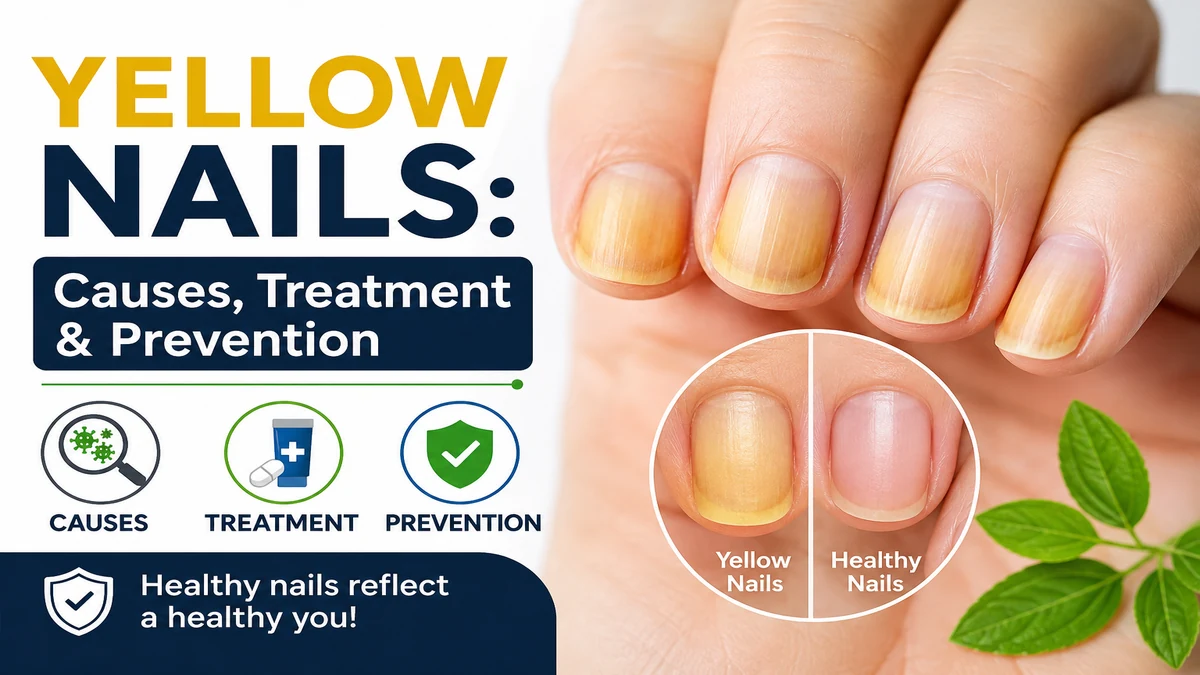
Yellow nails can be a harmless cosmetic change, but they may sometimes signal a fungal infection, an underlying health condition, or damage to the nails. The appearance can range from mild yellow staining to thick, brittle, slow-growing nails.
Understanding yellow nails causes, treatment, and prevention can help you decide when simple home care is enough and when medical evaluation is needed.
What Are Yellow Nails?
Yellow nails occur when one or more fingernails or toenails develop a yellowish discoloration. The nail may remain otherwise normal, or it can become thick, brittle, ridged, crumbly, or separated from the skin underneath.
The cause is important because treatment depends on what is producing the discoloration.
Yellow Nails Causes
Several factors can cause yellow nails. Some are temporary, while others require treatment.
1. Nail Fungus
A fungal nail infection, known medically as onychomycosis, is one of the common causes of yellow toenails and fingernails.
Signs may include:
- Yellow, white, or brown nail discoloration
- Thickened nails
- Brittle or crumbly nail edges
- Distorted nail shape
- Debris collecting under the nail
- Nail separation from the nail bed
Fungal infections are more common in toenails because shoes create a warm, moist environment where fungi can grow.
2. Smoking
Tobacco smoke can stain nails and fingertips yellow or brown. Repeated exposure can make the discoloration more noticeable over time.
Stopping smoking can prevent additional staining and may allow the nails to gradually return toward their natural appearance as they grow.
3. Nail Polish Staining
Frequent use of dark nail polishes can sometimes leave yellow or orange stains on the nails, particularly when polish is applied repeatedly without a protective base coat.
This type of discoloration is generally superficial and may fade as the nail grows.
4. Yellow Nail Syndrome
Yellow nail syndrome is a rare condition associated with yellowish, thickened, slow-growing nails. The nails may also curve and separate from the nail bed.
Some people with this condition develop swelling in the legs or respiratory problems because the syndrome can be associated with lymphatic and lung abnormalities.
Persistent yellow nails accompanied by swelling or breathing problems should be medically evaluated.
5. Psoriasis
Nail psoriasis can affect the fingernails and toenails. It may cause:
- Yellow or reddish discoloration
- Small pits in the nail surface
- Nail thickening
- Crumbling
- Separation from the nail bed
People with psoriasis elsewhere on the skin may be more likely to develop nail involvement.
6. Nail Trauma
Repeated pressure or injury can change the appearance of a nail. Tight shoes, aggressive manicures, nail picking, or direct trauma may cause discoloration or changes in nail growth.
7. Certain Medical Conditions
In some cases, nail discoloration can occur alongside systemic health problems. Persistent or unexplained yellow nails may warrant an examination, particularly when several nails are affected or other symptoms are present.
What Causes Yellow Toenails?
Yellow toenails are frequently associated with fungal nail infections, especially when the nails are thick, brittle, distorted, or developing debris underneath.
Other possible causes include:
- Tight or poorly fitting footwear
- Repeated toenail trauma
- Nail polish staining
- Psoriasis
- Certain medical conditions
- Poor nail care
Because several conditions can look similar, persistent yellow toenails should not automatically be assumed to be caused by fungus.
What Causes Yellow Fingernails?
Yellow fingernails may result from nail polish staining, smoking, fungal infections, trauma, psoriasis, or other conditions.
If the discoloration affects only the surface of the nail and gradually disappears as the nail grows, staining may be responsible. Thickening, crumbling, separation, or persistent discoloration is more likely to require professional assessment.
Yellow Nails Treatment
Treatment depends on the underlying cause.
Treatment for Fungal Nail Infections
A healthcare professional may recommend antifungal treatment after examining the nail and, when necessary, testing a nail sample.
Treatment options can include:
- Topical antifungal medicines for selected mild infections
- Prescription oral antifungal medicines for some infections
- Removal or trimming of damaged nail material in certain cases
- Treatment of athlete’s foot if it is also present
Nail fungus can take months to treat because healthy nail has to grow out. Toenails generally grow more slowly than fingernails.
Avoid taking oral antifungal medication without medical advice because some medicines can interact with other drugs and may require monitoring.
Treatment for Nail Polish Staining
If nail polish is responsible, taking a break from polish and allowing the nail to grow can help.
Using a base coat before applying strongly pigmented polish may also reduce future staining.
Treatment for Nail Psoriasis
Treatment depends on the severity and may include prescription topical medications or other therapies recommended by a dermatologist.
Treatment for Yellow Nail Syndrome
Yellow nail syndrome requires medical evaluation. Treatment focuses on the individual’s symptoms and any associated lymphatic or respiratory problems.
Can You Treat Yellow Nails at Home?
Home care may help when yellowing is caused by superficial staining or minor nail damage, but it will not reliably cure an underlying fungal infection or medical condition.
Helpful nail-care measures include:
- Keep nails clean and dry.
- Trim nails regularly.
- Avoid picking or biting the nails.
- Don’t share nail clippers or other nail tools.
- Wear breathable footwear.
- Change socks regularly.
- Avoid prolonged moisture around the feet.
- Give nails a break from dark nail polish if staining occurs.
Be cautious with DIY remedies such as lemon juice, vinegar, bleach, or harsh chemicals. These can irritate or damage the skin and nails.
How to Prevent Yellow Nails
You can reduce your risk of nail discoloration by following good nail hygiene.
Keep Feet Dry
Fungi thrive in warm, damp environments. Dry your feet carefully after bathing, particularly between the toes.
Wear Appropriate Shoes
Choose shoes that fit properly and allow air circulation. Avoid wearing damp shoes for prolonged periods.
Change Socks Regularly
Clean, dry socks can help reduce moisture buildup inside footwear.
Don’t Share Nail Tools
Sharing nail clippers, files, or other manicure and pedicure tools can increase the risk of spreading infections.
Protect Your Nails
Avoid aggressive manicures, excessive filing, and picking at the nail. Protect your hands when working with chemicals or doing activities that could injure the nails.
Consider a Base Coat
If nail polish causes staining, applying a base coat before colored polish may help reduce direct pigment contact with the nail.
Stop Smoking
Quitting smoking can help prevent tobacco-related nail staining and offers many other health benefits.
When Should You See a Doctor?
Yellow nails aren’t always serious, but you should consider seeing a healthcare professional if:
- The discoloration doesn’t improve as the nail grows.
- The nail becomes thick, brittle, or crumbly.
- The nail separates from the nail bed.
- Several nails become yellow without an obvious cause.
- There is pain, swelling, redness, or drainage.
- You repeatedly develop nail infections.
- You have diabetes or a weakened immune system.
- Yellow nails occur together with leg swelling or breathing problems.
A dermatologist can examine the nail and determine whether the problem is fungal infection, psoriasis, trauma, staining, or another condition.
Frequently Asked Questions
Are yellow nails always caused by fungus?
No. Nail fungus is a common cause, but yellow nails can also result from nail polish staining, smoking, trauma, psoriasis, and less common medical conditions.
How do I get rid of yellow nails naturally?
If staining is superficial, stopping the source and allowing the nail to grow may help. However, there is no reliable natural treatment that cures every cause of yellow nails, particularly fungal infections.
Do yellow nails grow out?
They can. If discoloration is caused by temporary staining or minor trauma, the affected portion may gradually disappear as the nail grows. Toenails can take many months to fully replace themselves.
Can nail polish cause yellow nails?
Yes. Repeated use of highly pigmented nail polish can stain the nail surface, particularly when a base coat isn’t used.
Are yellow toenails a sign of a fungal infection?
They can be. Yellow, thickened, brittle, distorted nails are particularly suggestive of a fungal infection, but other conditions can produce similar changes.
Final Takeaway
Yellow nails can have many causes, from nail polish staining and smoking to fungal infections and certain medical conditions. Treatment should address the underlying cause rather than simply trying to whiten the nail. Good nail hygiene, keeping feet dry, avoiding nail trauma, and seeking medical advice for persistent or changing nails can help protect nail health.