


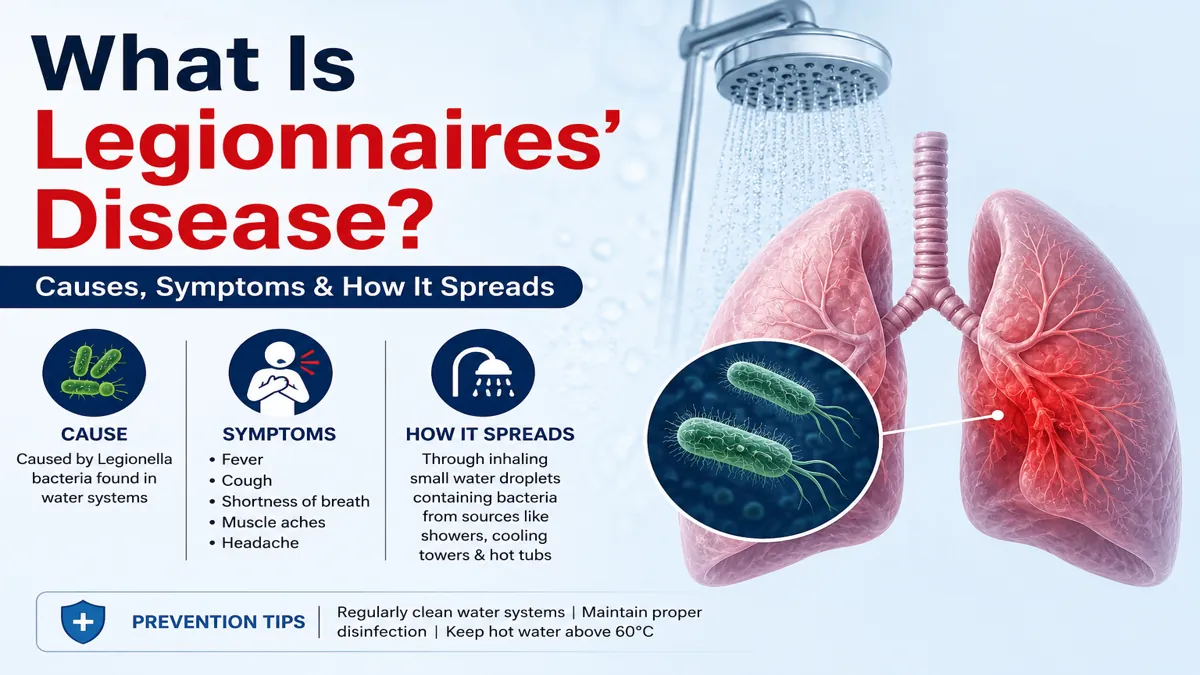
Legionnaires’ disease is a serious type of pneumonia (lung infection) caused by Legionella bacteria, most commonly Legionella pneumophila. The infection primarily affects the lungs and can become life-threatening if not diagnosed and treated promptly.
The disease was first identified in 1976 after an outbreak among attendees of an American Legion convention in Philadelphia, which is how it got its name.
Although Legionnaires’ disease is relatively uncommon, it can lead to severe illness, especially in older adults, smokers, and people with weakened immune systems.
What Causes Legionnaires’ Disease?
Legionnaires’ disease is caused by Legionella bacteria, which naturally exist in freshwater environments such as rivers, lakes, and streams. However, these bacteria usually become a health concern when they multiply in man-made water systems.
Common places where Legionella bacteria can grow include:
- Cooling towers used in large buildings
- Hot tubs and whirlpool spas
- Decorative fountains
- Hotel and hospital plumbing systems
- Hot water tanks and water heaters
- Large air-conditioning systems that use water
- Humidifiers and misting devices (if not properly maintained)
The bacteria multiply more easily in warm, stagnant water, particularly when water systems are not cleaned or disinfected regularly.
How Does Legionnaires’ Disease Spread?
One of the most common questions people ask is whether Legionnaires’ disease spreads from person to person.
The answer is almost always no.
Instead, the disease spreads when people inhale tiny water droplets (aerosols) that contain Legionella bacteria.
Examples include:
- Breathing in mist from contaminated cooling towers
- Steam from poorly maintained hot tubs
- Water spray from decorative fountains
- Aerosolized water from showers or faucets in contaminated buildings
In rare situations, a person may become infected if contaminated water accidentally enters the lungs while drinking (aspiration).
Does Legionnaires’ Disease Spread Between People?
Person-to-person transmission is extremely rare. Nearly all reported cases result from exposure to contaminated water sources rather than contact with an infected individual.
You cannot usually catch Legionnaires’ disease by:
- Shaking hands
- Hugging someone
- Sharing food
- Sitting near an infected person
- Coughing or sneezing exposure
Who Is Most at Risk?
Anyone can develop Legionnaires’ disease, but certain groups have a higher risk.
These include:
- Adults aged 50 years or older
- Current or former smokers
- People with chronic lung diseases such as COPD or emphysema
- Individuals with diabetes
- People with kidney disease
- Cancer patients
- Organ transplant recipients
- Individuals taking immune-suppressing medications
- Hospitalized patients with weakened immune systems
Healthy younger adults are generally less likely to develop severe illness after exposure.
Symptoms of Legionnaires’ Disease
Symptoms usually appear 2 to 10 days after exposure to the bacteria.
Common symptoms include:
- High fever
- Chills
- Persistent cough (dry or producing mucus)
- Shortness of breath
- Chest pain
- Muscle aches
- Headache
- Fatigue
- Confusion, especially in older adults
- Nausea, vomiting, or diarrhea
Because these symptoms resemble other types of pneumonia, medical testing is often needed for an accurate diagnosis.
How Is Legionnaires’ Disease Diagnosed?
Doctors may suspect Legionnaires’ disease based on symptoms, medical history, and chest imaging.
Diagnostic tests may include:
- Chest X-ray
- Urine antigen test
- Sputum culture
- PCR (polymerase chain reaction) testing
- Blood tests
Early diagnosis helps ensure timely treatment and reduces the risk of complications.
Treatment for Legionnaires’ Disease
Legionnaires’ disease requires prompt antibiotic treatment.
Doctors commonly prescribe antibiotics such as:
- Azithromycin
- Levofloxacin
- Moxifloxacin
Many patients need hospitalization, particularly if they have severe pneumonia or underlying health conditions.
Supportive treatment may include:
- Oxygen therapy
- Intravenous fluids
- Medications to control fever
- Intensive care for severe cases
Most people recover fully with early treatment, although recovery may take several weeks.
Possible Complications
Without timely treatment, Legionnaires’ disease can lead to serious complications, including:
- Respiratory failure
- Septic shock
- Acute kidney injury
- Multi-organ failure
- Death in severe cases
People with weakened immune systems face the highest risk of complications.
How Can Legionnaires’ Disease Be Prevented?
Since the disease originates from contaminated water systems, prevention focuses on proper maintenance and water safety.
Recommended preventive measures include:
- Regular cleaning and disinfection of cooling towers
- Maintaining appropriate hot water temperatures
- Flushing unused plumbing systems
- Proper maintenance of hot tubs and spas
- Routine water quality monitoring
- Following water management plans in hospitals and large buildings
For individuals:
- Avoid smoking, as smoking increases susceptibility.
- Ensure home water heaters are properly maintained.
- Clean humidifiers according to manufacturer instructions.
- Stay informed during local Legionella outbreaks.
Is Legionnaires’ Disease Contagious?
No. Legionnaires’ disease is not considered a contagious disease in everyday settings.
Unlike influenza or COVID-19, it does not typically spread from one person to another. The primary source of infection is contaminated water that becomes airborne as fine droplets.
Legionnaires’ Disease vs. Pontiac Fever
Both illnesses are caused by Legionella bacteria, but they differ significantly.
| Feature | Legionnaires’ Disease | Pontiac Fever |
|---|---|---|
| Severity | Serious pneumonia | Mild flu-like illness |
| Lung infection | Yes | No |
| Hospitalization | Often required | Rarely needed |
| Antibiotics | Required | Usually not necessary |
| Recovery | Weeks to months | A few days |
When Should You See a Doctor?
Seek immediate medical attention if you experience:
- High fever with persistent cough
- Difficulty breathing
- Chest pain
- Confusion
- Symptoms of pneumonia after staying in a hotel, hospital, cruise ship, or other large building
Early treatment significantly improves outcomes.
Frequently Asked Questions (FAQs)
Can you get Legionnaires’ disease from drinking contaminated water?
Drinking contaminated water usually does not cause infection. However, infection may occur if water accidentally enters the lungs while swallowing.
Is Legionnaires’ disease fatal?
It can be fatal if left untreated, particularly in older adults and people with weakened immune systems. Prompt antibiotic treatment greatly improves survival.
Can home air conditioners spread Legionnaires’ disease?
Standard household air conditioners do not use water in a way that supports Legionella growth. Large commercial cooling towers pose a much greater risk.
How long does recovery take?
Most patients improve within a few days of starting antibiotics, but complete recovery may take several weeks or months, depending on the severity of illness.
Can Legionnaires’ disease be prevented?
Yes. Proper maintenance of water systems, routine cleaning, and effective water management significantly reduce the risk of outbreaks.
Key Takeaways
Legionnaires’ disease is a potentially serious bacterial pneumonia caused by Legionella bacteria that thrive in poorly maintained water systems. People become infected by inhaling contaminated water droplets—not through normal contact with infected individuals. Older adults, smokers, and those with weakened immune systems are at the greatest risk of severe illness. Recognizing symptoms early, seeking prompt medical care, and maintaining safe water systems are the most effective ways to reduce complications and prevent outbreaks.