
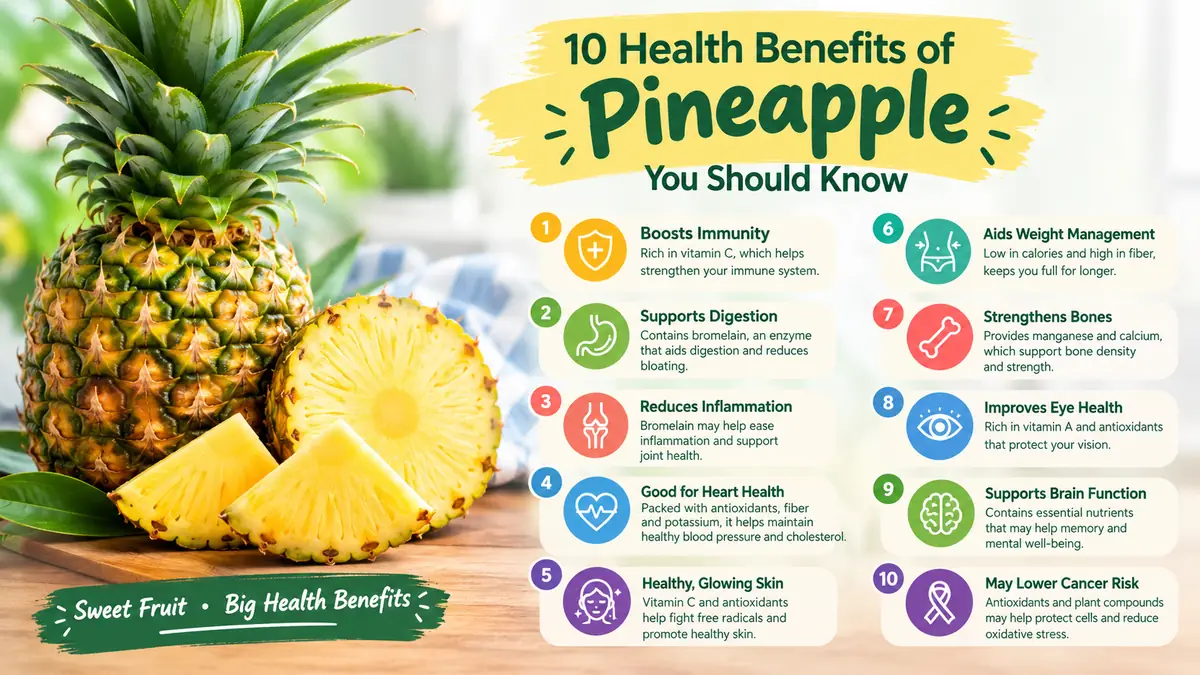
Pineapple is a delicious tropical fruit known for its sweet-tart flavor, juicy texture, and impressive nutritional profile. It contains vitamin C, manganese, fiber, antioxidants, and a group of enzymes called bromelain.
Adding pineapple to a balanced diet may support immune function, digestion, heart health, and overall wellness. However, eating too much may cause digestive discomfort or mouth irritation in some people.
What Is Pineapple?
Pineapple is a tropical fruit that belongs to the Bromeliaceae family. It can be eaten fresh, grilled, added to smoothies, mixed into salads, or used in various recipes.
One of pineapple’s most notable components is bromelain, a mixture of enzymes naturally found in the fruit. Bromelain has been studied for its potential effects on digestion and inflammation.
Nutritional Value of Pineapple
Pineapple provides several important nutrients while being relatively low in calories. A typical serving can contribute:
- Vitamin C
- Manganese
- Dietary fiber
- Copper
- Vitamin B6
- Folate
- Potassium
- Natural carbohydrates
- Antioxidant compounds
Its vitamin C content is particularly noteworthy. Vitamin C is an antioxidant that contributes to normal immune function and helps protect cells from oxidative stress.
10 Health Benefits of Pineapple
1. Supports Immune Function
Pineapple is a good source of vitamin C, an essential nutrient involved in normal immune system function.
Regularly including vitamin C-rich foods such as pineapple in a balanced diet can help you meet your daily nutritional needs.
2. May Support Healthy Digestion
Pineapple contains bromelain, a group of enzymes that can break down proteins. Pineapple also provides dietary fiber, which is important for normal digestive function.
Eating fruit as part of a fiber-rich diet can support regular bowel movements and overall gut health.
3. Provides Antioxidants
Pineapple contains vitamin C and other plant compounds with antioxidant properties.
Antioxidants help protect cells from oxidative stress caused by unstable molecules known as free radicals. Eating a variety of colorful fruits and vegetables is a practical way to increase antioxidant intake.
4. Supports Bone Health
Pineapple provides manganese, a mineral involved in bone formation and connective tissue metabolism.
Although eating pineapple alone cannot guarantee strong bones, incorporating nutrient-rich fruits into a balanced diet can contribute to overall nutritional support for bone health.
5. May Support Heart Health
Pineapple can be part of a heart-healthy eating pattern because it provides fiber, potassium, vitamin C, and plant compounds.
A diet rich in fruits, vegetables, whole grains, legumes, nuts, and other minimally processed foods is generally beneficial for cardiovascular health.
6. Supports Healthy Skin
Vitamin C plays an important role in collagen production. Collagen helps provide structure to the skin, bones, and connective tissues.
Including vitamin C-rich foods such as pineapple in your diet can therefore contribute to normal collagen formation and healthy skin.
7. May Help Reduce Inflammation
Bromelain has been investigated for its potential anti-inflammatory effects. Research has explored bromelain in several areas, although more evidence is needed to determine how much benefit can be obtained from eating normal portions of pineapple.
Pineapple should not be considered a treatment for inflammatory diseases.
8. May Support Weight Management
Fresh pineapple can be a useful choice for people trying to maintain a healthy eating pattern. It provides water, fiber, and nutrients while offering natural sweetness.
Replacing highly processed desserts or sugary snacks with fresh fruit may help improve overall diet quality.
However, pineapple does not directly “burn fat,” and eating large quantities will not automatically cause weight loss.
9. Supports Eye Health
Pineapple provides vitamin C and other antioxidant compounds that contribute to overall nutritional health.
Maintaining adequate nutrition, eating a variety of fruits and vegetables, and managing conditions such as diabetes are important parts of supporting long-term eye health.
10. Helps Meet Daily Fruit Intake
One of the simplest benefits of pineapple is that it makes it easier to include fruit in your diet.
You can enjoy fresh pineapple:
- As a snack
- With yogurt
- In fruit salads
- In smoothies
- With oatmeal
- In salsa
- Alongside grilled foods
Choosing whole or minimally processed fruit is generally preferable to heavily sweetened pineapple products.
Is Pineapple Good for Weight Loss?
Pineapple can fit into a weight-loss diet, but it is not a weight-loss food in the sense of directly burning body fat.
Fresh pineapple contains relatively few calories per serving and provides water, fiber, and nutrients. It can be a satisfying alternative to some calorie-dense desserts.
For sustainable weight management, focus on your overall calorie intake, protein and fiber consumption, physical activity, sleep, and eating habits rather than relying on a single food.
Best Time to Eat Pineapple
There is no scientifically established “best time” to eat pineapple for maximum health benefits.
You can eat it as part of breakfast, lunch, a snack, or dinner. Some people may prefer eating smaller portions if pineapple causes acidity or digestive discomfort.
The most important factor is including fruit regularly as part of a balanced diet.
How Much Pineapple Should You Eat?
The appropriate amount depends on your overall diet, nutritional needs, and individual tolerance.
A moderate serving of fresh pineapple can easily fit into a balanced eating pattern. Instead of focusing on a specific “maximum” amount, consider pineapple as one of several fruits you eat throughout the week.
People who experience mouth irritation or stomach discomfort after eating pineapple may benefit from reducing their portion size.
Fresh Pineapple vs. Canned Pineapple
Fresh pineapple is an excellent choice, but canned pineapple can also be nutritious.
When purchasing canned pineapple, check the nutrition label and consider products packed in water or juice rather than heavy syrup. Pineapple packed in syrup can contain substantially more added sugar.
Frozen pineapple without added sugar can also be a convenient option.
Pineapple Juice: Is It Healthy?
Pineapple juice contains some of the nutrients found in pineapple, including vitamin C, but it generally contains less fiber than whole pineapple.
Whole fruit is usually the better choice because the fiber can contribute to fullness and digestive health.
If you drink pineapple juice, choose versions without added sugar and keep portions moderate.
Possible Side Effects of Eating Pineapple
Pineapple is safe for most people when consumed as part of a normal diet. However, some people may experience:
- Mouth or tongue irritation
- Heartburn or acid reflux
- Stomach discomfort
- Diarrhea after eating large amounts
- Allergic reactions in susceptible individuals
The acidity and enzymes in pineapple can cause temporary tingling or irritation around the mouth in some people.
Can You Be Allergic to Pineapple?
Yes. Although pineapple allergy is uncommon, some people can have an allergic reaction.
Symptoms may include itching, swelling, hives, vomiting, or difficulty breathing. Difficulty breathing or significant swelling requires urgent medical attention.
People with known food allergies should discuss suspected reactions with a healthcare professional.
Who Should Be Careful With Pineapple?
Most people can enjoy pineapple safely. However, people who experience frequent acid reflux, digestive sensitivity, or symptoms after eating pineapple may need to limit their intake.
If you take medications or supplements containing bromelain, speak with a healthcare professional before using concentrated bromelain products. Eating pineapple as a food is different from taking concentrated enzyme supplements.
Frequently Asked Questions
Is pineapple good for you?
Yes. Pineapple provides vitamin C, manganese, fiber, and other nutrients. It can be a healthy addition to a balanced diet when eaten in appropriate portions.
Does pineapple help digestion?
Pineapple contains bromelain, which consists of protein-digesting enzymes, and it also provides fiber. These components may support normal digestion, although pineapple should not be considered a treatment for digestive disorders.
Does pineapple burn belly fat?
No. Pineapple does not specifically burn belly fat. Fat loss generally requires a sustained energy deficit combined with an appropriate diet and physical activity.
Can I eat pineapple every day?
Many people can eat pineapple daily as part of a varied diet. However, portion size matters, particularly if pineapple causes mouth irritation, heartburn, or stomach discomfort.
Is pineapple good for skin?
Pineapple provides vitamin C, which is required for normal collagen production. Eating pineapple as part of a balanced diet can contribute to adequate vitamin C intake and support overall skin health.
Is fresh pineapple better than canned pineapple?
Fresh pineapple is an excellent option. Canned pineapple can also be nutritious, especially when packed in water or juice without added sugar. Check the nutrition label when choosing canned products.
Bottom Line
Pineapple is a nutrient-rich tropical fruit that can be a healthy addition to your diet. Its vitamin C, manganese, fiber, antioxidants, and bromelain content make it particularly interesting from a nutritional perspective.
Potential health benefits of pineapple include supporting normal immune function, digestion, collagen production, bone health, and overall diet quality.
For the best results, enjoy pineapple as part of a varied diet that includes vegetables, whole grains, protein-rich foods, healthy fats, and other fruits. If pineapple consistently causes allergic symptoms, severe digestive problems, or significant irritation, seek advice from a healthcare professional.