
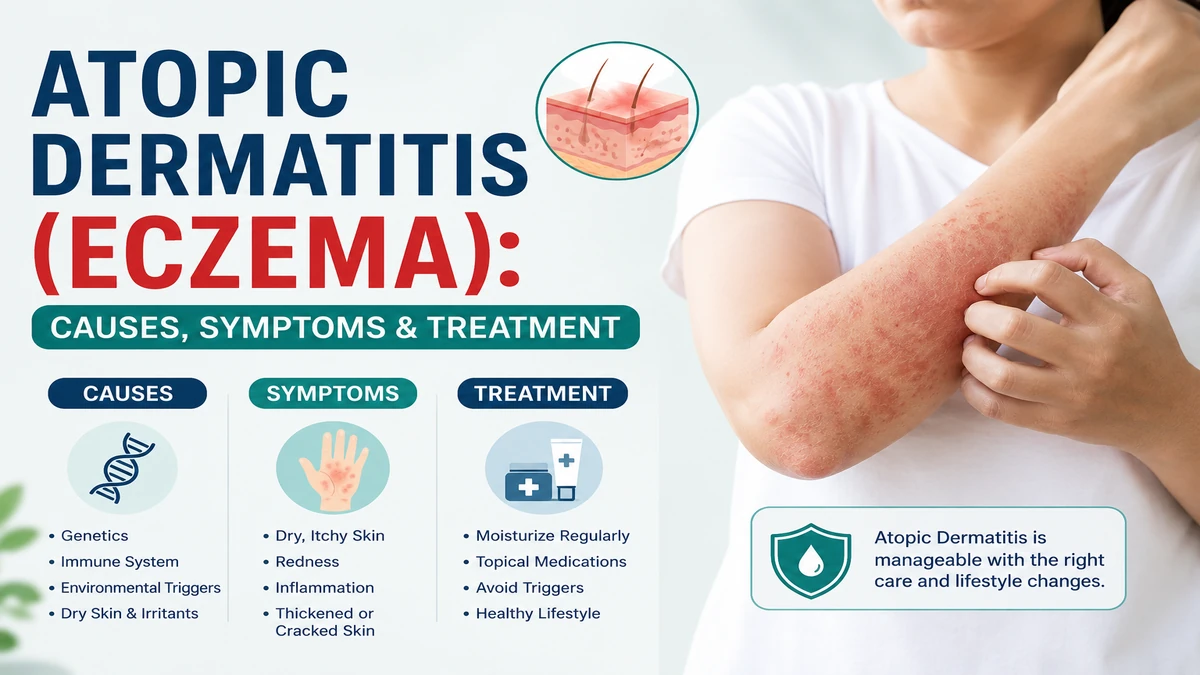
Atopic dermatitis, commonly called eczema, is a chronic inflammatory skin condition that causes dry, itchy, irritated, and sometimes cracked or thickened skin. It can affect people of any age but is particularly common in babies and children. Some people experience occasional flare-ups, while others have symptoms that persist for years.
Although atopic dermatitis is not contagious, it can significantly affect sleep, comfort, and quality of life. Understanding its triggers and following an appropriate skin-care and treatment plan can help control symptoms and reduce flare-ups.
What Is Atopic Dermatitis (Eczema)?
Atopic dermatitis is a long-term skin condition associated with inflammation and an impaired skin barrier. The skin normally helps keep moisture inside while protecting the body from irritants, allergens, and microorganisms. In people with atopic dermatitis, this protective barrier may not work as effectively.
As a result, the skin can lose moisture more easily and become dry, sensitive, and vulnerable to irritation. Immune-system activity also contributes to inflammation, causing itching, redness, and other symptoms.
Atopic dermatitis often develops in childhood, although adults can also develop it. Symptoms may improve for periods and then return during eczema flare-ups.
Atopic Dermatitis Symptoms
Symptoms can vary depending on a person’s age, skin tone, and the severity of the condition.
Common symptoms include:
- Intense itching
- Dry or flaky skin
- Red, brown, gray, purple, or darker patches depending on skin tone
- Small bumps that may leak fluid when scratched
- Cracked or scaly skin
- Swelling and irritation
- Thickened skin from repeated scratching
- Raw or sensitive skin
- Crusting when irritated areas become infected
Itching is one of the most characteristic symptoms of eczema. Scratching can temporarily relieve itching but may damage the skin and make inflammation worse.
Atopic Dermatitis in Babies
Eczema commonly appears in babies on the face, scalp, and the outer surfaces of the arms and legs. Infants may develop dry, itchy patches that can become irritated from rubbing or scratching.
Because babies cannot explain their symptoms, persistent scratching, difficulty sleeping, or irritated skin may be signs that they need evaluation by a pediatrician or dermatologist.
Atopic Dermatitis in Children and Adults
In older children and adults, eczema often affects areas such as:
- Hands
- Face and neck
- Elbows
- Knees
- Wrists
- Ankles
- Areas behind the knees
Adults may also develop hand eczema, which can be particularly troublesome for people who frequently wash their hands or work with irritating substances.
What Causes Atopic Dermatitis?
There is no single cause of atopic dermatitis. It is thought to result from a combination of genetic, immune-system, and environmental factors.
1. Impaired Skin Barrier
A healthy skin barrier prevents excessive water loss and protects the skin from irritants and microorganisms. Genetic differences affecting skin-barrier proteins can make some people more susceptible to eczema.
When the barrier is weakened, the skin becomes dry and more easily irritated.
2. Immune-System Dysfunction
Atopic dermatitis involves an overactive or altered immune response in the skin. This can trigger inflammation and contribute to redness, itching, and irritation.
3. Genetics and Family History
People with a family history of atopic dermatitis, asthma, or allergic conditions may have a higher likelihood of developing eczema.
However, having a family history does not mean that a person will definitely develop the condition.
4. Environmental Factors
Certain environmental conditions can trigger or worsen eczema. These may include:
- Cold or dry weather
- Hot and humid conditions
- Excessive sweating
- Dust
- Smoke
- Air pollution
- Certain fabrics
- Irritating soaps or detergents
Triggers differ from person to person, so identifying individual triggers can be useful.
Common Eczema Triggers
A trigger is something that causes or worsens symptoms. Common eczema triggers include:
Dry Skin
Dry skin can weaken the skin barrier and increase itching. Low humidity, particularly during cold weather, can make dryness worse.
Soaps and Detergents
Strong soaps, fragrances, detergents, and cleaning products may irritate sensitive skin.
Heat and Sweating
Heat and perspiration can trigger itching and flare-ups in some people.
Stress
Emotional stress does not directly cause eczema, but it may worsen symptoms in some individuals.
Fabrics
Wool and rough or synthetic fabrics can irritate the skin. Soft, breathable clothing may be more comfortable.
Allergens
Some people with eczema may also have allergies. However, food and environmental allergies are not the cause of every eczema flare-up. Unnecessary elimination diets should generally be avoided unless recommended by a healthcare professional.
Is Atopic Dermatitis Contagious?
No. Atopic dermatitis is not contagious.
You cannot catch eczema by touching, hugging, sharing clothing, or being close to someone who has it.
However, damaged eczema skin can sometimes become infected with bacteria or viruses. An infection can require medical treatment.
How Is Atopic Dermatitis Diagnosed?
Doctors generally diagnose eczema by examining the skin and reviewing the person’s symptoms and medical history.
There is usually no single test that confirms atopic dermatitis.
A healthcare professional may ask about:
- When symptoms started
- Where the rash appears
- How severe the itching is
- Possible triggers
- Family history of eczema or allergies
- Previous treatments
- Other allergic conditions
In some situations, additional testing may be considered to rule out other skin conditions.
Atopic Dermatitis Treatment
There is currently no universal cure for atopic dermatitis, but treatment can control inflammation, relieve itching, repair the skin barrier, and reduce flare-ups.
Treatment depends on the person’s age, symptoms, affected areas, and severity.
1. Moisturizers
Regular moisturizing is one of the most important parts of eczema care.
Moisturizers help reduce water loss and support the skin barrier. They are generally most effective when applied regularly, especially after bathing.
Choose products that are:
- Fragrance-free
- Gentle on sensitive skin
- Suitable for eczema-prone skin
Creams and ointments are often more moisturizing than lightweight lotions.
2. Topical Corticosteroids
Topical corticosteroids are commonly prescribed to reduce inflammation during eczema flare-ups.
Different strengths are appropriate for different parts of the body and different age groups. Stronger steroids are generally used under medical supervision because inappropriate or prolonged use can cause skin thinning and other side effects.
3. Non-Steroidal Topical Medicines
Doctors may prescribe non-steroidal medications for certain patients. These can include topical calcineurin inhibitors and other newer anti-inflammatory treatments.
They may be particularly useful for certain sensitive areas or when repeated steroid treatment is not appropriate.
4. Phototherapy
For moderate to severe eczema that does not respond adequately to topical treatments, a dermatologist may recommend phototherapy, which uses controlled exposure to specific wavelengths of ultraviolet light.
Phototherapy should be performed under appropriate medical supervision.
5. Oral or Injectable Treatments
People with moderate-to-severe atopic dermatitis may sometimes need systemic treatment.
Depending on the individual situation, doctors may prescribe targeted biologic medicines, oral immunomodulating medicines, or other treatments.
These medications require medical evaluation and monitoring because they can have significant side effects or precautions.
6. Antibiotics or Antiviral Treatment
Antibiotics are not routinely used for eczema itself because eczema is not a bacterial infection.
However, antibiotics may be prescribed when a healthcare professional confirms a bacterial skin infection. Viral infections involving eczema can also require specific treatment.
How to Manage Atopic Dermatitis at Home
Good skin care can help reduce flare-ups and complement prescribed treatment.
Take Short, Lukewarm Baths or Showers
Hot water can remove natural oils from the skin and increase dryness. Use lukewarm water and avoid prolonged bathing.
Moisturize Immediately After Bathing
Gently pat the skin dry and apply a fragrance-free moisturizer while the skin is still slightly damp.
Use Gentle Cleansers
Avoid harsh soaps, heavily fragranced products, and products that cause irritation.
Avoid Scratching
Scratching can damage the skin and create an opportunity for infection. Keeping fingernails short may reduce skin damage.
Choose Comfortable Clothing
Soft, breathable fabrics can reduce friction and irritation. Wash new clothes before wearing them if they contain irritating residues.
Identify Personal Triggers
Keeping track of flare-ups can help identify patterns involving weather, products, sweating, stress, or other factors.
Can Diet Cause Atopic Dermatitis?
Diet and eczema can be a complicated subject.
Although some people with eczema also have food allergies, food is not the primary cause of atopic dermatitis for most people. Eliminating foods without medical guidance can result in unnecessary dietary restrictions and nutritional deficiencies.
If a food allergy is suspected—particularly if symptoms occur shortly after eating a specific food—talk to a doctor or allergist rather than starting a restrictive diet on your own.
When Should You See a Doctor?
Consult a healthcare professional if:
- The rash is persistent or getting worse
- Itching interferes with sleep
- Symptoms affect daily activities
- Over-the-counter skin care is not helping
- The skin becomes painful, swollen, warm, or increasingly red
- There is pus, significant crusting, or drainage
- You develop fever along with a worsening skin rash
- Eczema repeatedly flares despite treatment
Sudden painful blisters, rapidly worsening skin symptoms, or feeling significantly unwell can require prompt medical attention, as certain infections can occur more readily in people with eczema.
Can Atopic Dermatitis Be Prevented?
It is not always possible to prevent atopic dermatitis because genetics and immune-system factors play important roles. However, people who are prone to eczema can often reduce flare-ups by protecting the skin barrier.
Helpful measures include:
- Moisturize regularly.
- Avoid known personal triggers.
- Use gentle, fragrance-free skin-care products.
- Avoid very hot showers and baths.
- Wear soft, breathable clothing.
- Manage sweating and overheating.
- Follow the treatment plan recommended by your healthcare professional.
Atopic Dermatitis vs. Contact Dermatitis
Atopic dermatitis and contact dermatitis can look similar but have different underlying causes.
Atopic dermatitis is associated with a weakened skin barrier, immune-system dysfunction, and genetic susceptibility.
Contact dermatitis occurs when the skin reacts to an irritant or allergen that comes into contact with it. Examples include certain cosmetics, metals, detergents, or chemicals.
A dermatologist can help determine which condition is responsible for a persistent rash.
Frequently Asked Questions
Is atopic dermatitis the same as eczema?
Atopic dermatitis is the most common type of eczema. The terms are sometimes used interchangeably, although eczema can refer to a broader group of inflammatory skin conditions.
Does eczema go away permanently?
Some children with atopic dermatitis experience significant improvement as they grow older, while others continue to have symptoms into adulthood. The condition can also come and go over time.
Can stress make eczema worse?
Stress may worsen eczema symptoms or contribute to flare-ups in some people. Managing stress may therefore be useful as part of an overall eczema-management plan.
Is eczema caused by poor hygiene?
No. Eczema is not caused by being unclean. In fact, excessive washing with harsh soaps can irritate the skin and worsen symptoms.
Can eczema spread from person to person?
No. Atopic dermatitis is not contagious and cannot be transmitted through physical contact.
What is the best moisturizer for eczema?
A fragrance-free cream or ointment that helps retain moisture is generally preferable to heavily fragranced products. Individual preferences and skin reactions vary, so a dermatologist can recommend suitable options.
Final Thoughts
Atopic dermatitis (eczema) is a common chronic inflammatory skin condition characterized by dry, itchy, and irritated skin. Although it cannot always be prevented or permanently cured, consistent skin care and appropriate medical treatment can significantly improve symptoms and help prevent flare-ups.
Regular moisturizing, avoiding personal triggers, using prescribed medications correctly, and seeking medical advice when symptoms become severe are important parts of managing eczema.