
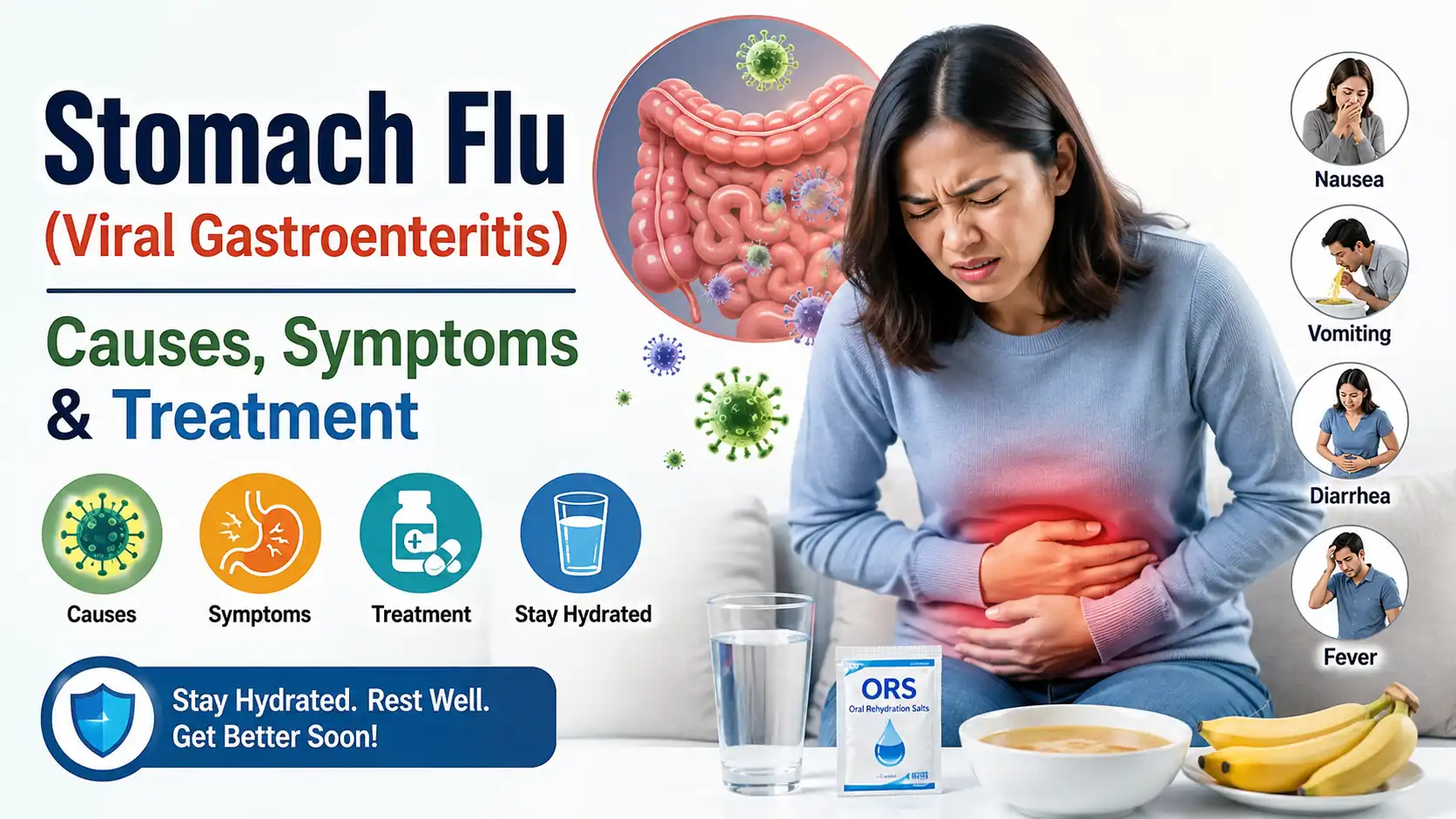
Stomach flu, medically known as viral gastroenteritis, is a common intestinal infection that causes diarrhea, vomiting, stomach cramps, and nausea. Despite its name, stomach flu is not caused by the influenza virus, which affects the respiratory system. Instead, stomach flu is caused by several viruses that infect the stomach and intestines.
Millions of people worldwide develop viral gastroenteritis each year. Although it usually resolves within a few days, severe dehydration can become dangerous, especially in infants, older adults, and people with weakened immune systems.
This guide explains the causes, symptoms, treatment options, prevention tips, and when to seek medical care.
What Is Stomach Flu (Viral Gastroenteritis)?
Viral gastroenteritis is an infection that inflames the stomach and intestines. It spreads easily from person to person through contaminated food, water, surfaces, or close contact with infected individuals.
The illness is highly contagious and often causes outbreaks in schools, daycare centers, nursing homes, cruise ships, and restaurants.
Fortunately, most healthy adults recover completely with rest and adequate hydration.
What Causes Stomach Flu?
Several viruses can cause viral gastroenteritis.
1. Norovirus
Norovirus is the most common cause of viral gastroenteritis in adults.
It spreads through:
- Contaminated food
- Contaminated water
- Shared utensils
- Touching infected surfaces
- Close contact with infected individuals
Even a tiny amount of the virus can cause infection.
2. Rotavirus
Rotavirus mainly affects:
- Babies
- Todlers
- Young children
Vaccination has significantly reduced severe rotavirus infections in many countries.
3. Adenovirus
Certain adenoviruses can infect the digestive tract and commonly affect young children.
4. Astrovirus
Astrovirus usually causes mild diarrhea in:
- Children
- Older adults
- People with weakened immunity
How Does Viral Gastroenteritis Spread?
The infection spreads through the fecal-oral route, meaning viruses pass from stool into another person’s mouth.
Common ways include:
- Eating contaminated food
- Drinking unsafe water
- Poor hand hygiene
- Caring for an infected person
- Touching contaminated objects
- Sharing towels or utensils
People remain contagious even after symptoms improve.
Risk Factors
Anyone can develop stomach flu, but the risk increases in people who:
- Are younger than five years
- Are older than 65 years
- Have weakened immune systems
- Live in crowded environments
- Travel internationally
- Eat contaminated food
- Attend daycare or school
Symptoms of Stomach Flu
Symptoms usually appear 12 to 48 hours after exposure, depending on the virus.
Common symptoms include:
- Sudden diarrhea
- Nausea
- Vomiting
- Stomach cramps
- Abdominal pain
- Fever
- Chills
- Headache
- Muscle aches
- Fatigue
- Loss of appetite
Symptoms often last:
- Norovirus: 1–3 days
- Rotavirus: 3–8 days
Some people experience mild illness, while others develop severe dehydration.
Signs of Dehydration
Dehydration is the most serious complication.
Watch for:
- Dry mouth
- Excessive thirst
- Dark urine
- Decreased urination
- Dizziness
- Weakness
- Sunken eyes
- Rapid heartbeat
In babies:
- Few wet diapers
- Crying without tears
- Dry lips
- Sleepiness
- Irritability
Severe dehydration requires immediate medical attention.
How Is Stomach Flu Diagnosed?
Doctors usually diagnose viral gastroenteritis based on:
- Medical history
- Symptoms
- Physical examination
Laboratory tests may be needed if symptoms are severe or prolonged.
Possible tests include:
- Stool analysis
- Stool PCR testing
- Blood tests
- Electrolyte levels
- Kidney function tests
Stomach Flu Treatment
There is no specific cure for most viral gastroenteritis infections.
Treatment focuses on relieving symptoms and preventing dehydration.
1. Drink Plenty of Fluids
Hydration is the most important treatment.
Good options include:
- Oral rehydration solution (ORS)
- Water
- Coconut water
- Clear soups
- Electrolyte drinks (in moderation)
- Ice chips if vomiting persists
2. Eat Easy-to-Digest Foods
Once vomiting improves, gradually introduce bland foods.
Examples include:
- Bananas
- Rice
- Applesauce
- Toast
- Plain crackers
- Boiled potatoes
- Oatmeal
- Plain yogurt (if tolerated)
Avoid:
- Fried foods
- Spicy meals
- Alcohol
- Excess caffeine
- Sugary drinks
- Fatty foods
3. Get Enough Rest
Rest allows your immune system to fight the infection more effectively.
4. Medications
A healthcare provider may recommend:
- Anti-nausea medications
- Fever reducers
- Pain relievers
Antibiotics do not work against viruses and should not be used unless a bacterial infection is diagnosed.
Avoid anti-diarrheal medications in young children unless advised by a healthcare professional.
Home Remedies
Supportive care at home includes:
- Sip fluids frequently
- Eat small meals
- Wash hands regularly
- Replace lost electrolytes
- Avoid dairy temporarily if it worsens symptoms
- Stay home until symptoms resolve
Foods to Eat During Recovery
Choose foods that are gentle on the stomach.
Good choices include:
- Bananas
- Rice
- Toast
- Applesauce
- Oatmeal
- Plain pasta
- Boiled chicken
- Clear broth
- Cooked carrots
- Plain potatoes
Foods to Avoid
Avoid foods that may worsen diarrhea or nausea:
- Greasy foods
- Spicy foods
- High-fat meals
- Alcohol
- Coffee
- Energy drinks
- Soda
- Artificial sweeteners
- Raw vegetables
- Heavy dairy products
Prevention Tips
Good hygiene is the best defense.
Wash Your Hands
Wash with soap and water for at least 20 seconds, especially:
- Before eating
- After using the toilet
- After changing diapers
- Before preparing food
Clean Contaminated Surfaces
Use disinfectants that are effective against viruses, especially after someone has been ill.
Practice Food Safety
- Wash fruits and vegetables.
- Cook seafood thoroughly.
- Avoid cross-contamination between raw and cooked foods.
- Refrigerate perishables promptly.
Stay Home When Sick
Avoid school, work, or food preparation until at least 48 hours after vomiting and diarrhea have stopped, especially if norovirus is suspected.
Get Vaccinated
Rotavirus vaccines help protect infants from severe illness and are part of routine childhood immunization schedules in many countries.
Possible Complications
Most people recover without problems.
However, complications may include:
- Severe dehydration
- Electrolyte imbalance
- Kidney injury due to dehydration
- Hospitalization
- Malnutrition in vulnerable individuals
These risks are higher in:
- Infants
- Older adults
- Pregnant women
- People with chronic illnesses
- Immunocompromised individuals
When to See a Doctor
Seek medical care if you experience:
- Bloody diarrhea
- Persistent vomiting
- High fever
- Severe abdominal pain
- Symptoms lasting longer than three days in adults
- Signs of severe dehydration
- Confusion or fainting
- Inability to keep fluids down
- Very little or no urination
For children, seek prompt medical attention if they show signs of dehydration, persistent vomiting, lethargy, or a high fever.
Frequently Asked Questions (FAQs)
Is stomach flu the same as influenza?
No. Influenza affects the respiratory system, while stomach flu is an intestinal infection caused by different viruses.
How long does stomach flu last?
Most cases improve within 1 to 3 days, although some viral infections may last up to a week.
Can antibiotics treat stomach flu?
No. Antibiotics are ineffective against viral infections and should only be used when prescribed for a confirmed bacterial illness.
Can you catch stomach flu from another person?
Yes. Viral gastroenteritis spreads easily through close contact, contaminated food or water, and contaminated surfaces.
What should I drink during stomach flu?
Water, oral rehydration solutions, clear broths, and other fluids that replace lost water and electrolytes are the best choices.
Key Takeaways
- Stomach flu (viral gastroenteritis) is a contagious intestinal infection caused by viruses such as norovirus and rotavirus.
- Common symptoms include diarrhea, vomiting, nausea, stomach cramps, and fever.
- Dehydration is the most serious complication and should be treated promptly.
- Most people recover with rest, hydration, and supportive care.
- Good hand hygiene, safe food handling, and rotavirus vaccination for infants help prevent infection.
- Seek medical care if symptoms are severe, prolonged, or signs of dehydration develop.
Conclusion
Stomach flu (viral gastroenteritis) is an unpleasant but usually short-lived illness that affects the digestive system. While there is no specific antiviral treatment for most cases, staying hydrated, eating gentle foods, resting, and practicing good hygiene can speed recovery and reduce the risk of spreading the infection. If symptoms become severe or dehydration develops, prompt medical evaluation is essential to prevent complications.