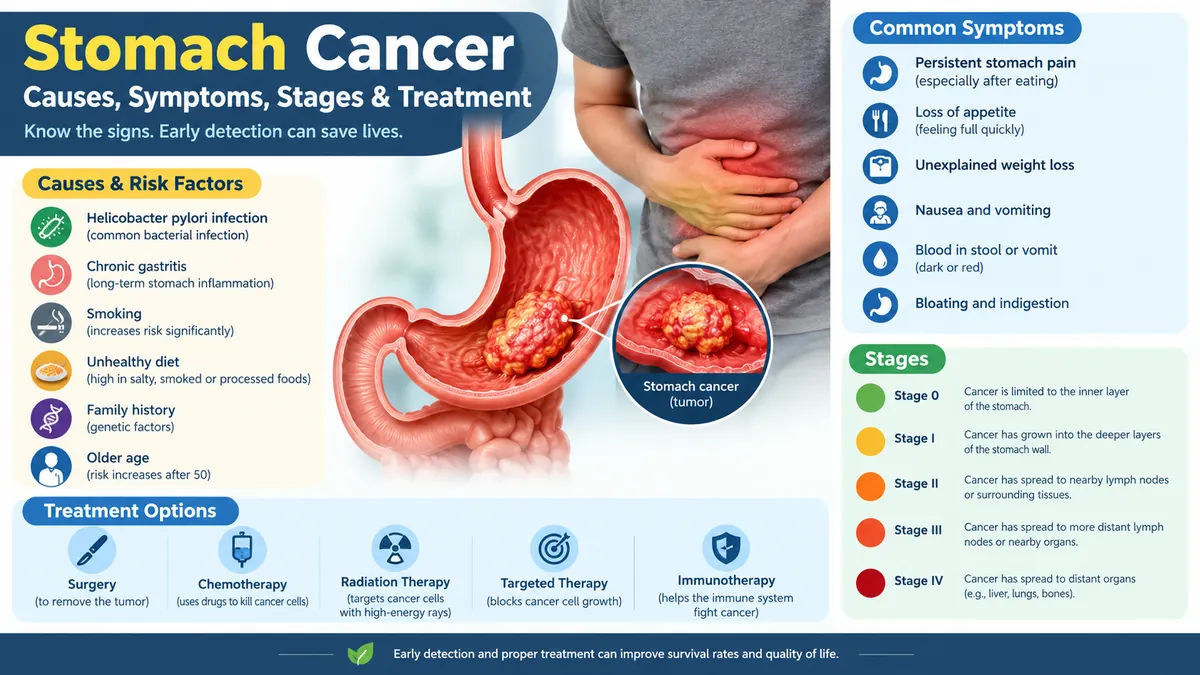
Stomach cancer, also called gastric cancer, is a type of cancer that begins in the cells lining the stomach. It can develop in different parts of the stomach and may grow slowly over several years. Early stomach cancer often causes few or nonspecific symptoms, which can make it difficult to detect.
Understanding the possible stomach cancer causes, symptoms, risk factors, diagnosis, and treatment options can help people recognize concerning changes and seek medical evaluation promptly.
What Is Stomach Cancer?
The stomach is part of the digestive system. It receives food from the esophagus and helps break it down before it passes into the small intestine.
Stomach cancer occurs when abnormal cells in the stomach begin growing and multiplying uncontrollably. The most common type is adenocarcinoma, which develops from cells in the stomach’s inner lining. Other, less common types include gastrointestinal stromal tumors (GISTs) and certain lymphomas.
If stomach cancer is not detected and treated, it can grow through the stomach wall and potentially spread to nearby lymph nodes or other organs.
Stomach Cancer Causes
There is no single cause of stomach cancer. It develops when genetic changes cause stomach cells to grow and divide abnormally. Several factors can increase the likelihood of these changes occurring.
1. H. pylori Infection
Long-term infection with Helicobacter pylori (H. pylori) is one of the important risk factors for stomach cancer. Persistent infection can cause inflammation and changes in the stomach lining. Treatment of H. pylori infection can reduce the risk of certain stomach cancers.
2. Smoking
Tobacco use increases the risk of stomach cancer. Smoking can also contribute to other digestive and respiratory diseases.
3. Diet
A diet high in salted, smoked, preserved, or poorly preserved foods may increase stomach cancer risk. Eating fewer fruits and vegetables has also been associated with increased risk.
4. Chronic Stomach Inflammation
Long-term inflammation of the stomach, including chronic atrophic gastritis, can cause changes to the stomach lining that may increase cancer risk.
5. Family History and Genetics
Having a close family member with stomach cancer may increase risk. Certain inherited conditions, including hereditary diffuse gastric cancer and Lynch syndrome, can also increase susceptibility.
6. Other Risk Factors
Other factors associated with stomach cancer include:
- Older age
- Male sex
- Certain stomach polyps
- Previous stomach surgery
- Pernicious anemia
- Gastroesophageal reflux disease (GERD)
- Obesity, particularly in relation to some cancers near the upper stomach
- Epstein-Barr virus infection
- Heavy alcohol use
- Certain occupational or environmental exposures
Having one or more risk factors does not mean a person will definitely develop stomach cancer.
Stomach Cancer Symptoms
Stomach cancer may not cause noticeable symptoms during its early stages. When symptoms do occur, they can resemble common digestive problems.
Possible symptoms include:
- Indigestion
- Persistent stomach discomfort
- Upper abdominal pain
- Bloating after eating
- Feeling full after eating a small amount
- Loss of appetite
- Heartburn
- Nausea
- Vomiting
- Difficulty swallowing
- Unexplained weight loss
- Persistent tiredness
As stomach cancer progresses, symptoms may become more serious. These can include vomiting blood, blood in the stool, significant weight loss, jaundice, abdominal swelling from fluid buildup, and worsening difficulty swallowing.
Is Stomach Pain Always a Sign of Cancer?
No. Stomach pain is extremely common and can result from conditions such as gastritis, ulcers, acid reflux, infections, or other digestive disorders.
However, persistent, worsening, or unexplained stomach symptoms should be evaluated by a healthcare professional, particularly when they occur with unexplained weight loss, vomiting, bleeding, or difficulty swallowing.
When Should You See a Doctor?
Consider making a medical appointment if you experience:
- Persistent indigestion or stomach discomfort
- Ongoing abdominal pain
- Unexplained weight loss
- Repeated vomiting
- Difficulty swallowing
- Persistent loss of appetite
- Black or bloody stools
- Vomiting blood
- Increasing abdominal swelling
These symptoms do not necessarily mean cancer, but medical evaluation can help determine the underlying cause.
How Is Stomach Cancer Diagnosed?
Doctors may use several tests to determine whether symptoms are caused by stomach cancer.
Upper Endoscopy
An upper endoscopy, also called an esophagogastroduodenoscopy (EGD), allows a doctor to examine the lining of the esophagus, stomach, and upper small intestine using a flexible camera.
If an abnormal area is found, the doctor can take a tissue sample for examination.
Biopsy
A biopsy involves removing a small sample of tissue. Laboratory specialists examine the cells under a microscope to determine whether cancer is present.
A biopsy is an important part of confirming a stomach cancer diagnosis.
Blood Tests
Blood tests may be used to look for problems such as anemia and to assess overall health. Blood tests alone cannot diagnose stomach cancer.
Imaging Tests
Depending on the situation, doctors may use imaging tests such as CT scans, PET scans, or other studies to determine how far the cancer has developed or whether it has spread.
Doctors may also use additional procedures, including endoscopic ultrasound or laparoscopy, to help determine the cancer’s stage.
Stages of Stomach Cancer
Staging describes how extensive the cancer is and whether it has spread.
In general, stomach cancer may be described as:
- Early-stage cancer: Limited to the inner layers of the stomach.
- Locally advanced cancer: Has grown deeper into the stomach wall or nearby tissues and may involve lymph nodes.
- Advanced or metastatic cancer: Has spread to distant organs or tissues.
The stage is one of the major factors doctors consider when developing a treatment plan.
Stomach Cancer Treatment
Treatment depends on several factors, including the cancer’s location, type, stage, overall health, and specific characteristics of the tumor.
Treatment may involve one or more of the following approaches.
1. Surgery
Surgery may be used to remove early or localized stomach cancer.
Depending on the tumor’s size and location, surgeons may remove part of the stomach or, in some cases, most or all of it. Nearby lymph nodes may also be removed.
For very early cancers, an endoscopic procedure may sometimes be appropriate instead of traditional surgery.
2. Chemotherapy
Chemotherapy uses medicines that destroy or slow the growth of cancer cells. It may be given before surgery to shrink a tumor, after surgery to reduce the risk of recurrence, or to control advanced disease.
3. Radiation Therapy
Radiation therapy uses high-energy radiation to damage cancer cells. It may be combined with chemotherapy in certain situations.
4. Targeted Therapy
Targeted medicines are designed to act on particular characteristics of cancer cells. They may be considered when testing shows that a tumor has a specific target that can be treated.
5. Immunotherapy
Immunotherapy helps the immune system recognize and attack cancer cells. It may be an option for some people with advanced stomach cancer depending on the characteristics of the tumor and previous treatments.
6. Palliative Treatment
When stomach cancer cannot be completely removed or cured, treatment may focus on controlling the disease, reducing symptoms, improving comfort, and maintaining quality of life.
Palliative care can also be provided alongside cancer treatment and is not limited to end-of-life care.
Can Stomach Cancer Be Prevented?
There is no guaranteed way to prevent stomach cancer. However, certain steps may help lower risk.
These include:
- Getting appropriate testing and treatment for H. pylori infection
- Avoiding tobacco
- Eating a diet rich in fruits and vegetables
- Limiting heavily salted and preserved foods
- Maintaining a healthy weight
- Limiting heavy alcohol consumption
- Discussing a strong family history of stomach cancer with a healthcare professional
People with certain inherited conditions or strong family histories may require specialized medical advice about screening or preventive measures.
Frequently Asked Questions
What are the first symptoms of stomach cancer?
Early stomach cancer may cause indigestion, stomach discomfort, bloating after meals, mild nausea, heartburn, or reduced appetite. Some people have no symptoms initially.
What is the main cause of stomach cancer?
There is no single cause. Genetic changes in stomach cells contribute to cancer development, while factors such as chronic H. pylori infection, smoking, certain dietary patterns, chronic stomach inflammation, and family history can increase risk.
Can H. pylori cause stomach cancer?
Long-term H. pylori infection is an important risk factor for certain types of stomach cancer. Treating the infection can reduce the risk of developing these cancers.
Is stomach cancer curable?
Some stomach cancers can be treated with the goal of cure, particularly when they are found before spreading beyond the stomach. Treatment and outlook depend heavily on the cancer’s type, stage, location, and other individual factors.
What is the best treatment for stomach cancer?
There is no single treatment that is best for everyone. Depending on the cancer, treatment may involve surgery, chemotherapy, radiation therapy, targeted therapy, immunotherapy, or combinations of these approaches.
Final Takeaway
Stomach cancer can develop without obvious early symptoms, making awareness of persistent digestive changes important. H. pylori infection, smoking, certain dietary patterns, chronic stomach inflammation, and family history are among the factors associated with increased risk.
Persistent stomach pain, unexplained weight loss, repeated vomiting, difficulty swallowing, bleeding, or other concerning symptoms should be discussed with a healthcare professional. Early evaluation can help identify the cause and, when cancer is present, determine appropriate treatment as soon as possible.