
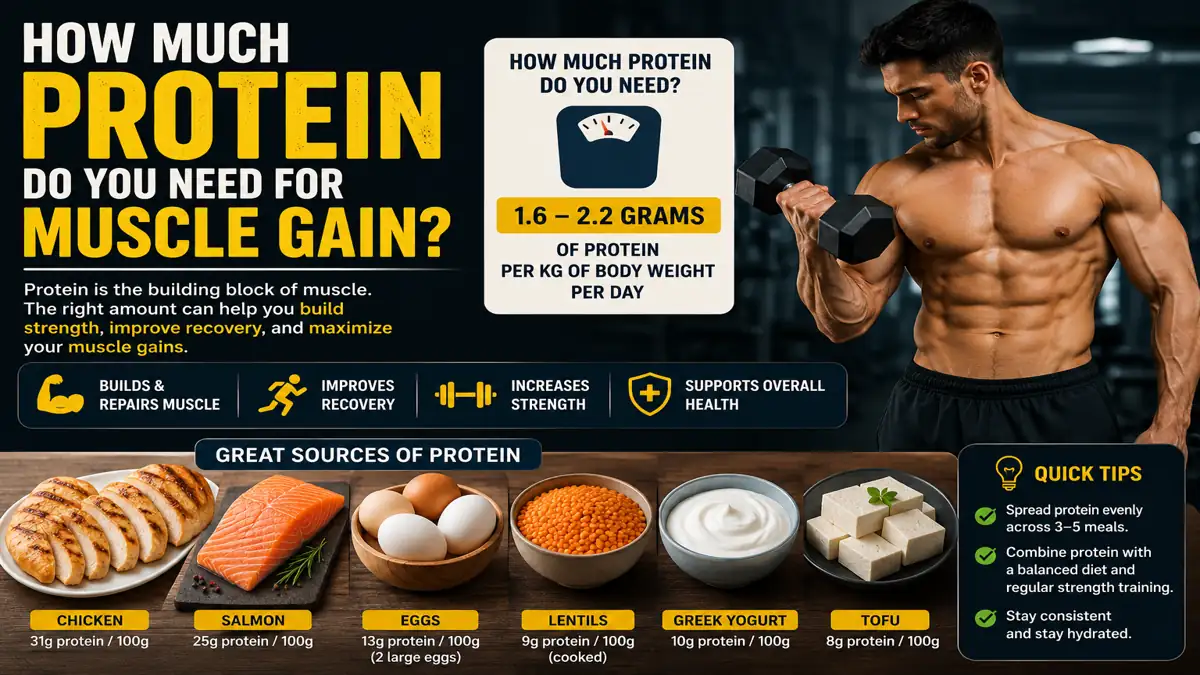
Building muscle requires more than lifting heavy weights—it also depends on proper nutrition. Among all nutrients, protein plays the most important role in repairing and building muscle tissue. But one question remains common among beginners and experienced gym-goers alike: How much protein do you actually need for muscle gain?
The answer depends on several factors, including your body weight, activity level, training intensity, age, and overall calorie intake. This guide explains everything you need to know about protein intake for muscle growth, backed by current scientific evidence.
Why Is Protein Important for Muscle Growth?
Protein is made up of amino acids, which are often called the building blocks of the body. During resistance training, tiny tears occur in your muscle fibers. Protein provides the amino acids your body needs to repair these fibers, making them stronger and larger over time.
Without adequate protein, your muscles cannot recover efficiently, which can limit strength gains and muscle growth.
How Much Protein Do You Need?
Research suggests that most people aiming to build muscle should consume:
1.6–2.2 grams of protein per kilogram (kg) of body weight per day
This range supports maximum muscle protein synthesis for individuals who regularly perform resistance training.
Daily Protein Intake Based on Body Weight
| Body Weight | Protein Needed (1.6 g/kg) | Protein Needed (2.2 g/kg) |
|---|---|---|
| 50 kg | 80 g | 110 g |
| 60 kg | 96 g | 132 g |
| 70 kg | 112 g | 154 g |
| 80 kg | 128 g | 176 g |
| 90 kg | 144 g | 198 g |
| 100 kg | 160 g | 220 g |
For most healthy adults, aiming for 1.6–2.0 g/kg/day is sufficient for excellent muscle growth.
Should Beginners Eat More Protein?
Not necessarily.
Beginners often experience rapid muscle growth due to “newbie gains,” but they still don’t need excessive protein. Consuming around 1.6 grams per kilogram of body weight is generally enough when combined with consistent strength training and adequate calories.
Is More Protein Better?
Eating more protein isn’t always better.
Once your daily protein needs are met, consuming significantly more is unlikely to result in additional muscle growth. Extra protein may simply be used for energy or stored as body fat if you consistently consume excess calories.
Instead of focusing on extremely high protein intake, prioritize:
- Progressive strength training
- Sufficient calories
- Quality sleep
- Consistent workout routine
Best Sources of Protein
Choose a variety of high-quality protein sources throughout the day.
Animal-Based Protein
- Chicken breast
- Turkey
- Lean beef
- Fish
- Eggs
- Greek yogurt
- Cottage cheese
- Milk
- Whey protein
Plant-Based Protein
- Lentils
- Chickpeas
- Kidney beans
- Soybeans
- Tofu
- Tempeh
- Edamame
- Quinoa
- Nuts and seeds
Combining different plant proteins helps ensure you get all the essential amino acids your body needs.
How Should You Spread Protein Throughout the Day?
Instead of eating most of your protein in one meal, distribute it evenly across your meals.
Aim for 20–40 grams of protein per meal, depending on your body size and daily requirements.
For example:
Breakfast
- Greek yogurt with oats
- Eggs on whole-grain toast
Lunch
- Grilled chicken with rice and vegetables
Snack
- Protein shake
- Cottage cheese
- Roasted chickpeas
Dinner
- Fish or tofu with potatoes and vegetables
Even distribution helps maximize muscle protein synthesis throughout the day.
Is Protein Timing Important?
Protein timing matters less than your total daily intake.
However, consuming 20–40 grams of protein within about two hours after resistance training may support recovery and muscle growth, especially if you haven’t eaten protein recently.
The most important goal is consistently meeting your daily protein target.
Do You Need Protein Supplements?
Protein supplements are convenient but not essential.
If you can meet your protein needs through whole foods, supplements offer little additional benefit.
Protein powders can be useful when:
- You’re busy
- You struggle to eat enough protein
- You travel frequently
- You need a quick post-workout option
Remember, supplements should complement—not replace—a balanced diet.
Can Too Much Protein Be Harmful?
For healthy individuals, higher-protein diets are generally considered safe.
However, people with existing kidney disease should consult a healthcare professional before significantly increasing protein intake.
To support overall health:
- Drink enough water.
- Eat plenty of fruits and vegetables.
- Include healthy fats and whole grains.
- Avoid relying solely on protein supplements.
Common Protein Myths
Myth 1: You Need Protein Immediately After Your Workout
The “anabolic window” is much larger than previously believed. While post-workout protein is beneficial, your total daily intake matters more.
Myth 2: More Protein Means Faster Muscle Growth
Muscle growth depends on training, recovery, calorie intake, hormones, and genetics—not just protein.
Myth 3: Plant Protein Can’t Build Muscle
Plant proteins can effectively support muscle growth when consumed in sufficient amounts and from varied sources.
Tips to Maximize Muscle Gain
- Follow a structured resistance training program.
- Eat enough calories to support muscle growth.
- Consume 1.6–2.2 g of protein per kilogram of body weight daily.
- Prioritize quality sleep (7–9 hours each night).
- Stay hydrated.
- Be consistent—muscle growth takes time.
Frequently Asked Questions
Can I build muscle without protein powder?
Yes. Whole foods can provide all the protein you need if your daily intake is adequate.
How much protein should I eat after a workout?
Around 20–40 grams is generally enough for most people.
Is whey protein better than food?
No. Whey protein is simply a convenient protein source. Whole foods also provide vitamins, minerals, and other nutrients that support overall health.
Can older adults benefit from higher protein intake?
Yes. Older adults often benefit from protein intake toward the higher end of the recommended range to help maintain muscle mass and strength.
Final Thoughts
Protein is one of the most important nutrients for building muscle, but it isn’t the only factor. Consistent strength training, adequate calorie intake, quality sleep, and proper recovery all work together to promote muscle growth.
For most people, consuming 1.6–2.2 grams of protein per kilogram of body weight each day provides enough protein to maximize muscle gain. Focus on getting protein from a variety of high-quality food sources, spread your intake throughout the day, and stay consistent with your training.
Muscle growth is a gradual process, but with the right nutrition and exercise plan, you’ll steadily build strength and lean muscle over time.