
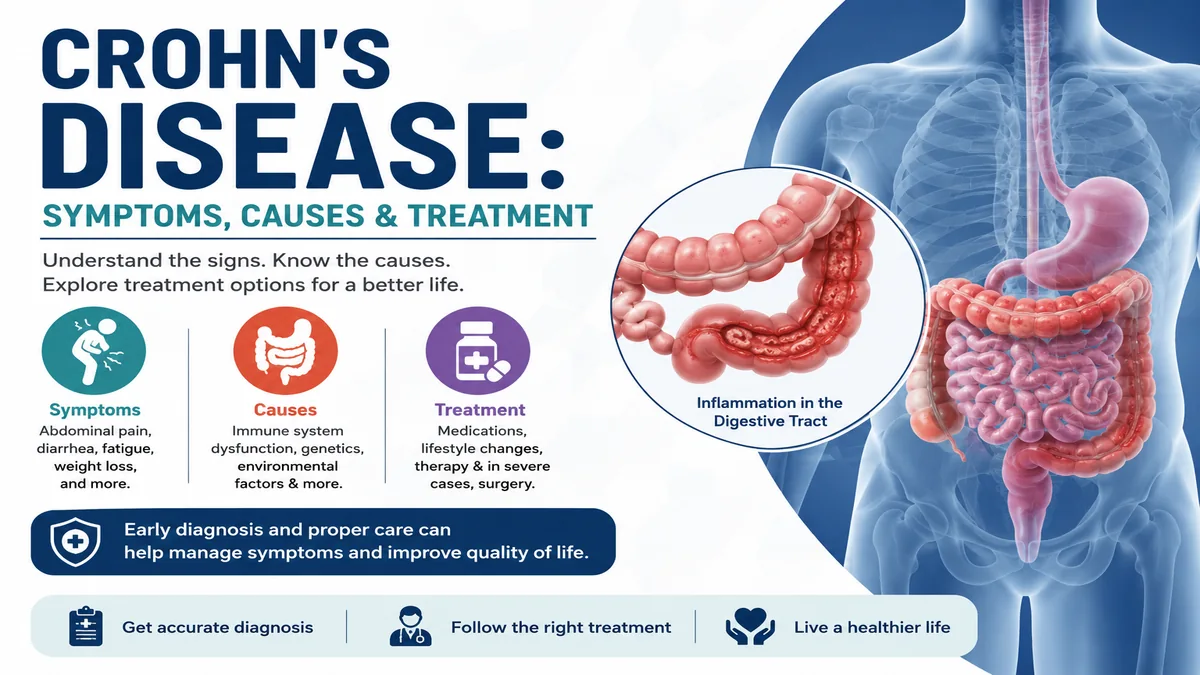
Crohn’s disease is a chronic inflammatory bowel disease (IBD) that causes inflammation in the digestive tract. It can affect any part of the gastrointestinal tract, from the mouth to the anus, although it commonly affects the end of the small intestine and the beginning of the large intestine. Symptoms can range from mild to severe and often occur in cycles of flare-ups and remission.
Although there is currently no permanent cure for Crohn’s disease, appropriate treatment can control inflammation, reduce symptoms, prevent complications and help maintain long-term remission.
What Is Crohn’s Disease?
Crohn’s disease occurs when an abnormal immune response causes persistent inflammation in the digestive tract. Unlike some digestive conditions that affect only the surface lining, Crohn’s-related inflammation can extend deeper into the intestinal wall.
The disease can affect different parts of the digestive system in different people. Some people have inflammation in the small intestine, while others may have disease involving the colon or multiple areas of the digestive tract.
Crohn’s disease is a lifelong condition, but symptoms are not necessarily present all the time. Periods when symptoms become active are called flares, while periods with few or no symptoms are called remission.
Common Symptoms of Crohn’s Disease
Crohn’s disease symptoms vary depending on which part of the digestive tract is affected and how severe the inflammation is.
Common symptoms include:
- Persistent or recurring diarrhea
- Abdominal pain and cramping
- Unexplained weight loss
- Fatigue
- Reduced appetite
- Fever
- Nausea or vomiting
- Blood in the stool
- Mouth sores
- Pain or drainage around the anus
Some people may also develop symptoms outside the digestive system, including joint pain, eye inflammation, skin problems and anemia.
Crohn’s Disease Symptoms in a Flare
During a flare-up, symptoms may become more noticeable or severe. A person may experience frequent diarrhea, abdominal cramps, fatigue, reduced appetite, fever or unintended weight loss.
The symptoms can sometimes develop gradually, while in other cases they may appear more suddenly.
Early Signs of Crohn’s Disease
Early Crohn’s disease can be difficult to recognize because its symptoms may resemble food intolerance, irritable bowel syndrome, infection or other digestive problems.
Possible early warning signs include:
- Recurrent diarrhea
- Ongoing abdominal discomfort or cramping
- Unexplained tiredness
- Decreased appetite
- Unintentional weight loss
- Repeated low-grade fever
- Blood or mucus in the stool
- Recurrent mouth ulcers
Having one or more of these symptoms does not necessarily mean you have Crohn’s disease. A healthcare professional may need to perform several tests to determine the cause.
What Causes Crohn’s Disease?
The exact cause of Crohn’s disease is not fully understood. Researchers believe that several factors may interact, including genetics, the immune system, environmental factors and the gut microbiome.
1. Abnormal Immune Response
The immune system normally protects the body from harmful organisms. In Crohn’s disease, an abnormal immune response may cause excessive inflammation in the digestive tract.
2. Genetics
Crohn’s disease can run in families. People who have a close relative with Crohn’s disease or another form of IBD may have a higher risk of developing the condition.
3. Gut Microbiome
The digestive tract contains trillions of microorganisms that make up the gut microbiome. Researchers have identified differences in the microbiomes of people with IBD, although the exact relationship between these changes and Crohn’s disease remains under investigation.
4. Environmental Factors
Environmental factors may influence the development of Crohn’s disease in genetically susceptible people. Researchers continue to study how lifestyle and environmental exposures interact with genetics and the immune system.
5. Smoking
Smoking is an important modifiable risk factor. It can increase the likelihood of developing Crohn’s disease and may contribute to more severe disease and a greater need for surgery.
Important: Stress and particular foods are not considered proven causes of Crohn’s disease. However, stress or certain foods may worsen symptoms in some people.
Risk Factors for Crohn’s Disease
Several factors may increase the risk of developing Crohn’s disease:
- Family history of IBD
- Being a young adult, although Crohn’s can occur at any age
- Cigarette smoking
- Certain genetic factors
- Environmental influences
- Abnormal immune responses
Crohn’s disease can affect people of different ages and backgrounds.
How Is Crohn’s Disease Diagnosed?
There is no single test that can diagnose Crohn’s disease. Doctors usually combine information from the person’s symptoms, medical history, physical examination and several diagnostic tests.
Depending on the situation, testing may include:
Blood Tests
Blood tests may help identify anemia, inflammation or other abnormalities.
Stool Tests
Stool testing can help detect intestinal inflammation and rule out certain infections.
Colonoscopy
A colonoscopy allows a healthcare professional to examine the colon and the end of the small intestine and, when appropriate, obtain tissue samples for laboratory examination.
Upper Endoscopy
An upper endoscopy may be used when symptoms suggest that Crohn’s disease could involve the upper digestive tract.
CT or MRI Scans
Imaging can help doctors identify inflammation, narrowing, abscesses and other intestinal complications.
Capsule Endoscopy
In selected cases, a person may swallow a small capsule containing a camera that takes images as it travels through the digestive tract.
Crohn’s Disease Treatment
There is currently no cure for Crohn’s disease, but treatment can reduce inflammation, control symptoms, promote remission and help prevent complications. Treatment is individualized according to disease severity, location and other health factors.
1. Corticosteroids
Corticosteroids can rapidly reduce inflammation and may be prescribed for short-term control of moderate or severe flares.
Because prolonged steroid use can cause significant side effects, these medicines are generally not intended as a long-term maintenance treatment.
2. Immunosuppressant Medicines
These medicines reduce abnormal immune activity and may be used to help maintain remission or when other treatments are not sufficient.
3. Biologic Medicines
Biologic therapies target specific components of the immune system involved in inflammation. They can be an important treatment option for people with moderate-to-severe Crohn’s disease.
4. Small-Molecule Medicines
Certain newer oral medicines may be prescribed for some adults with Crohn’s disease, particularly when other treatments have not worked adequately.
5. Antibiotics
Antibiotics may be used in specific situations, such as certain infections, abscesses or complications involving fistulas.
6. Nutritional Therapy and Supplements
Crohn’s disease can interfere with appetite and nutrient absorption. Some people may develop deficiencies of nutrients such as iron, vitamin B12 or other vitamins and minerals.
A doctor or registered dietitian may recommend dietary changes or supplements when appropriate.
7. Surgery
Surgery may be necessary when Crohn’s disease causes serious complications or does not respond adequately to medical treatment.
Depending on the problem, surgery may be used to remove a damaged section of intestine, treat a blockage or address certain fistulas or abscesses.
Surgery does not permanently cure Crohn’s disease, because inflammation can develop again in another part of the digestive tract.
Crohn’s Disease Diet: What Should You Eat?
There is no single diet that works for everyone with Crohn’s disease. Certain foods may trigger or worsen symptoms in an individual, but specific foods have not been established as universal causes of Crohn’s disease.
Keeping a food and symptom diary can help identify foods that seem to aggravate your symptoms.
Depending on your symptoms, a healthcare professional may suggest:
- Eating smaller, more frequent meals
- Drinking enough fluids
- Choosing nutrient-rich foods
- Limiting foods that personally trigger symptoms
- Adjusting fiber intake during certain flares
- Addressing nutritional deficiencies
- Working with a registered dietitian if eating has become difficult
Do not eliminate major food groups or start restrictive diets without professional guidance, especially if you are losing weight.
Possible Complications of Crohn’s Disease
Untreated or poorly controlled inflammation can cause complications over time.
Potential complications include:
- Intestinal narrowing or strictures
- Bowel obstruction
- Ulcers
- Fistulas
- Abscesses
- Anal fissures
- Malnutrition
- Anemia
- Kidney stones
- Bone problems
- Joint inflammation
- Eye inflammation
- Liver or bile duct problems
- Blood clots
Crohn’s disease involving a large portion of the colon may also increase colorectal cancer risk, making appropriate long-term monitoring important.
When Should You See a Doctor?
Talk with a healthcare professional if you have persistent or recurring digestive symptoms, particularly:
- Diarrhea that does not improve
- Persistent abdominal pain
- Blood in the stool
- Unexplained weight loss
- Persistent fever
- Ongoing fatigue
- Repeated vomiting
- Pain or drainage around the anus
Seek urgent medical attention for severe abdominal pain, significant bleeding, persistent vomiting, severe dehydration, or symptoms suggesting a bowel obstruction.
Can Crohn’s Disease Be Prevented?
There is currently no guaranteed way to prevent Crohn’s disease because its exact cause is unknown.
However, people who smoke should consider quitting. If you have already been diagnosed with Crohn’s disease, avoiding smoking may help reduce disease severity and related complications.
Regular medical follow-up, taking prescribed medicines correctly and maintaining adequate nutrition can also help manage the condition.
Crohn’s Disease vs. Ulcerative Colitis
Crohn’s disease and ulcerative colitis are both inflammatory bowel diseases, but they are not the same condition.
Crohn’s disease:
- Can affect anywhere from the mouth to the anus
- Often affects the small intestine and colon
- Inflammation can extend through deeper layers of the bowel
- May cause fistulas and strictures
Ulcerative colitis:
- Primarily affects the colon and rectum
- Inflammation is generally limited to the inner lining of the colon
- Rectal bleeding and frequent bowel movements are common symptoms
Because the symptoms can overlap, proper medical testing is important for diagnosis.
Frequently Asked Questions
Is Crohn’s disease curable?
There is currently no permanent cure for Crohn’s disease. However, treatment can control inflammation, reduce symptoms and help many people achieve long periods of remission.
What is the main symptom of Crohn’s disease?
Common symptoms include diarrhea, abdominal pain or cramping and unintended weight loss. Fatigue, fever, reduced appetite and blood in the stool can also occur.
What causes Crohn’s disease?
The exact cause is unknown. Genetics, abnormal immune responses, environmental factors and changes in the gut microbiome are believed to contribute to its development.
Can stress cause Crohn’s disease?
Stress is not considered the underlying cause of Crohn’s disease. However, stress may make symptoms more difficult to manage for some people.
Can Crohn’s disease go into remission?
Yes. Treatment can help many people achieve remission, during which symptoms may become minimal or disappear. The goal of treatment is to maintain remission and control intestinal inflammation.
Is Crohn’s disease dangerous?
Crohn’s disease can become serious if inflammation is severe or remains uncontrolled. Complications can include bowel obstruction, fistulas, abscesses, malnutrition and other health problems. Early diagnosis and appropriate treatment can help reduce these risks.
What foods should be avoided with Crohn’s disease?
There is no universal list of foods that everyone with Crohn’s disease must avoid. Food tolerance varies. A food diary and guidance from a healthcare professional or registered dietitian can help identify personal triggers.
Final Thoughts
Crohn’s disease is a long-term inflammatory bowel condition that can affect different parts of the digestive tract. Diarrhea, abdominal pain, weight loss and fatigue are among the most common symptoms, but Crohn’s can also cause problems outside the digestive system.
Because symptoms can resemble other gastrointestinal conditions, diagnosis usually requires a combination of medical history, laboratory tests, stool testing, imaging and endoscopic evaluation. Treatment may include medications, nutritional support and, in some cases, surgery.
If you experience persistent digestive symptoms, unexplained weight loss or blood in your stool, consult a qualified healthcare professional rather than trying to diagnose or treat Crohn’s disease yourself.