
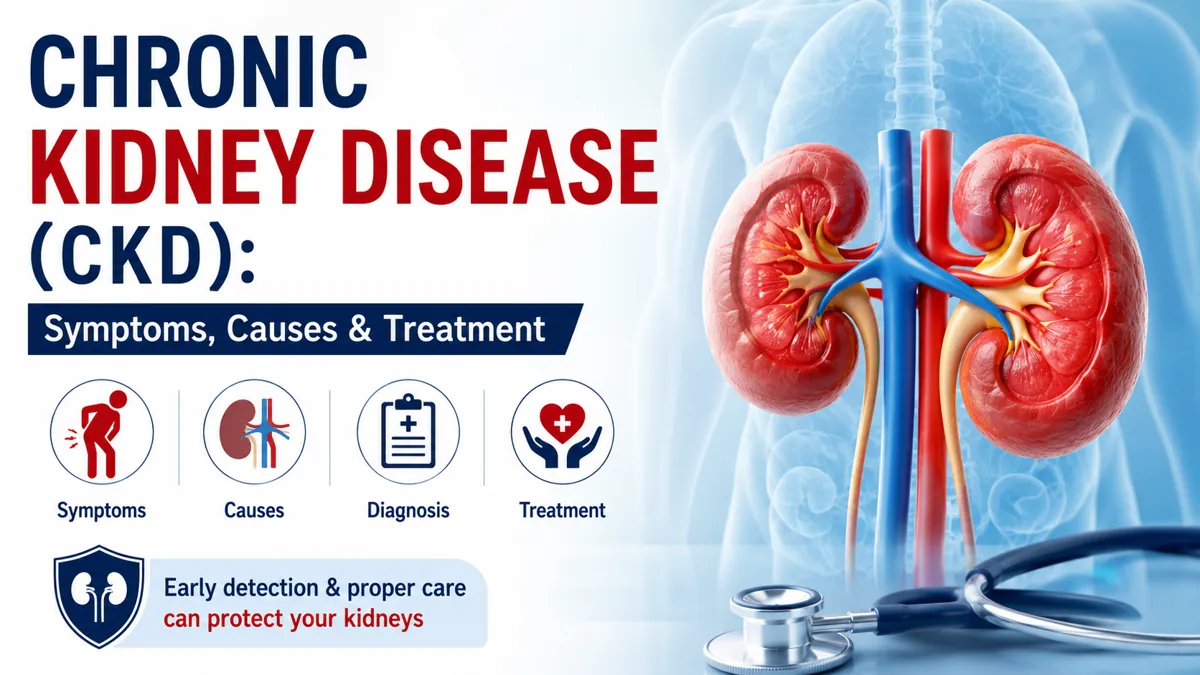
Chronic Kidney Disease (CKD) is a long-term condition in which the kidneys gradually lose their ability to filter waste and excess fluids from the blood. Healthy kidneys play a vital role in maintaining fluid balance, regulating blood pressure, producing hormones, and keeping minerals such as calcium and potassium in balance.
CKD often develops slowly over months or years. In its early stages, many people experience no symptoms, making regular health checkups especially important for individuals at higher risk. Without proper treatment, CKD can progress to kidney failure, requiring dialysis or a kidney transplant.
This comprehensive guide explains the symptoms, causes, risk factors, diagnosis, treatment options, and preventive measures for Chronic Kidney Disease.
What Is Chronic Kidney Disease (CKD)?
Chronic Kidney Disease is defined as kidney damage or decreased kidney function that lasts for three months or longer.
The kidneys normally:
- Filter waste products from the blood
- Remove excess water
- Balance electrolytes
- Help control blood pressure
- Produce red blood cells through erythropoietin
- Support healthy bones by activating vitamin D
When kidney function declines, waste products accumulate in the body, leading to various health complications.
How Common Is CKD?
CKD affects hundreds of millions of people worldwide. Many individuals are unaware they have the disease because symptoms often appear only after significant kidney damage has occurred.
Early detection can slow or even prevent disease progression.
Symptoms of Chronic Kidney Disease
CKD usually develops silently. Symptoms often become noticeable only when kidney function declines significantly.
Common symptoms include:
1. Fatigue and Weakness
Reduced kidney function can lead to anemia, causing persistent tiredness and low energy.
2. Swelling (Edema)
Fluid retention may cause swelling in:
- Feet
- Ankles
- Legs
- Hands
- Face
3. Changes in Urination
You may notice:
- Frequent urination, especially at night
- Reduced urine output
- Foamy urine
- Blood in urine
- Dark-colored urine
4. High Blood Pressure
Damaged kidneys struggle to regulate blood pressure, creating a cycle where hypertension further damages the kidneys.
5. Loss of Appetite
Waste buildup in the bloodstream can reduce appetite and cause weight loss.
6. Nausea and Vomiting
As toxins accumulate, digestive symptoms become more common.
7. Persistent Itching
Mineral imbalance and toxin buildup may cause widespread itching.
8. Muscle Cramps
Electrolyte disturbances, especially low calcium or abnormal potassium levels, may trigger muscle cramps.
9. Shortness of Breath
This can result from:
- Fluid buildup in the lungs
- Anemia
- Heart complications
10. Difficulty Concentrating
Toxin accumulation may affect brain function, causing confusion or poor concentration.
What Causes Chronic Kidney Disease?
Several medical conditions can gradually damage the kidneys.
Diabetes
Diabetes is the leading cause of CKD. High blood sugar damages the tiny blood vessels responsible for filtering waste.
High Blood Pressure
Long-term hypertension damages kidney arteries and reduces blood flow.
Glomerulonephritis
Inflammation of the kidney’s filtering units can gradually reduce kidney function.
Polycystic Kidney Disease
This inherited disorder causes fluid-filled cysts to grow inside the kidneys.
Recurrent Kidney Infections
Frequent infections can cause permanent kidney damage.
Kidney Stones
Repeated obstruction from kidney stones may contribute to chronic kidney injury.
Autoimmune Diseases
Conditions such as lupus may attack kidney tissue.
Long-Term Use of Certain Medications
Excessive use of some pain relievers (NSAIDs) and certain medications may damage kidneys over time.
Risk Factors
You may have a higher risk of CKD if you have:
- Diabetes
- High blood pressure
- Heart disease
- Obesity
- Family history of kidney disease
- Smoking habit
- Older age
- High cholesterol
- Autoimmune disorders
- Recurrent urinary tract infections
Stages of Chronic Kidney Disease
Doctors classify CKD using the estimated glomerular filtration rate (eGFR).
| Stage | eGFR | Kidney Function |
|---|---|---|
| Stage 1 | 90 or above | Mild damage with normal function |
| Stage 2 | 60–89 | Mild decrease |
| Stage 3a | 45–59 | Mild to moderate decline |
| Stage 3b | 30–44 | Moderate to severe decline |
| Stage 4 | 15–29 | Severe kidney damage |
| Stage 5 | Below 15 | Kidney failure |
How Is CKD Diagnosed?
Doctors use several tests.
Blood Tests
These measure:
- Creatinine
- eGFR
- Blood urea nitrogen (BUN)
Urine Tests
Urine testing detects:
- Protein
- Blood
- Albumin leakage
Blood Pressure Measurement
Hypertension is both a cause and complication of CKD.
Imaging Tests
Ultrasound or CT scans help identify:
- Kidney size
- Kidney stones
- Cysts
- Structural abnormalities
Kidney Biopsy
In selected cases, a small tissue sample helps identify the exact cause of kidney damage.
Treatment for Chronic Kidney Disease
Although CKD cannot usually be reversed, treatment can slow disease progression and reduce complications.
1. Control Blood Sugar
For people with diabetes, maintaining healthy blood glucose levels significantly reduces kidney damage.
2. Manage Blood Pressure
Doctors often recommend:
- ACE inhibitors
- ARBs
These medications help protect kidney function.
3. Healthy Diet
A kidney-friendly diet may include:
- Reduced sodium
- Moderate protein intake (as advised by a healthcare provider)
- Limited processed foods
- More fruits and vegetables (tailored to kidney function)
- Controlled potassium and phosphorus intake if recommended
4. Regular Exercise
Aim for at least 150 minutes of moderate physical activity each week, unless your healthcare provider advises otherwise.
5. Quit Smoking
Smoking accelerates kidney damage and increases cardiovascular risk.
6. Manage Cholesterol
Statin medications may reduce cardiovascular complications in people with CKD.
7. Treat Anemia
Iron supplements or erythropoiesis-stimulating medications may be prescribed if anemia develops.
8. Treat Mineral and Bone Disorders
Vitamin D supplements or medications to control phosphorus may be necessary.
9. Dialysis
If kidneys fail, dialysis removes waste and excess fluid from the blood.
There are two main types:
- Hemodialysis
- Peritoneal dialysis
10. Kidney Transplant
A kidney transplant may be the best long-term option for eligible patients with end-stage kidney disease.
Foods to Eat with CKD
Depending on the stage of CKD and guidance from a healthcare professional, healthier choices may include:
- Apples
- Blueberries
- Cauliflower
- Cabbage
- Bell peppers
- Egg whites
- Olive oil
- Fish rich in omega-3 fatty acids
- Garlic
- Onions
A registered dietitian can help create a meal plan that matches your kidney function and nutritional needs.
Foods to Limit
People with CKD may need to reduce:
- Processed foods
- Salty snacks
- Fast food
- Sugary beverages
- Processed meats
- Excess red meat
- High-sodium canned foods
- Foods high in phosphorus or potassium if advised by a healthcare provider
Complications of CKD
Untreated CKD can lead to:
- Kidney failure
- Heart disease
- Stroke
- Anemia
- Bone disease
- High potassium levels
- Fluid overload
- Metabolic acidosis
- Nerve damage
- Malnutrition
Can CKD Be Prevented?
Although not all cases are preventable, you can reduce your risk by:
- Managing diabetes effectively
- Controlling blood pressure
- Maintaining a healthy weight
- Exercising regularly
- Eating a balanced diet
- Avoiding smoking
- Limiting alcohol intake
- Staying hydrated
- Avoiding unnecessary long-term use of pain medications
- Having regular kidney function tests if you are at higher risk
When to See a Doctor
Seek medical evaluation if you experience:
- Persistent swelling
- Blood in urine
- Foamy urine
- High blood pressure
- Unexplained fatigue
- Decreased urine output
- Persistent nausea
- Family history of kidney disease
- Diabetes or hypertension with abnormal kidney test results
Early diagnosis offers the best opportunity to slow CKD progression.
Frequently Asked Questions (FAQs)
Can chronic kidney disease be cured?
CKD is generally not curable, but early diagnosis and proper treatment can slow its progression and help preserve kidney function.
What is the first sign of CKD?
Many people have no symptoms initially. Early signs may include changes in urination, high blood pressure, swelling, or protein in the urine detected during testing.
Is CKD life-threatening?
Advanced CKD can become life-threatening if it progresses to kidney failure without appropriate treatment. Regular monitoring and management greatly improve outcomes.
Can drinking more water cure CKD?
Staying hydrated is important, but drinking excessive water does not cure CKD. Fluid intake should follow your healthcare provider’s recommendations, especially in advanced stages.
Which foods are good for kidney health?
A balanced diet emphasizing fresh fruits and vegetables, whole grains, healthy fats, and lean proteins can support kidney health. Dietary recommendations should be individualized based on the stage of CKD and laboratory results.
Conclusion
Chronic Kidney Disease is a progressive condition that often develops without obvious symptoms in its early stages. Regular screening is especially important for people with diabetes, high blood pressure, or a family history of kidney disease. While CKD cannot usually be reversed, early diagnosis, appropriate medications, healthy lifestyle changes, and ongoing medical care can slow progression, reduce complications, and improve quality of life. If you notice persistent changes in urination, swelling, or other warning signs, consult a healthcare professional for evaluation.