
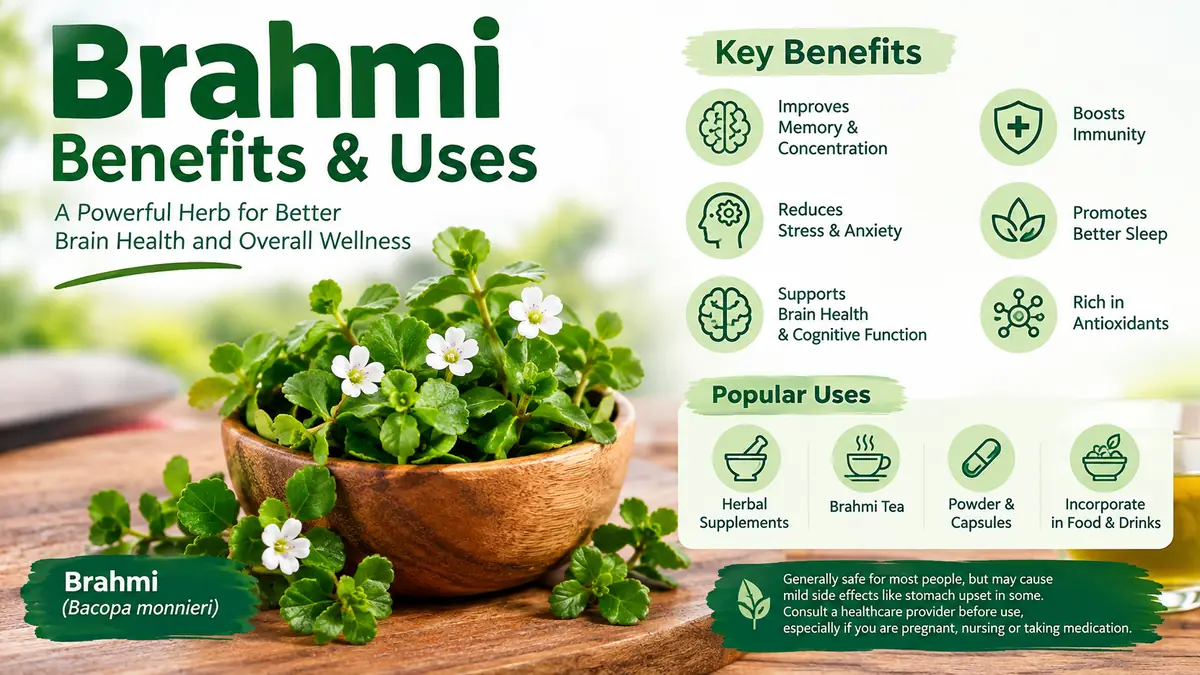
Brahmi (Bacopa monnieri) is a traditional Ayurvedic herb that has been used for centuries to support memory, concentration, and overall mental well-being. It is commonly known as a medhya rasayana, a group of Ayurvedic herbs traditionally associated with cognitive health.
Modern research has investigated Brahmi for potential effects on memory, attention, stress, and anxiety. Although some studies show promising results, more high-quality research is needed to fully understand its effectiveness and long-term safety.
What Is Brahmi?
Brahmi is a small, creeping perennial herb that grows in moist, tropical and subtropical environments. Its scientific name is Bacopa monnieri.
The plant contains naturally occurring compounds called bacosides, which are thought to contribute to many of its biological effects. Brahmi is available in several forms, including capsules, tablets, powders, extracts, and liquid preparations.
Note: The name “Brahmi” can sometimes refer to other plants, particularly Centella asiatica (Gotu Kola). When buying a supplement, check the label for the botanical name Bacopa monnieri.
Potential Health Benefits of Brahmi
1. May Support Memory
One of the best-known traditional uses of Brahmi is supporting memory.
Some clinical studies suggest that standardized Bacopa extracts may improve certain aspects of memory and information processing when taken consistently over time. However, Brahmi is not an instant memory booster, and benefits may take several weeks to become noticeable.
2. May Improve Concentration and Attention
Brahmi is traditionally used to promote mental clarity and concentration.
Research suggests that Bacopa may help some people with attention and cognitive processing. This has made it a popular ingredient in supplements marketed for students, professionals, and older adults.
3. May Help Reduce Stress
Chronic stress can affect sleep, mood, concentration, and overall well-being. Brahmi has traditionally been used as a calming herb.
Some research indicates that Bacopa may influence the body’s response to stress and may help promote a greater sense of calm.
4. May Support Mental Well-Being
Brahmi has been studied for its potential effects on anxiety and psychological stress.
Its possible calming properties may make it useful as part of a broader approach to managing everyday stress. However, Brahmi should not replace professional treatment for an anxiety disorder or other mental health condition.
5. Contains Antioxidant Compounds
Brahmi contains plant compounds with antioxidant activity.
Antioxidants help protect cells from oxidative stress caused by unstable molecules called free radicals. This antioxidant activity is one reason researchers continue to investigate Bacopa’s potential health effects.
6. May Support Brain Health
Because of its traditional use for memory and its antioxidant and anti-inflammatory properties observed in laboratory research, Brahmi is being studied for its potential role in maintaining healthy brain function.
However, evidence from laboratory and animal studies should not be interpreted as proof that Brahmi can prevent or treat neurological diseases in humans.
7. May Support Healthy Aging
Changes in memory and concentration can occur naturally with age. Research into Bacopa suggests that standardized extracts may have cognitive benefits in some older adults.
More research is needed to determine how useful Brahmi is for long-term cognitive health and whether it can prevent age-related cognitive decline.
Traditional Uses of Brahmi
In Ayurveda, Brahmi has traditionally been used for several purposes, including:
- Supporting memory and learning
- Promoting concentration
- Supporting mental relaxation
- Managing occasional stress
- Supporting healthy sleep
- Promoting general vitality
- Supporting traditional nervous-system health
Traditional use does not necessarily establish clinical effectiveness, so modern evidence should also be considered.
How Is Brahmi Used?
Brahmi can be consumed in different forms depending on the product and purpose.
Brahmi Powder
Brahmi powder may be mixed with water, milk, smoothies, or other foods. The amount of active compounds can vary substantially between products.
Brahmi Capsules or Tablets
Capsules and tablets generally contain a measured amount of Brahmi extract or dried herb. Standardized extracts may provide more consistent amounts of active compounds than ordinary powders.
Brahmi Liquid Extract
Liquid preparations are another option. Follow the manufacturer’s instructions because concentration can vary between products.
Brahmi Tea
Brahmi may also be prepared as an herbal tea, although the amount of active compounds delivered through tea can differ from concentrated extracts.
When Is the Best Time to Take Brahmi?
There is no universally established best time to take Brahmi.
Some people take it with food to reduce the chance of stomach discomfort. If a product causes drowsiness, taking it later in the day may be preferable. Always follow the dosage instructions provided on the specific product.
Consistency may be more important than a particular time of day when Brahmi is being used for cognitive support.
Brahmi Dosage
There is no single standard dose that applies to every Brahmi product.
Research has used different preparations and standardized extracts, making it difficult to compare doses directly. The amount of bacosides can also vary considerably between supplements.
For this reason:
- Follow the product’s recommended serving.
- Avoid taking more than the suggested amount.
- Choose products that clearly state the botanical name and extract information.
- Talk with a healthcare professional before using concentrated supplements regularly.
Children, pregnant women, and breastfeeding women should seek professional medical advice before using Brahmi supplements.
Brahmi Side Effects
Brahmi is generally tolerated by many people when used appropriately, but side effects can occur.
Possible side effects include:
- Nausea
- Stomach cramps
- Diarrhea
- Increased bowel movements
- Bloating
- Dry mouth
- Fatigue or drowsiness
Taking Brahmi with food may help reduce some digestive symptoms.
If you experience persistent or severe side effects, stop using the supplement and consult a healthcare professional.
Brahmi Precautions
Brahmi may not be suitable for everyone.
Speak with a healthcare professional before using Brahmi if you:
- Take prescription medications.
- Have a thyroid disorder.
- Have a slow heart rate or certain heart conditions.
- Have gastrointestinal problems.
- Are pregnant or breastfeeding.
- Are preparing for surgery.
- Are giving the supplement to a child.
Brahmi may interact with certain medicines, so professional advice is particularly important if you take medication regularly.
Does Brahmi Improve Memory Immediately?
Probably not.
Brahmi is not generally considered an immediate cognitive stimulant. Research on Bacopa has typically examined its effects after regular use over a period of weeks.
If your goal is better memory or concentration, healthy sleep, regular physical activity, a balanced diet, stress management, and adequate hydration are also important.
Brahmi vs. Gotu Kola
Brahmi and Gotu Kola are sometimes confused because both have been associated with traditional Ayurvedic and herbal medicine.
Bacopa monnieri is the botanical name for the herb commonly called Brahmi, while Centella asiatica is Gotu Kola. They are different plants and contain different active compounds.
Always check the scientific name on a supplement label if you specifically want Bacopa monnieri.
Frequently Asked Questions
Is Brahmi good for the brain?
Brahmi has traditionally been used to support memory and concentration. Some clinical research suggests Bacopa extracts may provide modest cognitive benefits, but more research is needed.
Can Brahmi reduce stress?
Brahmi may have calming and stress-supporting effects. Some studies have reported improvements in measures of stress or anxiety, but it should not replace professional treatment for diagnosed anxiety disorders.
Does Brahmi have side effects?
Yes. Possible side effects include nausea, abdominal discomfort, diarrhea, increased bowel movements, dry mouth, fatigue, and drowsiness.
Can I take Brahmi every day?
Some standardized Bacopa products are designed for regular use, but suitability depends on the individual, product, dose, and medications. Follow the product directions and consult a healthcare professional if you plan to use it long term.
Is Brahmi safe during pregnancy?
There is not enough reliable evidence to establish the safety of concentrated Brahmi supplements during pregnancy. Pregnant or breastfeeding women should consult a healthcare professional before using Brahmi.
Is Brahmi the same as Gotu Kola?
No. Brahmi commonly refers to Bacopa monnieri, whereas Gotu Kola is Centella asiatica. They are different plants.
Bottom Line
Brahmi (Bacopa monnieri) is a traditional Ayurvedic herb best known for its potential benefits for memory, concentration, stress management, and cognitive health. Research is promising in some areas, but evidence is not strong enough to consider Brahmi a treatment for medical or neurological conditions.
If you decide to use Brahmi, choose a reputable product, follow the recommended serving, and discuss supplementation with a healthcare professional if you take medications or have an existing medical condition.