
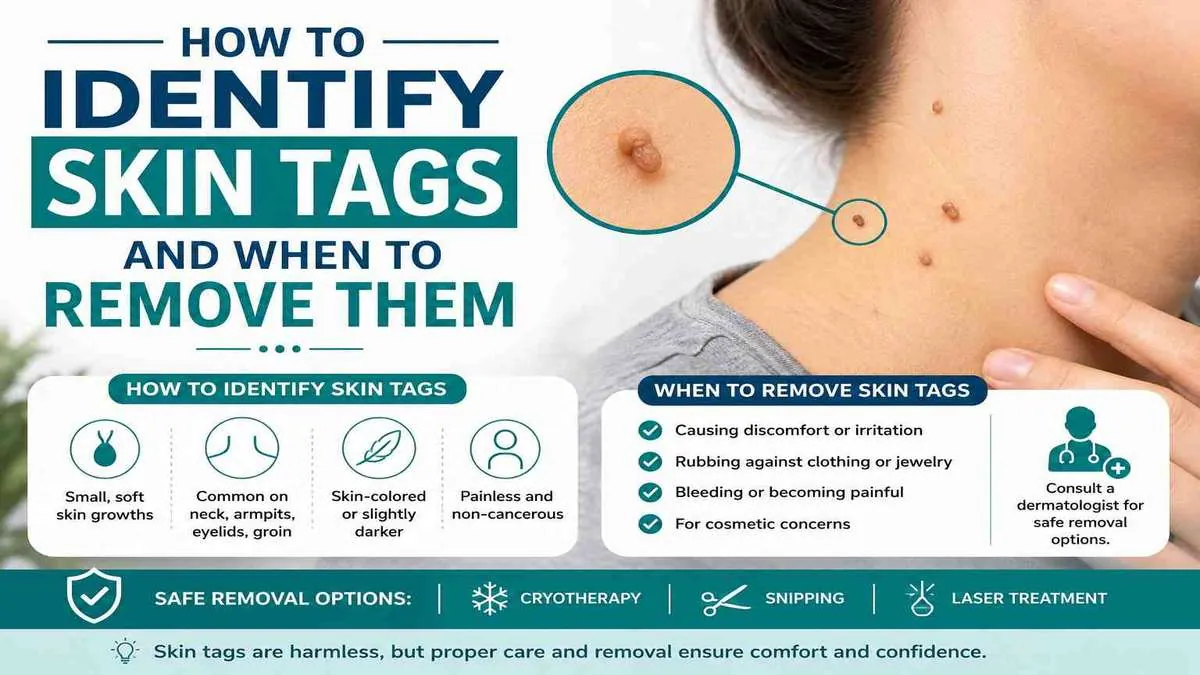
Skin tags are one of the most common noncancerous skin growths. Although they are usually harmless, many people mistake them for warts, moles, or other skin conditions. Knowing how to identify skin tags correctly can help you avoid unnecessary worry and determine whether medical treatment is needed.
In this comprehensive guide, you’ll learn what skin tags look like, what causes them, who is most likely to develop them, when they should be removed, and the safest treatment options available.
What Are Skin Tags?
Skin tags, medically known as acrochordons, are small, soft growths that hang off the skin by a thin stalk. They consist of collagen fibers, blood vessels, and skin tissue covered by the outer layer of skin.
Unlike cancerous growths, skin tags are benign and usually painless. Most adults develop at least one skin tag during their lifetime.
What Do Skin Tags Look Like?
Identifying a skin tag is usually straightforward once you know its characteristics.
Common features include:
- Soft and flexible texture
- Flesh-colored or slightly darker than surrounding skin
- Small size, usually between 1–5 mm
- Attached by a narrow stalk (peduncle)
- Smooth or slightly wrinkled surface
- Painless unless irritated
- Moves easily when touched
Some skin tags may grow larger, reaching 1–2 centimeters over time.
Where Do Skin Tags Commonly Appear?
Skin tags usually develop where skin rubs against skin or clothing.
The most common locations include:
- Neck
- Armpits
- Eyelids
- Groin
- Under the breasts
- Upper chest
- Inner thighs
People who experience frequent skin friction are more likely to develop them.
What Causes Skin Tags?
The exact cause isn’t completely understood, but several factors increase the likelihood of developing skin tags.
1. Skin Friction
Repeated rubbing between skin folds or clothing is considered one of the primary triggers.
2. Aging
Skin tags become more common after age 40 and continue increasing with age.
3. Genetics
Some people inherit a tendency to develop multiple skin tags.
4. Obesity
Extra skin folds increase friction, making overweight individuals more susceptible.
5. Pregnancy
Hormonal changes during pregnancy may encourage skin tag formation.
6. Insulin Resistance
People with type 2 diabetes or insulin resistance often develop more skin tags than others.
Who Is Most at Risk?
Skin tags are more common among:
- Adults over 40
- People with obesity
- Pregnant women
- Individuals with diabetes
- People with metabolic syndrome
- Those with a family history of skin tags
Having these risk factors does not necessarily mean you’ll develop skin tags, but your chances may be higher.
Skin Tags vs. Other Skin Growths
Many harmless skin conditions look similar.
| Skin Condition | Appearance | Painful? | Contagious? |
|---|---|---|---|
| Skin Tag | Soft, hanging growth | Usually no | No |
| Wart | Rough, raised bump | Sometimes | Yes (viral) |
| Mole | Flat or raised pigmented spot | Usually no | No |
| Cyst | Firm lump beneath skin | Sometimes | No |
| Seborrheic Keratosis | Waxy, stuck-on appearance | No | No |
If you’re unsure about any new skin growth, it’s best to have it evaluated by a healthcare professional.
Are Skin Tags Dangerous?
Skin tags are almost always harmless.
They generally:
- Do not become cancerous
- Grow slowly
- Cause no health problems
- Do not spread to others
However, they can become irritated if repeatedly rubbed by jewelry, clothing, or shaving.
When Should You Remove a Skin Tag?
Medical removal isn’t always necessary, but there are situations where it may be recommended.
1. Frequent Irritation
A skin tag that catches on clothing or jewelry may become painful or bleed repeatedly.
2. Cosmetic Concerns
Many people choose removal because skin tags affect their appearance, especially on the face or neck.
3. Bleeding
Occasional bleeding after accidental trauma is common, but persistent or unexplained bleeding should be evaluated.
4. Rapid Growth
A skin tag that suddenly enlarges or changes noticeably deserves medical assessment.
5. Color Changes
Seek medical advice if a growth becomes:
- Black
- Dark purple
- Bright red
- Unevenly colored
These changes don’t necessarily indicate cancer but should be examined.
6. Pain
Typical skin tags aren’t painful. Persistent pain may indicate irritation, twisting of the stalk, or another skin condition.
7. Uncertain Diagnosis
If you’re not sure whether it’s actually a skin tag, consult a dermatologist before attempting removal.
Safe Ways Doctors Remove Skin Tags
Healthcare providers can remove skin tags quickly using several methods.
Cryotherapy
Liquid nitrogen freezes the skin tag until it falls off.
Advantages
- Fast procedure
- Minimal discomfort
- Low risk of scarring
Snip Excision
A healthcare provider cuts the skin tag off using sterile surgical scissors or a scalpel.
Advantages
- Immediate removal
- Quick healing
- Suitable for larger skin tags
Electrocautery
Heat from an electrical device burns off the skin tag while sealing blood vessels.
Advantages
- Minimal bleeding
- Effective for multiple skin tags
- Low infection risk
Ligation
A small surgical thread is tied around the base, cutting off the blood supply until the skin tag falls away.
Can You Remove Skin Tags at Home?
While over-the-counter skin tag removal products are available, home removal carries risks such as infection, bleeding, scarring, and incorrect diagnosis.
Avoid:
- Cutting skin tags with scissors or blades
- Using dental floss or thread without medical advice
- Burning them with heat
- Applying chemicals not intended for skin
These methods may lead to complications, especially if the growth is not actually a skin tag.
If a skin tag is located on the eyelid, face, or genital area, do not attempt to remove it yourself. These sensitive locations should be treated by a healthcare professional.
How to Prevent Skin Tags
Although prevention isn’t always possible, these habits may reduce your risk:
- Maintain a healthy weight.
- Reduce skin friction by wearing well-fitting clothing.
- Keep skin folds clean and dry.
- Manage blood sugar if you have diabetes.
- Use powders or moisture-wicking fabrics in areas prone to rubbing.
Because genetics also play a role, skin tags can’t always be prevented.
When to See a Doctor
Schedule a medical evaluation if you notice:
- A growth that changes color.
- Rapid enlargement.
- Persistent pain.
- Frequent bleeding.
- Signs of infection, such as redness, warmth, swelling, or pus.
- A skin growth that doesn’t resemble a typical skin tag.
Early evaluation can help rule out other skin conditions that may require treatment.
Frequently Asked Questions (FAQs)
Can skin tags fall off naturally?
Yes. Occasionally, a skin tag may twist on its stalk, lose its blood supply, and fall off on its own.
Are skin tags contagious?
No. Skin tags cannot spread from person to person.
Do skin tags come back after removal?
A removed skin tag usually does not grow back, but new skin tags may develop in other areas over time.
Can children get skin tags?
Although they are more common in adults, children can occasionally develop skin tags, particularly in areas where skin rubs together.
Are skin tags a sign of diabetes?
Not necessarily. However, having multiple skin tags has been associated with insulin resistance and type 2 diabetes. If you have many skin tags along with other risk factors, discuss screening with your healthcare provider.
Key Takeaways
Skin tags are common, benign skin growths that often appear in areas where skin experiences friction. They are usually soft, flesh-colored, and attached by a thin stalk. While they rarely require treatment, removal may be appropriate if they become irritated, bleed, change in appearance, or cause cosmetic concerns. Professional removal is generally the safest option, especially for skin tags in sensitive areas.
By recognizing the typical features of skin tags and knowing when to seek medical advice, you can make informed decisions about your skin health while avoiding unnecessary risks.