
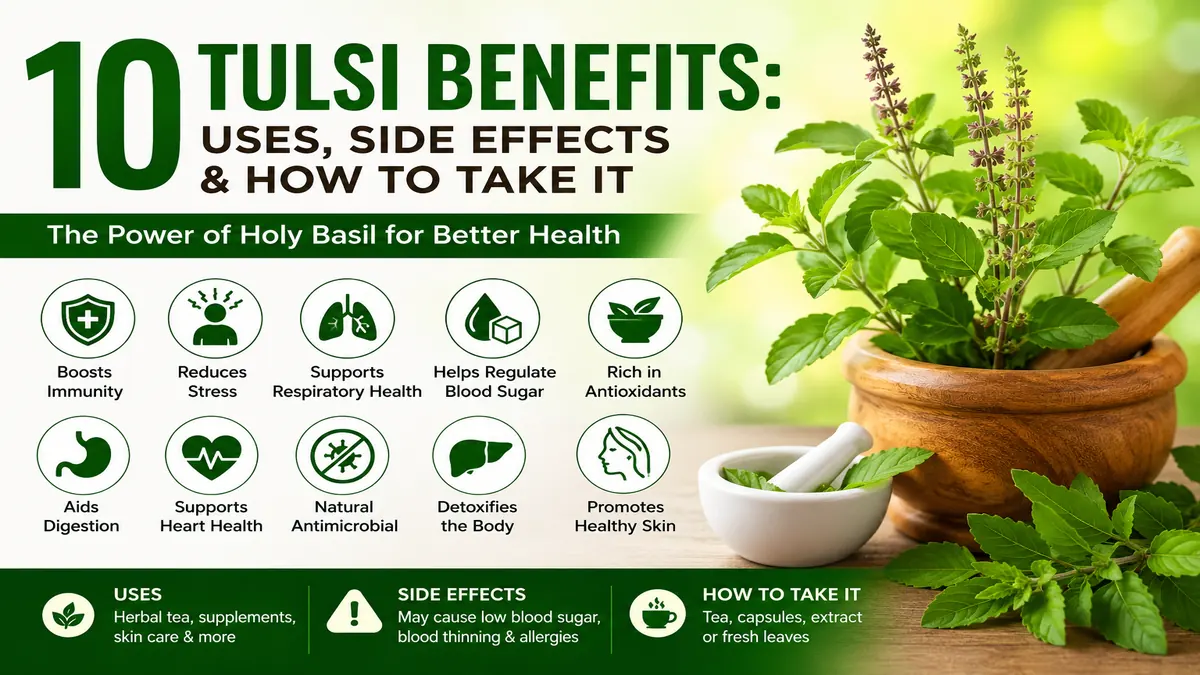
Tulsi, also known as holy basil, is a traditional herb widely used in Ayurveda and other Indian health practices. Scientifically known as Ocimum tenuiflorum (also called Ocimum sanctum), tulsi is valued for its aromatic leaves and long history of traditional use.
Today, tulsi is commonly consumed as fresh leaves, herbal tea, extracts, powders, and supplements. Research suggests that some compounds in tulsi may have antioxidant, anti-inflammatory, and stress-related effects, although more high-quality human research is needed to establish many of its claimed health benefits.
In this article, we explore the potential benefits of tulsi, its common uses, how to consume it, possible side effects, and precautions.
What Is Tulsi (Holy Basil)?
Tulsi is a fragrant plant belonging to the mint family, Lamiaceae. It is native to the Indian subcontinent and is cultivated in many tropical and subtropical regions.
Tulsi has an important place in Ayurveda and traditional Indian households. Several varieties are commonly recognized, including:
- Rama Tulsi – generally associated with green leaves
- Krishna Tulsi – characterized by darker purple-green leaves
- Vana Tulsi – a more wild-growing variety with a strong aroma
Tulsi leaves contain naturally occurring plant compounds such as eugenol, rosmarinic acid, ursolic acid, and other polyphenols that contribute to its aroma and biological activity.
Potential Health Benefits of Tulsi
1. May Help Manage Stress
One of the most widely discussed traditional uses of tulsi is supporting the body’s response to stress.
Some research suggests that tulsi may have adaptogenic properties, meaning it may help the body adapt to physical and psychological stress. Small human studies have reported improvements in perceived stress and related symptoms among people consuming tulsi preparations.
However, larger and better-designed clinical trials are needed before tulsi can be considered a proven treatment for stress or anxiety.
2. May Support Mental Well-Being
Tulsi has traditionally been used to promote calmness and mental clarity. Certain plant compounds found in holy basil may influence pathways involved in the body’s stress response.
Although preliminary research is encouraging, tulsi should not replace professional treatment for anxiety, depression, or other mental health conditions.
3. Contains Antioxidant Compounds
Tulsi provides various plant compounds with antioxidant activity.
Antioxidants help protect cells from oxidative stress, which occurs when there is an imbalance between free radicals and the body’s antioxidant defenses.
A diet rich in fruits, vegetables, herbs, and other plant foods remains a more reliable way to obtain a broad range of antioxidants.
4. May Have Anti-Inflammatory Properties
Laboratory and animal studies suggest that compounds in tulsi may influence inflammatory pathways.
This has generated interest in tulsi as a potentially useful herb for supporting overall health. However, evidence from human studies is still limited, and tulsi should not be considered a treatment for inflammatory diseases.
5. May Support Healthy Blood Sugar Levels
Some preliminary studies have investigated tulsi’s potential effects on blood glucose regulation.
Certain research suggests that holy basil preparations may modestly affect blood sugar levels. However, evidence remains insufficient to determine an effective dose or recommend tulsi as a treatment for diabetes.
People taking diabetes medication should be particularly cautious because combining herbs that may lower blood sugar with medication could potentially contribute to hypoglycemia.
6. May Support Cardiovascular Health
Tulsi contains several bioactive plant compounds that are being studied for their potential effects on cardiovascular health.
Preliminary research has explored possible effects on blood pressure, cholesterol, and other cardiovascular risk factors. However, the evidence is not strong enough to conclude that tulsi prevents or treats heart disease.
A heart-healthy diet, regular physical activity, healthy weight, adequate sleep, and appropriate medical care remain much more important.
7. May Support Immune Function
Tulsi has traditionally been used to support general wellness and immunity.
Some laboratory and animal research indicates that compounds in tulsi may influence immune responses. Nevertheless, there is not enough high-quality human evidence to claim that tulsi prevents infections or significantly strengthens immunity.
8. May Have Antimicrobial Properties
Certain compounds in tulsi, particularly essential-oil components, have demonstrated antimicrobial activity in laboratory research.
This may help explain some of tulsi’s traditional applications. However, laboratory antimicrobial effects do not necessarily mean that consuming tulsi can treat bacterial, viral, or fungal infections in humans.
9. May Support Respiratory Health
Tulsi tea is traditionally consumed for coughs, congestion, and other respiratory complaints.
Its aromatic compounds may provide a soothing sensation, but evidence that tulsi can treat respiratory infections or conditions remains limited.
If you have difficulty breathing, persistent wheezing, chest pain, or a severe or prolonged cough, seek medical attention rather than relying on herbal remedies.
10. May Support Oral Health
Tulsi has traditionally been used in some oral-care practices. Laboratory research has investigated its antimicrobial properties against microorganisms associated with oral health.
However, tulsi should not replace brushing twice daily with fluoride toothpaste, flossing, and regular dental checkups.
Tulsi Uses
Tulsi can be used in several ways depending on personal preference.
Tulsi Tea
Tulsi tea is one of the easiest ways to consume the herb.
You can prepare it by steeping fresh or dried tulsi leaves in hot water. Some people add ginger, lemon, or other herbs for flavor.
Fresh Tulsi Leaves
Fresh leaves may be washed and consumed directly or added to beverages and certain foods.
Because herbal preparations can vary considerably in strength, consuming moderate amounts as a food or tea is generally different from taking concentrated extracts or supplements.
Tulsi Powder
Dried tulsi leaves are sometimes ground into powder and added to drinks or foods.
Follow the product’s recommended serving size when using commercial tulsi powder.
Tulsi Extracts and Supplements
Concentrated tulsi extracts and capsules are also available. These products can contain much higher concentrations of active compounds than culinary preparations.
If you’re taking medications or have an underlying medical condition, talk with a healthcare professional before using concentrated tulsi supplements.
How to Consume Tulsi
There is no universally established therapeutic dose of tulsi for general health.
For everyday use, people commonly consume tulsi as:
- Herbal tea
- Fresh leaves
- Dried leaves
- Powder
- Standardized extracts
- Dietary supplements
The appropriate amount may depend on the preparation, concentration, and individual health circumstances.
More is not necessarily better, particularly with concentrated herbal extracts.
Tulsi Tea: Simple Preparation
To make tulsi tea:
- Wash a small handful of fresh tulsi leaves.
- Add the leaves to a cup of hot water.
- Allow them to steep for several minutes.
- Strain the leaves.
- Add lemon or ginger if desired.
Avoid making very concentrated preparations unless advised by a qualified healthcare professional.
Tulsi Nutrition
Tulsi is usually consumed in relatively small quantities, so it is not an important source of calories, protein, carbohydrates, vitamins, or minerals in the typical diet.
Its primary nutritional interest comes from its naturally occurring phytochemicals and aromatic compounds, rather than macronutrients.
The exact composition can vary depending on the tulsi variety, growing conditions, harvesting method, and preparation.
Tulsi Side Effects
Tulsi is commonly consumed as a food or herbal tea, but concentrated preparations may cause side effects in some people.
Possible concerns include:
- Nausea or stomach discomfort
- Headache or dizziness in some individuals
- Changes in blood sugar
- Possible interactions with medications
- Allergic reactions in sensitive individuals
Long-term safety of high-dose tulsi supplements has not been established as well as the safety of traditional food-level use.
Who Should Be Careful With Tulsi?
Certain people should speak with a healthcare professional before regularly using concentrated tulsi products.
People Taking Diabetes Medication
Because tulsi may potentially influence blood glucose, combining it with diabetes medicines could increase the risk of blood sugar becoming too low.
People Taking Blood-Thinning Medication
Tulsi may potentially affect blood clotting, so people taking anticoagulant or antiplatelet medicines should discuss its use with a healthcare professional.
Before Surgery
If you regularly take tulsi supplements or concentrated extracts, tell your healthcare team before surgery. They may recommend stopping certain supplements beforehand.
Pregnant or Breastfeeding Women
There isn’t enough reliable evidence to establish the safety of medicinal doses of tulsi during pregnancy or breastfeeding. It’s best to consult a healthcare professional before using concentrated preparations.
People With Medical Conditions
Anyone with a chronic health condition should discuss herbal supplements with their doctor or pharmacist, particularly when taking prescription medication.
Tulsi vs. Basil: What’s the Difference?
Although tulsi and culinary basil belong to the same plant family, they are different plants.
| Feature | Tulsi (Holy Basil) | Sweet Basil |
|---|---|---|
| Scientific name | Ocimum tenuiflorum | Ocimum basilicum |
| Common use | Traditional medicine, herbal tea | Cooking |
| Flavor | Strong, aromatic, slightly peppery | Sweet, aromatic |
| Traditional importance | Prominent in Ayurveda | Primarily culinary |
| Common preparations | Tea, leaves, extracts | Fresh or dried leaves |
Frequently Asked Questions About Tulsi
Is tulsi good for everyday use?
Tulsi leaves and tea are commonly consumed as part of traditional diets and wellness practices. However, there is limited evidence regarding the long-term daily use of concentrated supplements.
Can I drink tulsi tea every day?
Many people drink tulsi tea regularly. If you have a medical condition, take prescription medication, are pregnant or breastfeeding, or plan to consume concentrated preparations, consult a healthcare professional first.
Can tulsi help with stress?
Preliminary human research suggests tulsi may help support the body’s response to stress, but more high-quality research is needed.
Can tulsi lower blood sugar?
Some preliminary studies suggest tulsi may influence blood glucose levels. It should not replace prescribed diabetes treatment, and people taking glucose-lowering medication should use caution.
Is tulsi good for immunity?
Tulsi contains compounds that may influence immune activity, but there isn’t enough human evidence to conclude that consuming tulsi prevents infections or significantly boosts immunity.
Can tulsi help with cough and cold?
Tulsi tea is traditionally used for respiratory symptoms and may feel soothing. However, evidence that it treats or shortens common respiratory infections is limited.
What is the best way to consume tulsi?
For general wellness, tulsi can be consumed as fresh leaves or a mild herbal tea. Concentrated extracts and supplements should be used more cautiously.
Bottom Line
Tulsi (holy basil) is a traditional Ayurvedic herb containing a variety of bioactive plant compounds. Early research suggests potential benefits related to stress management, antioxidant activity, inflammation, blood sugar regulation, and general wellness.
However, many of these benefits are based on preliminary research, traditional use, laboratory studies, or small clinical trials. Tulsi should therefore be viewed as a complementary wellness herb rather than a replacement for medical treatment.
For most people, moderate consumption as a food or herbal tea is a practical way to enjoy tulsi. If you are considering concentrated tulsi supplements, especially while taking medication or managing a health condition, speak with a qualified healthcare professional first.