
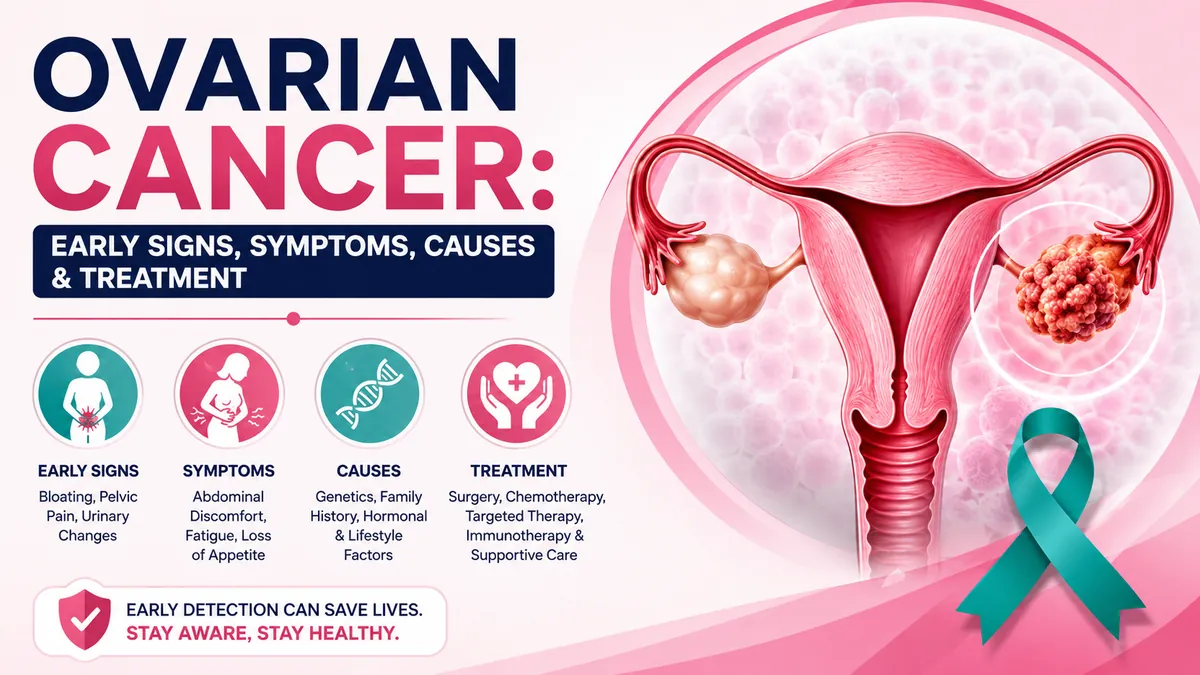
Ovarian cancer is a type of cancer that begins in the ovaries or nearby reproductive tissues. Although it is often called a “silent” disease, ovarian cancer can cause symptoms, especially as the disease develops. The challenge is that many early symptoms may be mild and can resemble common digestive or menstrual problems.
Learning about the early signs, symptoms, risk factors, causes, diagnosis, and treatment options for ovarian cancer may help people recognize when persistent symptoms need medical attention.
What Is Ovarian Cancer?
Ovarian cancer develops when abnormal cells in or around the ovaries begin to grow and multiply uncontrollably. These cells can form a tumor and may spread to nearby tissues or other parts of the body if not detected and treated.
The ovaries are part of the female reproductive system and are responsible for producing eggs and hormones such as estrogen and progesterone.
Several types of ovarian cancer exist. The most common type is epithelial ovarian cancer, which begins in cells covering the ovary or in related tissues. Other, less common types include:
- Germ cell tumors
- Stromal cell tumors
- Small cell carcinomas
- Tumors arising from the fallopian tubes or nearby tissues
The type of ovarian cancer can affect treatment decisions and outlook.
Early Signs of Ovarian Cancer
Early ovarian cancer may not always cause noticeable symptoms. When symptoms do occur, they can be vague and easily confused with less serious conditions.
Some possible early warning signs include:
- Persistent bloating or swelling of the abdomen
- Pelvic or abdominal pain
- Feeling full quickly while eating
- Difficulty eating or loss of appetite
- Frequent urination
- A sudden increase in the urge to urinate
- Indigestion or digestive discomfort
- Changes in bowel habits
- Unexplained fatigue
- Back pain
- Unexplained weight loss or weight gain
- Menstrual changes or abnormal vaginal bleeding
Having one or more of these symptoms does not necessarily mean cancer. However, symptoms that are new, persistent, worsening, or occurring frequently should be discussed with a healthcare professional.
Common Symptoms of Ovarian Cancer
As ovarian cancer progresses, symptoms may become more noticeable. Common symptoms can include:
1. Abdominal Bloating
Persistent abdominal bloating or an increase in abdominal size may occur. Some people may notice that their clothes feel tighter around the waist.
2. Pelvic or Abdominal Pain
Ongoing pain, pressure, or discomfort in the lower abdomen or pelvic area can be a symptom of ovarian cancer.
3. Feeling Full Quickly
Feeling unusually full after eating a small amount of food may occur due to changes in the abdomen or pressure from a growing tumor.
4. Frequent Urination
Some people may experience increased urinary frequency or urgency.
5. Changes in Bowel Habits
Constipation, diarrhea, or other unexplained changes in bowel habits can sometimes occur.
6. Loss of Appetite
A reduced appetite or difficulty eating may develop, particularly if bloating or abdominal discomfort is present.
7. Fatigue
Persistent tiredness that does not improve with rest may occur in some people.
8. Unexplained Weight Changes
Some individuals may experience unexplained weight loss. Others may notice weight gain or increased abdominal size due to fluid buildup.
9. Menstrual or Vaginal Changes
Abnormal vaginal bleeding, irregular periods, or bleeding after menopause should always be evaluated by a healthcare professional.
What Causes Ovarian Cancer?
The exact cause of ovarian cancer is not always known. Cancer develops when genetic changes cause cells to grow and divide abnormally.
Several factors may increase a person’s risk of developing ovarian cancer.
Risk Factors for Ovarian Cancer
Age
The risk of ovarian cancer generally increases with age, and many cases are diagnosed after menopause.
Family History
A family history of ovarian, breast, or certain other cancers may increase risk.
Inherited Gene Mutations
Inherited genetic changes, including mutations in the BRCA1 and BRCA2 genes, can increase the risk of ovarian cancer.
Other inherited conditions, such as Lynch syndrome, may also raise the risk.
Endometriosis
Endometriosis has been associated with an increased risk of certain types of ovarian cancer.
Reproductive History
Certain reproductive factors may influence ovarian cancer risk. For example, never having been pregnant may be associated with a higher risk in some people.
Hormone Therapy
Some forms of menopausal hormone therapy may influence ovarian cancer risk, depending on the type and duration of use.
Personal History of Cancer
People who have previously had breast, colorectal, or other certain cancers may have an increased risk depending on underlying genetic and health factors.
It is important to remember that having a risk factor does not mean someone will definitely develop ovarian cancer. Similarly, some people diagnosed with ovarian cancer have no known risk factors.
How Is Ovarian Cancer Diagnosed?
Doctors may use several tests to investigate symptoms and diagnose ovarian cancer.
Pelvic Examination
A healthcare professional may perform a pelvic examination to check for abnormalities or enlarged organs.
Imaging Tests
Imaging tests may include:
- Ultrasound
- CT scan
- MRI scan
These tests can help doctors identify masses or abnormalities in the ovaries and surrounding tissues.
Blood Tests
A blood test called CA-125 may be used in some cases. However, CA-125 levels can also increase because of noncancerous conditions, so the test cannot diagnose ovarian cancer on its own.
Biopsy and Surgery
A biopsy involves examining tissue or cells under a microscope. In many cases, surgery is needed to confirm the diagnosis, determine the type of cancer, and assess how far it has spread.
Stages of Ovarian Cancer
Ovarian cancer is commonly grouped into stages based on how far the cancer has spread.
Stage 1
The cancer is limited to the ovaries or fallopian tubes.
Stage 2
The cancer has spread to nearby tissues within the pelvis.
Stage 3
The cancer has spread outside the pelvis, often into the abdomen or nearby lymph nodes.
Stage 4
The cancer has spread to distant organs or tissues.
The stage of cancer is an important factor in determining treatment and prognosis.
Ovarian Cancer Treatment Options
Treatment depends on several factors, including:
- The type of ovarian cancer
- The stage of the cancer
- The size and location of the tumor
- The person’s overall health
- Previous treatments
- Whether fertility preservation is desired
1. Surgery
Surgery is a major treatment for many cases of ovarian cancer. The goal may be to remove as much cancer as possible.
Depending on the situation, surgery may involve removing:
- One or both ovaries
- Fallopian tubes
- The uterus
- Nearby lymph nodes
- Other affected tissues
In selected early-stage cases, fertility-sparing surgery may be possible.
2. Chemotherapy
Chemotherapy uses medicines to destroy cancer cells or slow their growth. It may be given before surgery, after surgery, or as the main treatment in certain situations.
3. Targeted Therapy
Targeted drugs work by interfering with specific processes involved in cancer cell growth. Certain targeted treatments may be used depending on the type of ovarian cancer and its genetic characteristics.
4. PARP Inhibitors
PARP inhibitors are targeted medicines that may be used for some people with ovarian cancer, particularly those with specific genetic features such as certain BRCA-related changes.
5. Immunotherapy
Immunotherapy helps the immune system recognize or attack cancer cells. It may be used in selected situations, although it is not appropriate for every type of ovarian cancer.
6. Radiation Therapy
Radiation therapy is less commonly used as a primary treatment for ovarian cancer but may sometimes be considered in specific circumstances.
Can Ovarian Cancer Be Prevented?
There is no guaranteed way to prevent ovarian cancer. However, some factors may help reduce risk in certain individuals.
Potential protective factors include:
- Pregnancy
- Breastfeeding
- Use of certain birth control methods
- Surgical removal of the fallopian tubes or ovaries in people with a very high inherited risk
Preventive surgery is generally considered only for people with significant genetic risk and should be discussed carefully with a qualified specialist.
Maintaining a healthy lifestyle, avoiding tobacco, staying physically active, and discussing family cancer history with a doctor may also support overall health and cancer risk management.
When Should You See a Doctor?
You should consider speaking with a healthcare professional if you experience symptoms such as:
- Persistent bloating
- Frequent abdominal or pelvic pain
- Feeling full unusually quickly
- Difficulty eating
- Frequent or urgent urination
- Unexplained changes in bowel habits
- Abnormal vaginal bleeding
- Unexplained weight changes
Symptoms that occur frequently or continue for several weeks should not be ignored.
Outlook for Ovarian Cancer
The outlook for ovarian cancer depends on several factors, including the type and stage of cancer, genetic characteristics, response to treatment, and overall health.
Early detection can improve treatment options and outcomes. However, ovarian cancer is often diagnosed at a later stage because its early symptoms can be subtle.
Advances in surgery, chemotherapy, targeted therapy, genetic testing, and personalized treatment are helping improve care for many people with ovarian cancer.
Frequently Asked Questions
What are the first signs of ovarian cancer?
Possible early signs include persistent bloating, pelvic or abdominal pain, feeling full quickly, difficulty eating, and frequent or urgent urination.
Can ovarian cancer cause back pain?
Yes. Some people with ovarian cancer may experience persistent back pain, although back pain is common and can have many other causes.
Is bloating always a sign of ovarian cancer?
No. Bloating is common and is usually caused by digestive or other noncancerous conditions. However, persistent or worsening bloating should be evaluated, especially when combined with other symptoms.
What is the biggest risk factor for ovarian cancer?
Age is an important risk factor, while inherited genetic mutations and a strong family history can also significantly increase risk.
Can ovarian cancer be cured?
Some cases of ovarian cancer can be successfully treated, particularly when detected at an early stage. Outcomes vary depending on the type and stage of cancer and response to treatment.
Is there a screening test for ovarian cancer?
There is currently no widely recommended routine screening test for ovarian cancer for people at average risk. Individuals with a strong family history or inherited genetic risk should discuss personalized screening and prevention strategies with a healthcare professional.
Conclusion
Ovarian cancer can be difficult to detect because its early symptoms are often mild and similar to common digestive or gynecological conditions. Persistent bloating, pelvic pain, early fullness, difficulty eating, and urinary changes are among the symptoms that should not be ignored.
Understanding the early signs, symptoms, causes, risk factors, and treatment options for ovarian cancer can help people seek medical attention when necessary. If you have persistent symptoms or a strong family history of ovarian or breast cancer, speak with a healthcare professional for appropriate evaluation and guidance.