
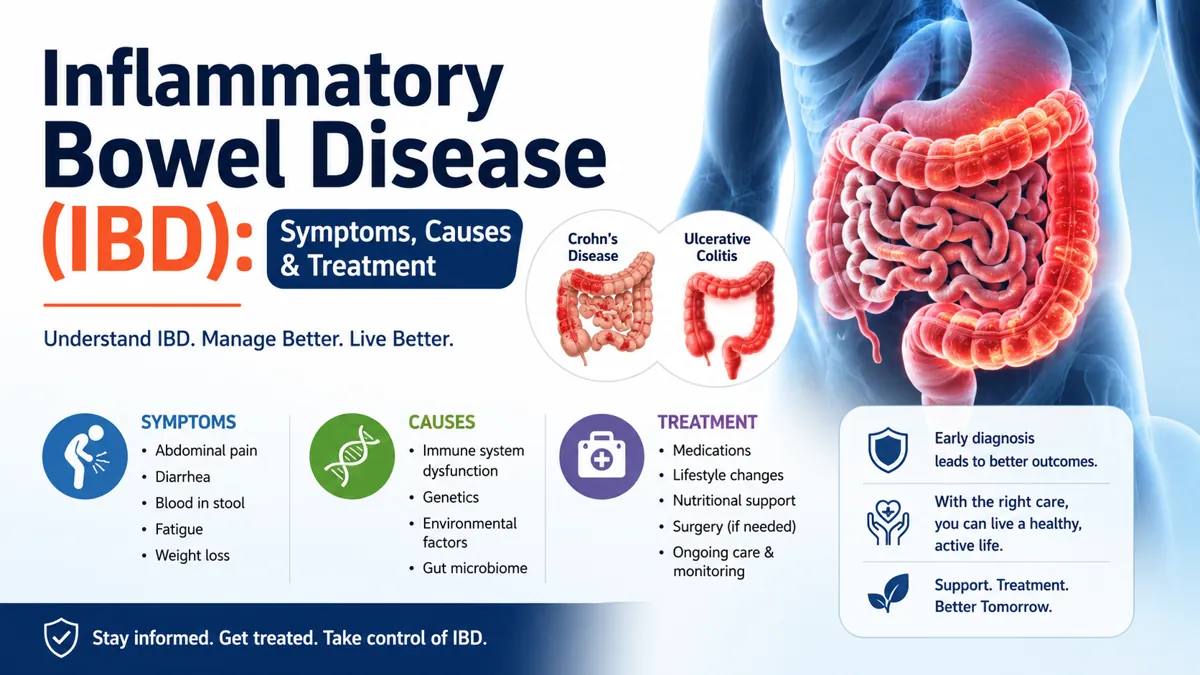
Inflammatory Bowel Disease (IBD) is a group of chronic conditions that cause ongoing inflammation in the digestive tract. The two most common forms of IBD are Crohn’s disease and ulcerative colitis. Although both conditions share some symptoms, they affect different parts of the digestive system and require individualized treatment.
Living with IBD can be challenging, but early diagnosis and proper medical care can help control symptoms, reduce flare-ups, and improve quality of life. In this comprehensive guide, you’ll learn about the symptoms, causes, risk factors, diagnosis, treatment options, diet recommendations, and prevention tips for Inflammatory Bowel Disease.
What Is Inflammatory Bowel Disease (IBD)?
Inflammatory Bowel Disease (IBD) refers to chronic inflammation of the gastrointestinal (GI) tract caused by an abnormal immune response. Unlike temporary digestive problems, IBD is a lifelong condition that often alternates between periods of remission (few or no symptoms) and flare-ups.
The two primary types of IBD are:
1. Crohn’s Disease
Crohn’s disease can affect any part of the digestive tract—from the mouth to the anus—but most commonly affects the end of the small intestine and the beginning of the large intestine. Inflammation can extend through multiple layers of the intestinal wall.
2. Ulcerative Colitis
Ulcerative colitis affects only the large intestine (colon) and rectum. Inflammation occurs in the innermost lining of the colon, leading to ulcers and bleeding.
Symptoms of Inflammatory Bowel Disease (IBD)
Symptoms vary depending on the severity of inflammation and which part of the digestive tract is affected.
Common symptoms include:
- Persistent diarrhea
- Abdominal pain and cramping
- Blood in the stool
- Urgent need to have a bowel movement
- Fatigue
- Weight loss
- Reduced appetite
- Fever during flare-ups
- Bloating
- Rectal bleeding
- Feeling of incomplete bowel emptying
Children with IBD may also experience:
- Delayed growth
- Poor weight gain
- Delayed puberty
Symptoms of Crohn’s Disease
People with Crohn’s disease may experience:
- Chronic diarrhea
- Abdominal pain, especially in the lower right abdomen
- Mouth sores
- Anal fissures
- Perianal fistulas
- Nutrient deficiencies
- Weight loss
- Fatigue
Symptoms of Ulcerative Colitis
Ulcerative colitis commonly causes:
- Bloody diarrhea
- Rectal bleeding
- Frequent bowel movements
- Abdominal discomfort
- Urgency to pass stool
- Mucus in stool
- Mild fever during severe flare-ups
Causes of Inflammatory Bowel Disease
The exact cause of IBD remains unknown. Researchers believe several factors work together to trigger the disease.
1. Immune System Dysfunction
An overactive immune system mistakenly attacks healthy intestinal tissue, leading to chronic inflammation.
2. Genetics
IBD tends to run in families. People with close relatives who have IBD have a higher risk of developing the condition.
3. Environmental Factors
Possible triggers include:
- Smoking (especially for Crohn’s disease)
- Western diet high in processed foods
- Air pollution
- Certain infections
- Stress (may worsen symptoms but doesn’t directly cause IBD)
4. Gut Microbiome Changes
Imbalances in gut bacteria may contribute to inflammation in susceptible individuals.
Risk Factors
Several factors increase the likelihood of developing IBD:
- Family history
- Age below 35 years
- Smoking
- Certain ethnic backgrounds
- Living in industrialized countries
- High-fat, low-fiber diet
- Previous gastrointestinal infections
Complications of IBD
Without proper treatment, IBD can lead to serious complications.
These include:
- Intestinal obstruction
- Fistulas
- Abscesses
- Colon perforation
- Severe bleeding
- Malnutrition
- Anemia
- Osteoporosis
- Increased risk of colorectal cancer
- Liver disease
- Blood clots
When Should You See a Doctor?
Seek medical attention if you experience:
- Persistent diarrhea lasting more than two weeks
- Blood in your stool
- Severe abdominal pain
- Unexplained weight loss
- Fever with digestive symptoms
- Ongoing fatigue
- Nighttime diarrhea
Immediate medical care is needed if severe abdominal pain, dehydration, or heavy rectal bleeding occurs.
How Is Inflammatory Bowel Disease Diagnosed?
Doctors use several tests to confirm IBD and rule out other digestive disorders.
Medical History and Physical Examination
Your healthcare provider will ask about:
- Symptoms
- Family history
- Diet
- Previous illnesses
- Medications
Blood Tests
Blood tests help identify:
- Infection
- Anemia
- Inflammation
- Nutritional deficiencies
Stool Tests
Stool analysis can detect:
- Infection
- Blood
- Inflammatory markers
Colonoscopy
A colonoscopy is the most important test for diagnosing IBD. It allows doctors to examine the colon and obtain tissue samples (biopsies).
Imaging Tests
Additional imaging may include:
- CT scan
- MRI
- Capsule endoscopy
- Ultrasound
Treatment for Inflammatory Bowel Disease
There is currently no cure for IBD, but treatment focuses on reducing inflammation, relieving symptoms, and preventing complications.
1. Anti-inflammatory Medications
Doctors may prescribe:
- Aminosalicylates (5-ASA)
- Corticosteroids for short-term flare control
2. Immune System Suppressors
These medications reduce abnormal immune activity.
Examples include:
- Azathioprine
- Methotrexate
3. Biologic Therapies
Biologics target specific inflammatory pathways.
Common biologic medications include:
- Anti-TNF agents
- Anti-integrin therapies
- IL-12/23 inhibitors
4. Small Molecule Therapies
Newer oral medications can help some patients whose disease is not controlled with other treatments.
5. Antibiotics
Antibiotics may be used when infections or abscesses occur.
6. Surgery
Surgery may be necessary when medications fail or complications develop.
Surgery may involve:
- Removing damaged portions of the intestine
- Treating fistulas
- Removing the colon in severe ulcerative colitis
Best Diet for IBD
There is no single diet that works for everyone with IBD, but certain dietary changes may help reduce symptoms.
Foods that may be easier to tolerate include:
- White rice
- Bananas
- Applesauce
- Oatmeal
- Lean chicken
- Fish
- Eggs
- Yogurt (if tolerated)
- Cooked vegetables
- Potatoes
Foods that may trigger symptoms include:
- Fried foods
- Spicy foods
- Alcohol
- Carbonated drinks
- High-fat foods
- Processed snacks
- High-fiber raw vegetables during flare-ups
- Excess caffeine
Keeping a food diary can help identify personal trigger foods.
Lifestyle Tips for Managing IBD
Healthy habits can help reduce flare-ups and improve overall well-being.
- Take medications exactly as prescribed.
- Avoid smoking.
- Exercise regularly.
- Stay hydrated.
- Get enough sleep.
- Manage stress through meditation, yoga, or counseling.
- Attend regular medical checkups.
- Stay up to date with recommended vaccinations after discussing them with your healthcare provider.
Can Inflammatory Bowel Disease Be Prevented?
There is no guaranteed way to prevent IBD because genetics play a major role. However, you may lower the risk of flare-ups by:
- Avoiding smoking
- Eating a balanced diet
- Exercising regularly
- Managing stress
- Following prescribed treatment
- Keeping follow-up appointments
Living With IBD
Many people with IBD lead active, fulfilling lives. Treatment plans often need adjustment over time, so maintaining regular communication with your healthcare team is important. Joining support groups, learning about the condition, and recognizing early signs of flare-ups can help improve long-term disease management.
Frequently Asked Questions (FAQs)
Is IBD the same as IBS?
No. Irritable Bowel Syndrome (IBS) is a functional digestive disorder that does not cause chronic inflammation or permanent damage. Inflammatory Bowel Disease (IBD) causes ongoing inflammation that can damage the digestive tract.
Is IBD curable?
Currently, there is no cure for IBD. However, medications, lifestyle changes, and surgery can effectively manage symptoms and help many people achieve long-term remission.
Can stress cause IBD?
Stress does not directly cause IBD, but it can trigger or worsen flare-ups in people who already have the condition.
What foods should be avoided during an IBD flare?
Many people benefit from temporarily limiting high-fiber foods, spicy foods, alcohol, fried foods, and caffeinated beverages during flare-ups. Triggers vary by individual.
Is IBD hereditary?
Yes. Having a close family member with IBD increases your risk, though many people with IBD have no family history.
Key Takeaways
Inflammatory Bowel Disease is a chronic condition that includes Crohn’s disease and ulcerative colitis. Symptoms such as persistent diarrhea, abdominal pain, blood in the stool, fatigue, and weight loss should never be ignored. Early diagnosis, appropriate medications, a balanced diet, and healthy lifestyle habits can help control inflammation, reduce complications, and improve quality of life. If you experience ongoing digestive symptoms, consult a healthcare professional for proper evaluation and treatment.