
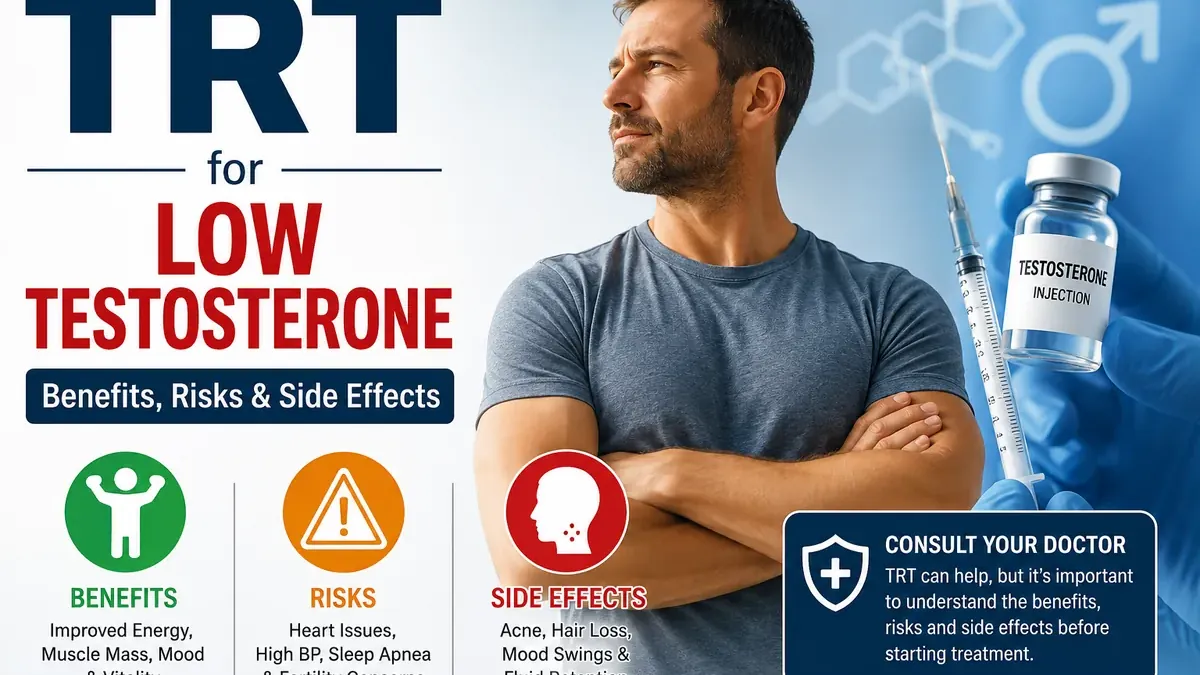
Testosterone therapy, also called testosterone replacement therapy (TRT), is a medical treatment used to restore testosterone levels in men who have confirmed testosterone deficiency, also known as hypogonadism. It may improve certain symptoms of low testosterone, including reduced sex drive, sexual difficulties, low energy, reduced muscle mass, and weakened bones.
However, testosterone therapy is not a general anti-aging treatment or a shortcut for building muscle. It can cause side effects and requires appropriate testing and medical monitoring. Current guidance emphasizes that treatment should generally be considered when a man has compatible symptoms and consistently low testosterone levels confirmed by blood testing.
What Is Testosterone?
Testosterone is a hormone produced mainly by the testicles. It plays an important role in:
- Sex drive and sexual function
- Sperm production
- Muscle mass and strength
- Bone health
- Red blood cell production
- Fat distribution
- Mood and overall well-being
- Development and maintenance of male physical characteristics
Testosterone levels naturally change throughout life. A lower testosterone result does not automatically mean that testosterone therapy is necessary because symptoms such as tiredness, low mood, reduced concentration, or decreased sexual desire can have many possible causes.
What Is Testosterone Therapy?
Testosterone therapy involves giving testosterone from an external source to restore hormone levels when the body is not producing enough.
Depending on the patient’s medical needs and the available product, testosterone may be administered as:
- Injections
- Gels or topical solutions
- Skin patches
- Buccal tablets or systems
- Testosterone pellets
- Nasal gel
The appropriate form depends on factors such as the cause of testosterone deficiency, treatment preferences, cost, convenience, fertility plans, and potential side effects.
Who May Benefit From Testosterone Therapy?
Testosterone therapy is primarily intended for men with confirmed hypogonadism rather than men who simply want to increase testosterone.
The diagnosis generally requires both:
- Symptoms or signs consistent with testosterone deficiency.
- Consistently low testosterone levels confirmed with properly performed blood tests.
The Endocrine Society recommends confirming low testosterone with a repeat morning fasting testosterone measurement and evaluating the underlying cause before starting treatment.
Possible symptoms of testosterone deficiency include:
- Reduced sex drive
- Erectile difficulties
- Fewer spontaneous erections
- Infertility or reduced sperm production
- Low energy
- Reduced muscle mass
- Decreased bone density
- Mood changes
- Difficulty concentrating
- Reduced body hair
- Breast enlargement or tenderness
Not everyone with these symptoms has low testosterone, so medical evaluation is important.
Potential Benefits of Testosterone Therapy
When appropriately prescribed for men with genuine testosterone deficiency, TRT can provide several benefits.
1. May Improve Sexual Function
One of the most recognized potential benefits of testosterone replacement is improvement in symptoms related to testosterone deficiency, particularly reduced sexual desire.
Some men may experience improvement in libido and sexual function after testosterone levels are restored to an appropriate range. However, erectile dysfunction can have many causes, so testosterone therapy does not necessarily solve erection problems when low testosterone is not the underlying cause.
2. May Help Increase Muscle Mass
Testosterone contributes to muscle development and maintenance. In men with testosterone deficiency, restoring testosterone levels may help improve lean muscle mass and, in some circumstances, muscle strength.
However, TRT should not be viewed as a substitute for resistance training, adequate nutrition, or appropriate treatment of other medical conditions.
3. May Support Bone Health
Low testosterone can contribute to reduced bone density. Testosterone treatment may improve bone mineral density in appropriately selected men with testosterone deficiency.
Men with significant bone loss may still need additional evaluation and treatments specifically designed for osteoporosis.
4. May Improve Anemia Related to Testosterone Deficiency
Testosterone plays a role in red blood cell production. Testosterone replacement can increase red blood cell production and may improve anemia associated with testosterone deficiency.
This same effect can become a problem if red blood cell levels rise too much, which is one reason blood tests are important during treatment.
5. May Improve Some Symptoms of Low Testosterone
Some men with confirmed hypogonadism may experience improvements in energy, mood, sense of well-being, and other symptoms after treatment. However, these symptoms can have many causes, so TRT is not an appropriate treatment for unexplained fatigue or low mood alone.
Risks and Side Effects of Testosterone Therapy
Testosterone therapy can cause side effects, particularly when it is used without proper diagnosis or monitoring.
1. Increased Red Blood Cell Count
One of the important risks of TRT is excessive production of red blood cells, known as erythrocytosis.
A significantly elevated red blood cell count can increase blood viscosity and may contribute to clot-related complications. Regular blood testing can help identify this problem.
2. Reduced Sperm Production and Fertility
External testosterone can suppress the body’s natural reproductive hormone signals. As a result, testosterone therapy can reduce sperm production and may impair fertility.
Men who are planning to have children should discuss fertility with their doctor before starting TRT. Testosterone therapy is generally not recommended for men planning fertility in the near term.
3. Acne and Skin Reactions
Testosterone can increase oil production in the skin and may cause or worsen acne.
Topical products may also cause irritation at the application site. Testosterone gel can potentially transfer to another person through skin contact if appropriate precautions are not followed.
4. Prostate-Related Concerns
Testosterone can affect prostate tissue. Men receiving TRT should discuss prostate health and appropriate monitoring with their healthcare provider.
Men with known or suspected prostate cancer should not receive testosterone therapy, and certain prostate-related conditions require evaluation before treatment.
5. Sleep Apnea May Worsen
Testosterone treatment may worsen untreated severe obstructive sleep apnea in some men. Because of this, untreated severe sleep apnea is considered a reason to avoid starting testosterone therapy under current Endocrine Society recommendations.
6. Possible Increase in Blood Pressure
The FDA has required labeling changes for testosterone products concerning increases in blood pressure observed in required ambulatory blood-pressure studies. People using TRT should therefore have their blood pressure monitored as appropriate.
7. Cardiovascular Risks Require Individual Assessment
The relationship between testosterone therapy and cardiovascular health has been studied extensively.
The large TRAVERSE trial found no meaningful increase in major cardiovascular events such as heart attack, stroke, or cardiovascular death among the studied men receiving testosterone compared with placebo. The FDA subsequently removed the boxed warning about increased cardiovascular risk from testosterone-product labeling. However, testosterone products now carry updated information about blood pressure, and other safety questions remain under study.
The Endocrine Society also notes that longer-term safety questions remain, including concerns involving blood clots and prostate health.
Who Should Avoid Testosterone Therapy?
Testosterone therapy may not be appropriate for men with certain medical conditions.
Doctors generally avoid starting TRT in men with conditions such as:
- Known or suspected prostate cancer
- Breast cancer
- Significantly elevated red blood cell levels
- Untreated severe obstructive sleep apnea
- Certain severe urinary symptoms
- Uncontrolled heart failure
- Recent heart attack or stroke
- Certain blood-clotting disorders
- Plans for fertility in the near future
The exact decision depends on the individual’s health, laboratory results, and the reason for testosterone deficiency.
Is Testosterone Therapy Safe for Older Men?
Testosterone naturally declines with age, but aging alone does not necessarily mean a man needs TRT.
Current expert guidance emphasizes distinguishing genuine hypogonadism from normal aging and other reversible causes of low testosterone. Symptoms such as low energy, reduced libido, and mood changes may also be caused by obesity, medications, sleep disorders, diabetes, thyroid problems, depression, or other health conditions.
Therefore, testosterone therapy should not be used simply as an “anti-aging” treatment without appropriate evaluation.
How Is Low Testosterone Diagnosed?
A single low testosterone test is usually not enough to diagnose hypogonadism.
A healthcare professional may:
- Review symptoms and medical history.
- Perform a physical examination when appropriate.
- Order a morning testosterone blood test.
- Repeat the test to confirm consistently low levels.
- Evaluate other hormones, such as luteinizing hormone (LH) and follicle-stimulating hormone (FSH), when appropriate.
- Investigate possible underlying causes.
- Discuss the potential benefits and risks of treatment.
The Endocrine Society recommends accurate testosterone testing and confirmation of consistently low morning testosterone before making the diagnosis.
What Monitoring Is Needed During Testosterone Therapy?
TRT should not be considered a “take it and forget it” treatment.
Doctors may monitor:
- Testosterone levels
- Hematocrit and red blood cell count
- Blood pressure
- Symptoms and treatment response
- Prostate health when appropriate
- PSA levels when indicated
- Potential side effects
Monitoring helps determine whether treatment is working and whether the dose needs adjustment or treatment should be stopped.
Can You Increase Testosterone Naturally?
Before starting TRT, doctors may look for reversible factors that are contributing to low testosterone.
Depending on the cause, helpful measures may include:
- Maintaining a healthy weight
- Regular physical activity
- Resistance training
- Getting adequate sleep
- Managing chronic health conditions
- Reviewing medications that may affect testosterone
- Eating a balanced, nutrient-rich diet
- Limiting excessive alcohol consumption
For men whose low testosterone is related to obesity or another reversible factor, addressing the underlying cause may be more appropriate than immediately starting testosterone therapy. The Endocrine Society specifically notes that weight loss is typically first-line treatment when obesity is the identified cause of hypogonadism and no other cause is found.
Testosterone Therapy Benefits vs. Risks
| Potential Benefits | Potential Risks |
|---|---|
| May improve low libido | Reduced sperm production |
| May improve sexual symptoms | Increased red blood cell count |
| May increase lean muscle mass | Acne and skin reactions |
| May support bone density | Possible worsening of sleep apnea |
| May improve anemia caused by deficiency | Prostate-related concerns |
| May improve some symptoms of hypogonadism | Possible increase in blood pressure |
| May improve overall well-being in some men | Requires ongoing monitoring |
Frequently Asked Questions
Is testosterone therapy good for low testosterone?
It can be effective for men with confirmed hypogonadism and symptoms of testosterone deficiency. Treatment should be based on appropriate testing and medical evaluation rather than symptoms alone.
Does testosterone therapy increase muscle mass?
Testosterone contributes to muscle development, and restoring deficient testosterone levels can increase lean muscle mass in some men. However, TRT is not recommended simply to enhance athletic performance or appearance.
Does testosterone therapy affect fertility?
Yes. External testosterone can suppress sperm production and may reduce fertility. Men planning to have children should discuss alternatives with a healthcare professional before starting TRT.
Can testosterone therapy cause prostate cancer?
The long-term relationship between testosterone therapy and prostate cancer remains an area of ongoing research. Men with known or suspected prostate cancer should not start TRT, and appropriate prostate risk assessment and monitoring are important for men receiving treatment.
Does testosterone therapy increase the risk of heart attack?
Current evidence from the large TRAVERSE trial did not show a meaningful increase in major cardiovascular events among the studied men receiving testosterone. However, testosterone can increase blood pressure in some patients, and individual cardiovascular risks should be discussed with a healthcare professional.
How long does testosterone therapy take to work?
The timeline varies depending on the symptom being treated, the cause of testosterone deficiency, the treatment formulation, and the individual. Some symptoms may improve gradually rather than immediately. Doctors typically reassess symptoms, testosterone levels, and side effects after treatment begins.
Final Takeaway
Testosterone therapy can provide meaningful benefits for men with medically confirmed testosterone deficiency, including improvements in sexual symptoms, muscle mass, bone health, and anemia related to low testosterone. However, TRT also has potential risks, including reduced fertility, increased red blood cell production, acne, prostate-related concerns, sleep apnea complications, and increased blood pressure.
The most important point is that testosterone therapy should be used to treat appropriately diagnosed hypogonadism—not simply to combat normal aging or improve physical performance. Proper testing, identification of the underlying cause, individualized treatment, and regular medical monitoring can help maximize potential benefits while reducing risks.
Medical disclaimer: This article is for informational and educational purposes only and is not a substitute for professional medical advice, diagnosis, or treatment. Always consult a qualified healthcare professional before starting testosterone therapy or making changes to your treatment.