
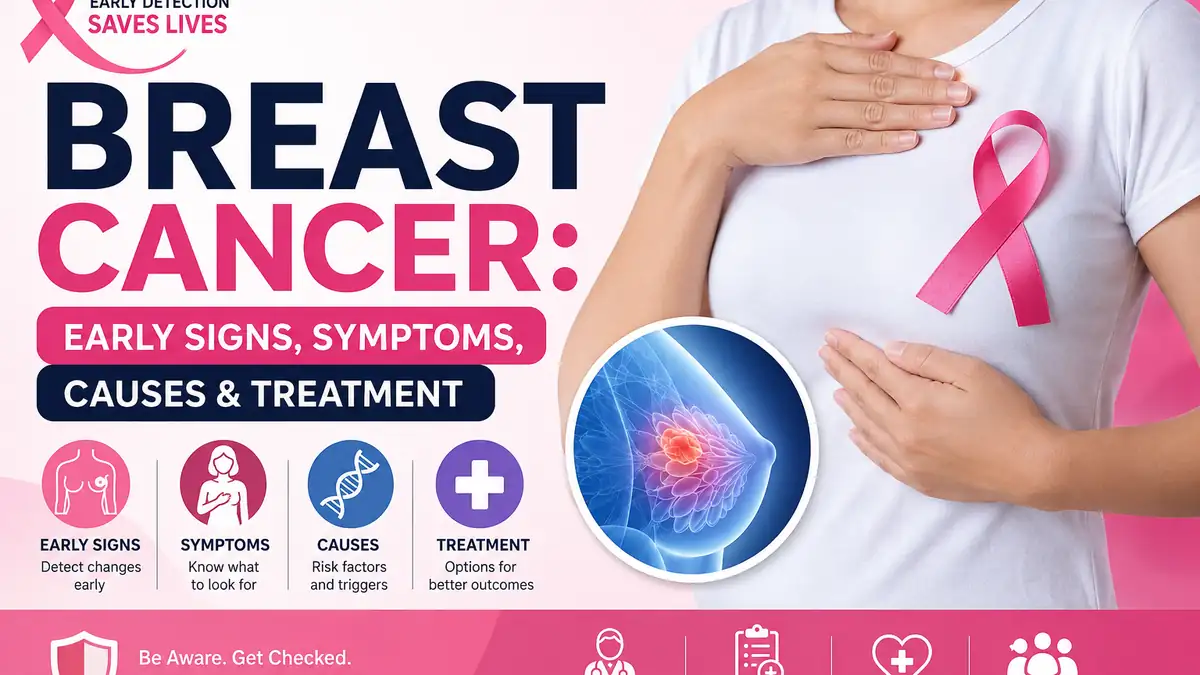
Breast cancer is one of the most common cancers affecting women worldwide, although men can also develop the disease. It occurs when abnormal cells in the breast grow uncontrollably and may form a tumor. Early detection and advances in treatment have significantly improved outcomes for many people with breast cancer.
Knowing the early signs and symptoms of breast cancer, understanding its possible causes and risk factors, and learning about available treatment options can help people seek medical attention at the right time.
What Is Breast Cancer?
Breast cancer begins when cells in the breast undergo abnormal changes and multiply uncontrollably. These cancer cells can form a lump or tumor and may invade nearby tissues. In some cases, breast cancer can spread to other parts of the body, a process known as metastasis.
Breast cancer can begin in different parts of the breast. The most common types include:
- Ductal carcinoma, which starts in the milk ducts
- Lobular carcinoma, which begins in the milk-producing lobules
- Invasive breast cancer, which has spread from its original location into nearby breast tissue
- Non-invasive breast cancer, where abnormal cells remain confined to their original area
The type and stage of breast cancer can influence symptoms, treatment, and prognosis.
Early Signs and Symptoms of Breast Cancer
Breast cancer does not always cause noticeable symptoms in its earliest stages. However, some people may experience changes in the breast that should be evaluated by a healthcare professional.
1. A New Lump or Thickened Area
A new lump in the breast or underarm is one of the most well-known signs of breast cancer. The lump may feel hard, firm, or different from the surrounding tissue.
However, not every breast lump is cancerous. Benign conditions such as cysts or fibroadenomas can also cause lumps. Any new or persistent lump should still be checked by a doctor.
2. Changes in Breast Size or Shape
A sudden or unusual change in the size, shape, or appearance of one breast may be a warning sign. While some natural differences between breasts are normal, a new and unexplained change deserves medical attention.
3. Skin Changes on the Breast
Breast cancer can sometimes affect the skin covering the breast. Possible changes include:
- Dimpling or puckering of the skin
- Redness or irritation
- Thickened skin
- Scaling or flaking
- An orange-peel-like appearance, sometimes called peau d’orange
These symptoms can also occur with other medical conditions, but they should not be ignored.
4. Nipple Changes
Changes involving the nipple may include:
- A newly inverted or pulled-in nipple
- Changes in nipple shape
- Scaling or crusting around the nipple
- Pain or irritation
- Unusual nipple discharge
A bloody or unexplained nipple discharge should be evaluated promptly.
5. Breast or Nipple Pain
Breast pain is common and is often caused by hormonal changes or other non-cancerous conditions. However, persistent pain in one specific area, especially when accompanied by a lump or visible changes, should be assessed by a healthcare professional.
6. Swelling in the Breast or Underarm
Breast cancer can cause swelling in part or all of the breast. Some people may also notice swelling or enlarged lymph nodes under the arm or near the collarbone.
7. Changes in Breast Skin Color
Redness, darkening, or other unusual changes in breast skin color can sometimes occur with certain forms of breast cancer, including inflammatory breast cancer.
What Are the Causes of Breast Cancer?
There is no single cause of breast cancer. The disease develops because of complex changes in breast cells, including genetic mutations that cause abnormal cell growth.
In many cases, doctors cannot identify one exact reason why a particular person developed breast cancer. However, several factors may increase the risk.
Risk Factors for Breast Cancer
Age
The risk of breast cancer generally increases with age. Although younger adults can develop breast cancer, it is more commonly diagnosed later in life.
Family History
Having close family members with breast cancer may increase a person’s risk. A family history of ovarian cancer or certain other cancers may also be relevant.
Inherited Gene Mutations
Some inherited genetic changes can increase the risk of breast cancer. Mutations in genes such as BRCA1 and BRCA2 are among the best-known examples.
However, most people diagnosed with breast cancer do not have an inherited BRCA mutation.
Personal History of Breast Cancer
A person who has previously had breast cancer may have an increased risk of developing another breast cancer or experiencing a recurrence.
Hormonal Factors
Certain hormonal and reproductive factors may influence breast cancer risk. These can include factors related to menstrual history, pregnancy, and exposure to hormones.
Dense Breast Tissue
People with dense breasts may have a higher risk of breast cancer. Dense breast tissue can also make some cancers more difficult to detect on a mammogram.
Alcohol Consumption
Regular alcohol consumption is associated with an increased risk of breast cancer.
Excess Body Weight and Physical Inactivity
Being overweight or obese, particularly after menopause, may increase breast cancer risk. A lack of regular physical activity may also contribute to a higher risk.
Radiation Exposure
Previous radiation treatment to the chest, particularly at a young age, can increase the risk of breast cancer later in life.
Types of Breast Cancer
There are several different types of breast cancer. Common forms include:
Ductal Carcinoma In Situ (DCIS)
DCIS is a non-invasive form of breast cancer in which abnormal cells are found in the milk ducts but have not spread into nearby breast tissue.
Invasive Ductal Carcinoma (IDC)
Invasive ductal carcinoma is one of the most common forms of invasive breast cancer. It begins in the milk ducts and spreads into surrounding breast tissue.
Invasive Lobular Carcinoma (ILC)
This type begins in the breast lobules and can spread into nearby tissues.
Inflammatory Breast Cancer
Inflammatory breast cancer is a rare but aggressive type that can cause redness, swelling, warmth, and changes in the appearance of breast skin.
Metastatic Breast Cancer
Metastatic breast cancer occurs when cancer spreads beyond the breast to distant areas of the body, such as the bones, liver, lungs, or brain.
How Is Breast Cancer Diagnosed?
If a person notices a breast lump or another concerning change, a doctor may recommend several tests.
Physical Examination
A healthcare professional may examine the breasts and nearby lymph nodes for lumps, swelling, or other abnormalities.
Mammogram
A mammogram is an X-ray examination of the breast that can help detect tumors or other abnormalities, sometimes before symptoms appear.
Breast Ultrasound
An ultrasound uses sound waves to create images of breast tissue. It may help determine whether a lump is solid or filled with fluid.
Breast MRI
Magnetic resonance imaging may be recommended for certain people, especially those at higher risk or when additional imaging is needed.
Biopsy
A biopsy is the only way to confirm whether suspicious breast tissue is cancerous. During this procedure, a sample of tissue is removed and examined in a laboratory.
Stages of Breast Cancer
Breast cancer is usually classified by stage, which describes how large the cancer is and whether it has spread.
The stages generally range from Stage 0 to Stage IV:
- Stage 0: Abnormal cells are present but have not invaded surrounding tissue.
- Stages I and II: Early-stage cancers that may be limited to the breast or nearby lymph nodes.
- Stage III: Locally advanced breast cancer.
- Stage IV: Metastatic breast cancer that has spread to distant parts of the body.
The stage helps doctors determine the most appropriate treatment plan.
Breast Cancer Treatment Options
Breast cancer treatment depends on several factors, including:
- Type of breast cancer
- Stage of the disease
- Tumor size
- Whether cancer has spread
- Hormone receptor status
- HER2 status
- Genetic characteristics of the tumor
- Age and overall health
- Individual treatment preferences
Many people receive a combination of treatments.
1. Surgery
Surgery may be used to remove the cancer.
Common surgical options include:
Lumpectomy: Removes the tumor and a small amount of surrounding tissue while preserving most of the breast.
Mastectomy: Removes part or all of the breast.
Some people may also undergo surgery to remove or examine nearby lymph nodes.
2. Radiation Therapy
Radiation therapy uses high-energy radiation to destroy cancer cells. It is commonly used after breast-conserving surgery and may also be recommended after a mastectomy in certain cases.
3. Chemotherapy
Chemotherapy uses drugs to destroy or slow the growth of cancer cells. It may be given before surgery to shrink a tumor or after surgery to reduce the risk of cancer returning.
Chemotherapy may also be used to treat advanced or metastatic breast cancer.
4. Hormone Therapy
Some breast cancers grow in response to hormones such as estrogen or progesterone. Hormone therapy, also called endocrine therapy, helps block or reduce the effects of these hormones.
5. Targeted Therapy
Targeted therapies are designed to attack specific features of cancer cells. Some are used for cancers that have certain biological characteristics, including HER2-positive breast cancer.
6. Immunotherapy
Immunotherapy helps the body’s immune system recognize and attack cancer cells. It may be used for certain types and stages of breast cancer.
Can Breast Cancer Be Prevented?
Breast cancer cannot always be prevented, especially when inherited genetic factors are involved. However, some lifestyle habits may help reduce risk.
These include:
- Staying physically active
- Maintaining a healthy body weight
- Limiting alcohol consumption
- Avoiding unnecessary exposure to radiation
- Discussing hormone therapy risks and benefits with a doctor
- Being aware of family history
- Following recommended breast cancer screening guidelines
People with a strong family history of breast or ovarian cancer may benefit from genetic counseling.
The Importance of Breast Cancer Screening
Regular screening can help detect breast cancer before noticeable symptoms develop.
The most appropriate screening schedule can vary based on:
- Age
- Family history
- Genetic risk
- Breast density
- Personal medical history
Mammography is one of the most widely used breast cancer screening tools. People should discuss their individual screening needs with a qualified healthcare professional.
When Should You See a Doctor?
Seek medical advice if you notice:
- A new breast or underarm lump
- Persistent breast pain
- Unexplained swelling
- Changes in breast size or shape
- Skin dimpling or thickening
- Nipple inversion or unusual discharge
- Redness or an orange-peel-like appearance of the skin
- Enlarged lymph nodes near the breast or underarm
Most breast changes are not caused by cancer, but early medical evaluation can help identify the cause.
Frequently Asked Questions
What is usually the first sign of breast cancer?
A new lump in the breast or underarm is a common warning sign, but breast cancer may also cause changes in breast shape, skin texture, or the nipple. Some people have no noticeable symptoms during the early stages.
Can breast cancer cause pain?
Yes, breast cancer can sometimes cause pain, although many breast cancers are painless. Persistent or unexplained pain should be evaluated, especially if it occurs with a lump or other breast changes.
Can young people get breast cancer?
Yes. Breast cancer can occur at a younger age, although the risk generally increases as people get older.
Are all breast lumps cancerous?
No. Many breast lumps are caused by non-cancerous conditions. However, any new or unusual lump should be checked by a healthcare professional.
Can breast cancer be cured?
Many cases of breast cancer can be treated successfully, particularly when detected at an early stage. Treatment outcomes depend on the type and stage of cancer and other individual factors.
Final Thoughts
Breast cancer can affect anyone with breast tissue, although it is far more common in women. Understanding the early signs and symptoms of breast cancer can help people recognize unusual changes and seek medical care promptly.
A new lump, nipple changes, unexplained swelling, skin dimpling, or persistent changes in the breast should not be ignored. Early diagnosis and modern treatment options can make a significant difference in outcomes.
Regular screening, a healthy lifestyle, awareness of personal risk factors, and timely medical evaluation are important parts of breast health. If you notice any concerning breast changes, speak with a qualified healthcare professional for an accurate diagnosis and appropriate treatment.