
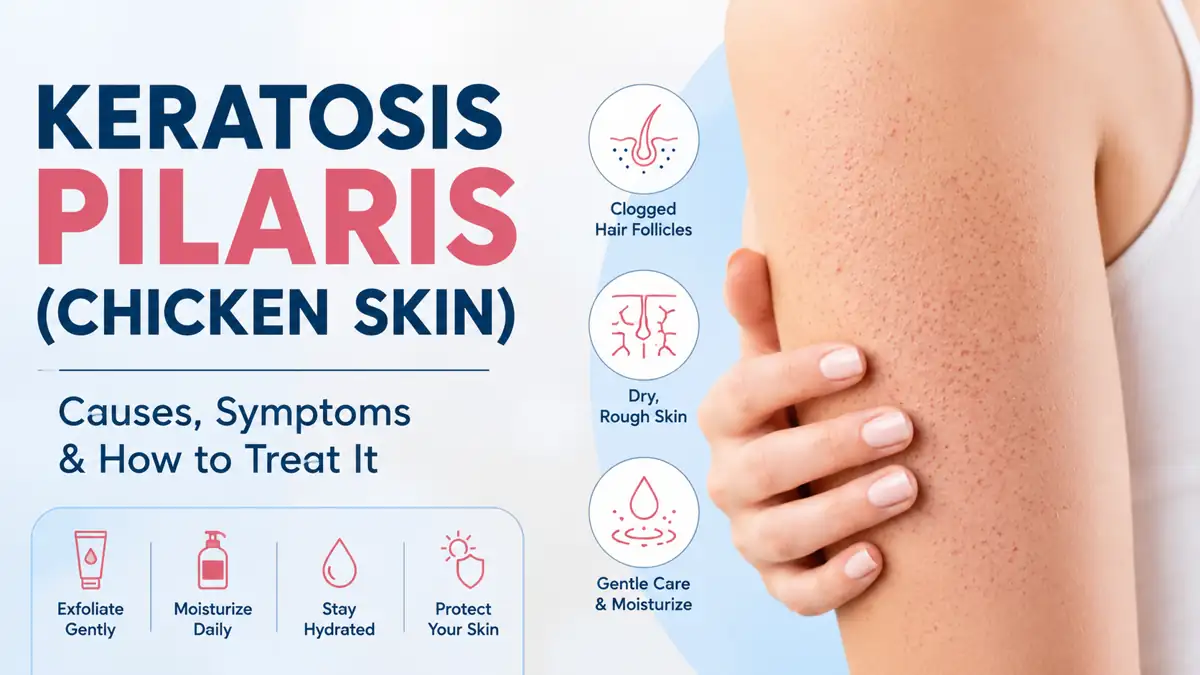
Keratosis pilaris (KP), often called “chicken skin,” is a common and harmless skin condition that causes tiny, rough bumps on the skin. These bumps usually appear on the upper arms, thighs, cheeks, or buttocks and can make the skin feel dry and sandpaper-like.
Although keratosis pilaris isn’t dangerous or contagious, many people seek treatment because of its appearance or rough texture. Fortunately, several skincare treatments and lifestyle changes can help improve the condition.
In this comprehensive guide, you’ll learn about the types, symptoms, causes, diagnosis, treatment options, home remedies, and prevention tips for keratosis pilaris.
What Is Keratosis Pilaris?
Keratosis pilaris is a skin disorder that develops when keratin, a protective protein found in the skin, builds up and blocks hair follicles. This blockage forms small, hard bumps that resemble goosebumps or chicken skin.
The condition often begins during childhood or adolescence and may become less noticeable with age. While there is no permanent cure, consistent skincare can significantly reduce its appearance.
Types of Keratosis Pilaris
Healthcare professionals recognize several forms of keratosis pilaris based on appearance and skin color changes.
1. Keratosis Pilaris Rubra
- Red or pink bumps
- Often affects the cheeks and upper arms
- May cause mild skin irritation
- More noticeable in fair skin
2. Keratosis Pilaris Alba
- White or skin-colored bumps
- Usually causes rough skin without redness
- Common in people with dry skin
3. Keratosis Pilaris Rubra Faceii
- Primarily affects the face
- Causes redness along with tiny bumps
- More common in children and teenagers
4. Atrophicans Variants
These rare forms may lead to mild scarring or thinning of the skin and often require evaluation by a dermatologist.
Symptoms of Keratosis Pilaris
Symptoms vary from person to person but commonly include:
- Tiny, rough bumps on the skin
- Dry, coarse texture
- Skin-colored, red, or brown bumps
- Mild itching
- Rough patches that resemble sandpaper
- Worsening during winter due to dry air
- Bumps on the upper arms, thighs, buttocks, cheeks, or calves
Most people experience cosmetic concerns rather than pain.
What Causes Keratosis Pilaris?
The main cause is an excess buildup of keratin, which blocks hair follicles.
Researchers believe multiple factors contribute to the condition.
Genetics
Keratosis pilaris often runs in families, suggesting a strong inherited component.
Dry Skin
People with naturally dry skin are more likely to develop noticeable bumps.
Skin Conditions
KP is commonly associated with:
- Atopic dermatitis (eczema)
- Ichthyosis vulgaris
- Asthma
- Allergic conditions
Hormonal Changes
Symptoms may become worse during:
- Puberty
- Pregnancy
- Hormonal fluctuations
Risk Factors
You may be more likely to develop keratosis pilaris if you:
- Have a family history of KP
- Have eczema
- Have very dry skin
- Are a child or teenager
- Live in cold, dry climates
- Have sensitive skin
Where Does Keratosis Pilaris Commonly Appear?
Common locations include:
- Upper arms
- Thighs
- Buttocks
- Cheeks (especially in children)
- Forearms
- Calves
Rarely, it can appear on the back or chest.
How Is Keratosis Pilaris Diagnosed?
Diagnosis is usually straightforward.
A healthcare provider will:
- Examine the affected skin
- Review your medical history
- Ask about family history
- Evaluate symptoms
Skin biopsies are rarely needed unless another skin condition is suspected.
Keratosis Pilaris Treatment
Although there is no permanent cure, treatment focuses on softening the keratin buildup and improving skin texture.
1. Moisturizers
Daily moisturizing helps reduce dryness and roughness.
Look for products containing:
- Ceramides
- Glycerin
- Hyaluronic acid
2. Exfoliating Creams
Products containing the following ingredients can help remove dead skin cells:
- Lactic acid
- Glycolic acid
- Salicylic acid
- Urea
These ingredients gradually smooth rough skin.
3. Topical Retinoids
Prescription retinoids help prevent blocked hair follicles by increasing skin cell turnover.
Examples include:
- Tretinoin
- Adapalene (in some cases)
Retinoids may not be suitable during pregnancy, so consult a healthcare professional before use.
4. Gentle Skin Care
Dermatologists recommend:
- Avoiding harsh scrubs
- Using fragrance-free cleansers
- Applying moisturizer immediately after bathing
- Taking short, lukewarm showers
5. Laser Therapy
For persistent redness, some dermatologists may recommend laser treatment.
Laser therapy can improve:
- Redness
- Skin discoloration
- Cosmetic appearance
Several sessions may be required.
Home Remedies for Keratosis Pilaris
While home remedies won’t eliminate KP completely, they may help reduce symptoms.
Use a Humidifier
Adding moisture to indoor air prevents excessive skin dryness.
Moisturize Twice Daily
Apply moisturizer after bathing and before bedtime.
Avoid Hot Water
Hot showers strip natural oils from the skin.
Wear Soft Clothing
Loose cotton fabrics reduce friction that can worsen irritation.
Exfoliate Gently
Use a soft washcloth or mild chemical exfoliant instead of aggressive scrubbing.
Stay Hydrated
Adequate hydration supports overall skin health.
Can Diet Help?
There is limited scientific evidence linking diet directly to keratosis pilaris. However, maintaining a balanced diet rich in skin-supporting nutrients may promote overall skin health.
Include foods rich in:
- Vitamin A
- Vitamin C
- Vitamin E
- Omega-3 fatty acids
- Zinc
If you suspect certain foods worsen your skin, discuss this with a healthcare professional before making major dietary changes.
Can Keratosis Pilaris Be Prevented?
You may not be able to prevent KP entirely because genetics plays a significant role. However, these habits can reduce flare-ups:
- Moisturize every day
- Use mild cleansers
- Avoid long hot showers
- Exfoliate gently
- Avoid scratching bumps
- Keep indoor humidity comfortable
- Wear breathable clothing
When Should You See a Doctor?
Consult a healthcare provider if:
- The bumps become painful
- You notice swelling or pus
- The rash spreads rapidly
- Home treatments fail after several months
- You’re unsure whether it’s keratosis pilaris or another skin condition
A dermatologist can recommend stronger prescription treatments if needed.
Keratosis Pilaris vs. Goosebumps
| Keratosis Pilaris | Goosebumps |
|---|---|
| Long-term skin condition | Temporary skin response |
| Caused by keratin buildup | Caused by muscle contraction around hair follicles |
| Rough, persistent bumps | Smooth bumps that disappear quickly |
| Often linked with dry skin | Triggered by cold or emotions |
| May require skincare treatment | No treatment needed |
Frequently Asked Questions (FAQs)
Is keratosis pilaris contagious?
No. Keratosis pilaris cannot spread from one person to another.
Does keratosis pilaris go away?
Many people notice improvement as they get older, but some continue to have symptoms into adulthood.
Can you pop keratosis pilaris bumps?
No. Picking or squeezing the bumps can lead to irritation, inflammation, infection, or scarring.
Is keratosis pilaris harmful?
No. It is a harmless skin condition that mainly affects appearance and skin texture.
Can children get keratosis pilaris?
Yes. It commonly begins during childhood and adolescence.
Key Takeaways
Keratosis pilaris is a common, harmless condition caused by keratin plugging hair follicles, resulting in rough, small bumps on the skin. While there is no permanent cure, daily moisturizing, gentle exfoliation, medicated creams, and consistent skincare can significantly improve the skin’s appearance. Most people manage symptoms successfully with a regular skincare routine, and the condition often becomes less noticeable with age.