
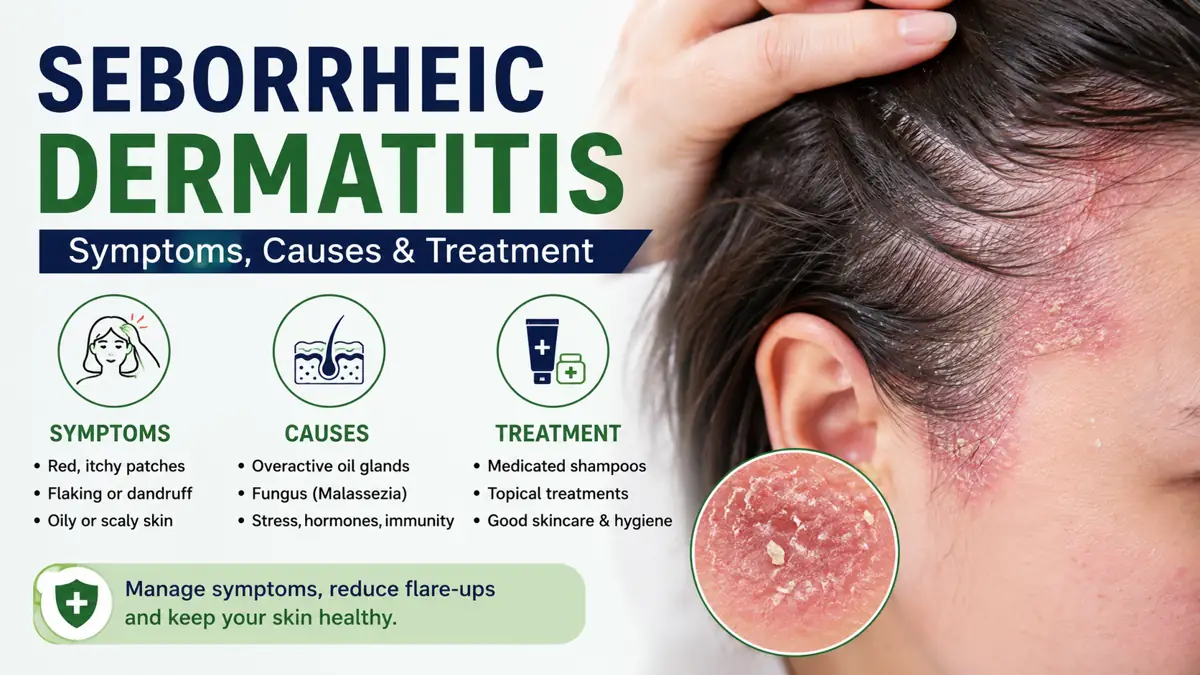
Seborrheic dermatitis is a common inflammatory skin condition that causes red, itchy, flaky skin in areas rich in oil (sebaceous) glands. It most often affects the scalp, face, ears, eyebrows, chest, and upper back. Although it is a long-term condition that tends to flare up from time to time, it is not contagious and can usually be managed effectively with the right treatment and skincare routine.
Many people mistake seborrheic dermatitis for simple dandruff, dry skin, or eczema. While these conditions can look similar, seborrheic dermatitis has unique characteristics and often requires targeted treatment.
In this guide, you’ll learn everything you need to know about seborrheic dermatitis causes, symptoms, treatments, home remedies, prevention, and when to see a doctor.
What Is Seborrheic Dermatitis?
Seborrheic dermatitis is a chronic inflammatory skin disorder that mainly affects oily areas of the body. It occurs when the skin reacts excessively to Malassezia, a naturally occurring yeast found on everyone’s skin. Combined with excess oil production and an overactive immune response, this can lead to inflammation, redness, and flaky scales.
In infants, seborrheic dermatitis is commonly known as cradle cap, while adults usually experience recurring flare-ups throughout life.
Seborrheic Dermatitis Symptoms
Symptoms vary depending on the affected area and the severity of the condition.
Common signs include:
- White or yellow greasy flakes on the scalp
- Persistent dandruff
- Red or inflamed skin
- Itching that may worsen during stress
- Oily patches covered with scales
- Burning or tenderness
- Crusting around the hairline
- Flaking in the eyebrows or beard
- Redness around the nose
- Skin peeling behind the ears
- Rash on the chest or upper back
Where Does Seborrheic Dermatitis Occur?
The condition commonly affects areas with many oil glands, including:
- Scalp
- Eyebrows
- Eyelids
- Around the nose
- Beard area
- Behind the ears
- Ear canals
- Chest
- Upper back
- Groin
- Skin folds
What Causes Seborrheic Dermatitis?
Doctors don’t know one single cause, but several factors contribute to the condition.
1. Malassezia Yeast
This naturally occurring yeast lives on healthy skin. In some people, it triggers an inflammatory response that leads to redness and scaling.
2. Excess Oil Production
People with oily skin tend to develop seborrheic dermatitis more often because yeast thrives in oily environments.
3. Genetics
A family history of eczema, psoriasis, or seborrheic dermatitis may increase the risk.
4. Immune System Changes
People with weakened immune systems are more likely to develop severe seborrheic dermatitis.
Examples include:
- HIV/AIDS
- Organ transplant recipients
- Certain cancers
- Long-term immunosuppressive medications
5. Neurological Conditions
Research shows higher rates among people with:
- Parkinson’s disease
- Stroke
- Epilepsy
- Traumatic brain injury
6. Hormonal Changes
Hormonal fluctuations can affect oil production and trigger flare-ups.
7. Weather
Symptoms often worsen during:
- Winter
- Cold weather
- Dry climates
Many people notice improvement during warmer months.
8. Stress
Emotional stress is a common trigger for flare-ups.
Risk Factors
You may have a higher risk if you have:
- Oily skin
- A family history of skin disorders
- Depression
- Parkinson’s disease
- HIV infection
- Psoriasis
- Rosacea
- Alcohol use disorder
- Recovery from major illness
- Chronic stress
Is Seborrheic Dermatitis Contagious?
No.
Seborrheic dermatitis cannot spread from person to person through touching, sharing towels, or close contact.
Seborrheic Dermatitis Diagnosis
A healthcare provider usually diagnoses the condition by:
- Examining the skin
- Reviewing symptoms
- Asking about medical history
Occasionally, a skin scraping or biopsy may be recommended to rule out:
- Psoriasis
- Ringworm
- Atopic dermatitis
- Lupus
- Rosacea
Seborrheic Dermatitis Treatment
Treatment depends on the severity and location of the condition.
1. Medicated Shampoos
These are usually the first treatment for scalp involvement.
Look for ingredients such as:
- Ketoconazole
- Selenium sulfide
- Zinc pyrithione
- Coal tar
- Salicylic acid
Using these shampoos 2–3 times per week can help reduce scaling and inflammation.
2. Antifungal Creams
Prescription or over-the-counter antifungal creams may reduce yeast growth.
Examples include:
- Ketoconazole cream
- Ciclopirox cream
3. Corticosteroid Creams
Low-strength steroid creams may quickly reduce:
- Redness
- Swelling
- Itching
However, they should only be used for short periods because prolonged use can thin the skin.
4. Calcineurin Inhibitors
Prescription medications such as tacrolimus or pimecrolimus can help manage inflammation, especially on sensitive areas like the face. These medicines are generally used when other treatments are not suitable and should be used under medical supervision.
5. Moisturizers
Daily moisturizing helps repair the skin barrier and reduce irritation.
Choose fragrance-free moisturizers designed for sensitive skin.
6. Light Therapy
In stubborn cases, dermatologists may recommend phototherapy.
Home Remedies for Seborrheic Dermatitis
Home care can help reduce symptoms between flare-ups.
Wash Regularly
Use a gentle cleanser and wash oily areas daily.
Don’t Scratch
Scratching worsens inflammation and increases infection risk.
Manage Stress
Stress reduction techniques such as:
- Yoga
- Meditation
- Exercise
- Deep breathing
may reduce flare frequency.
Use Gentle Skin Products
Avoid products containing:
- Alcohol
- Strong fragrances
- Harsh soaps
Remove Scales Carefully
Softening scales with mineral oil or coconut oil before washing may help loosen them. If you choose to try this approach, avoid leaving oils on the scalp for prolonged periods, as excess oil may worsen symptoms in some people.
Seborrheic Dermatitis in Babies
Infants often develop cradle cap, which appears as thick yellow scales on the scalp.
The condition usually:
- Appears within the first few months
- Is painless
- Doesn’t usually itch
- Often clears on its own by 6–12 months
Parents should avoid forcefully removing scales.
Can Diet Affect Seborrheic Dermatitis?
Research is still evolving, but some people report symptom improvement by:
- Eating more fruits and vegetables
- Including omega-3-rich foods
- Reducing highly processed foods
- Limiting excessive alcohol intake
- Maintaining a balanced diet
No single diet has been proven to cure seborrheic dermatitis.
Prevention Tips
Although flare-ups cannot always be prevented, these habits may help:
- Wash your scalp regularly.
- Use medicated shampoo if recommended.
- Keep facial skin clean.
- Moisturize daily.
- Manage stress.
- Get adequate sleep.
- Avoid harsh skincare products.
- Treat flare-ups early.
- Wear breathable clothing.
Possible Complications
Without treatment, seborrheic dermatitis may lead to:
- Persistent itching
- Skin infections from scratching
- Temporary hair shedding due to scalp inflammation
- Emotional distress or reduced self-confidence
When Should You See a Doctor?
Seek medical advice if:
- Symptoms don’t improve after several weeks of self-care.
- The rash becomes painful, swollen, or oozes pus.
- Large areas of skin are affected.
- You experience significant hair loss.
- Symptoms interfere with sleep or daily activities.
- You’re unsure whether the rash is seborrheic dermatitis or another skin condition.
Frequently Asked Questions
Is seborrheic dermatitis the same as dandruff?
No. Dandruff is a mild form of scalp flaking, while seborrheic dermatitis involves inflammation, redness, and greasy scales and may affect areas beyond the scalp.
Can seborrheic dermatitis be cured?
There is currently no permanent cure. However, with appropriate treatment and regular skincare, most people can keep symptoms well controlled and reduce flare-ups.
Does seborrheic dermatitis cause hair loss?
It may lead to temporary hair shedding if inflammation is severe or if frequent scratching damages the scalp. Hair usually regrows once the condition is under control.
Is seborrheic dermatitis caused by poor hygiene?
No. It is related to skin inflammation, oil production, and the body’s response to naturally occurring yeast—not poor hygiene.
Can stress make seborrheic dermatitis worse?
Yes. Stress is a common trigger and may increase the frequency or severity of flare-ups in some people.
Key Takeaways
Although it cannot usually be cured permanently, consistent treatment and healthy skincare habits can effectively control symptoms and reduce recurrences.
Seborrheic dermatitis is a chronic inflammatory skin condition that commonly affects oily areas such as the scalp and face.
Typical symptoms include flaky scales, redness, itching, and greasy patches.
Contributing factors include Malassezia yeast, excess oil production, genetics, stress, and certain medical conditions.
Treatment often includes medicated shampoos, antifungal medications, anti-inflammatory treatments, and a gentle skincare routine.